
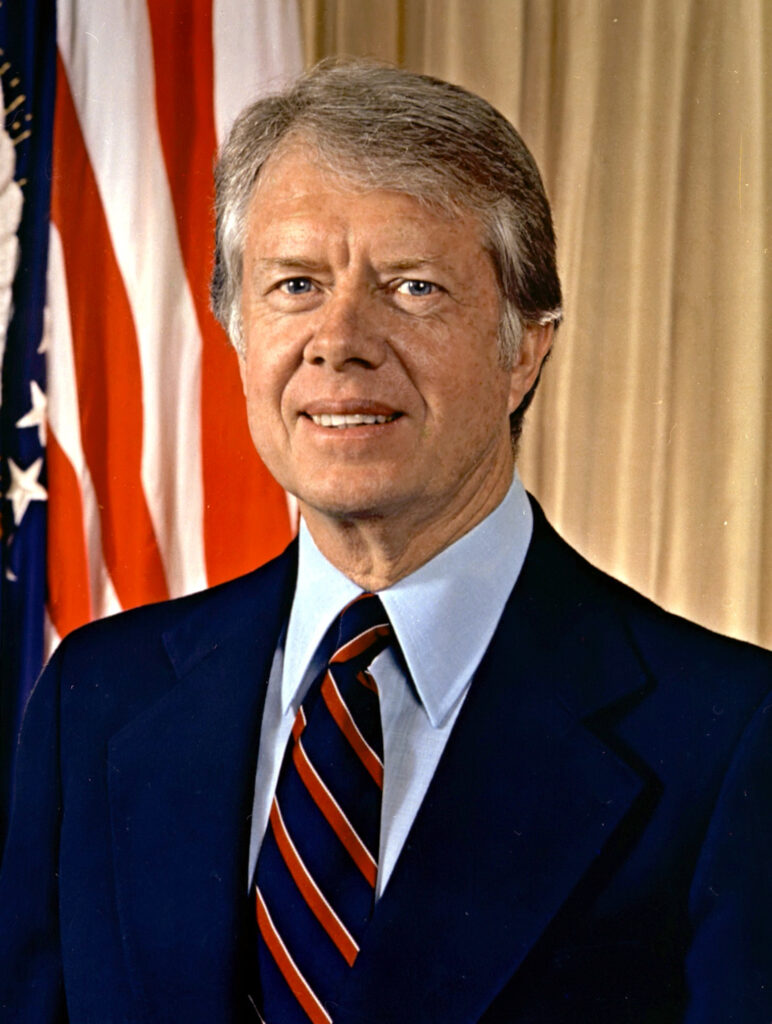
Georgia, December 31, 2024 — cybernewschronicle.com — As the year draws to a close, the nation is preparing to bid farewell to a remarkable leader: Jimmy Carter, the 39th president of the United States, who has lived longer than any other president in US history, reaching the milestone age of 100. Born on October 1, 1924, in Plains, Georgia, Carter’s life has been a testament to his commitment to public service, humanitarian work, and his unwavering dedication to the values of equality and justice.
Carter’s early life was marked by a strong sense of duty and service. After graduating from the US Naval Academy in 1946, he joined the submarine service, an experience that would shape his perspective on the world and inform his future decisions as a statesman.
Later, he returned to his family’s peanut farm in Georgia, where he became active in the civil rights movement, working tirelessly to promote desegregation and social justice. His entry into politics was marked by his election to the Georgia State Senate, where he served from 1963 to 1967, and later as the 76th governor of Georgia, from 1971 to 1975. As governor, Carter was one of the first of the “New South governors” committed to desegregation, a stance that reflected his deep-seated commitment to equality and justice.
His leadership and vision caught the attention of the nation, and in 1976, he announced his candidacy for the presidency. Despite being a dark horse candidate, little known outside his home state, Carter secured the Democratic nomination and went on to narrowly defeat Republican incumbent Gerald Ford in the general election.
As president, Carter pardoned all Vietnam draft evaders and negotiated major foreign policy agreements, including the Camp David Accords, the Panama Canal Treaties, and the second round of Strategic Arms Limitation Talks. Carter’s presidency was marked by significant achievements in foreign policy, including the establishment of diplomatic relations with several countries. His commitment to human rights and social justice continued to guide his decisions, both at home and abroad.
The Camp David Accords, in particular, remain a notable achievement, as they helped to establish a framework for peace in the Middle East. Carter’s ability to bring together leaders from different nations and facilitate dialogue and cooperation has been widely praised, and his legacy continues to inspire diplomats and leaders around the world. As we look to the future, we can draw hope from the progress that has been made in recent years in the field of cancer research.
While Carter’s own health has been a subject of concern in recent months, his remarkable longevity is a testament to the advances that have been made in medical science. As researchers continue to explore new treatments and therapies, we can look forward to a future where cancer is no longer a death sentence, but a manageable condition.
With continued investment in research and development, we can expect to see new breakthroughs and innovations in the years to come. As we prepare to bid farewell to Jimmy Carter, we can take comfort in the knowledge that his legacy will continue to inspire and motivate future generations of leaders and citizens. His commitment to public service, humanitarian work, and social justice has left an indelible mark on our nation and the world.
As we look to the future, we can draw hope from the progress that has been made and the advances that are still to come. With continued investment in research and development, we can expect to see new breakthroughs and innovations in the years to come, and we can look forward to a future where diseases like cancer are no longer a major threat to public health.
As we move forward, it will be important to continue to support research and development in the field of cancer treatment, and to work towards a future where all people have access to quality healthcare and medical treatment. By continuing to invest in research and development, we can help to ensure that future generations will have access to the latest treatments and therapies, and that diseases like cancer will become increasingly rare.
Consult your doctor for medical advice.




