The Unopposed Nomination
WASHINGTON, D.C., November 2, 2026 — The calculus of the 2024 Democratic presidential race shifted abruptly in July when former President Joe Biden withdrew his candidacy, leaving Vice President Kamala Harris to secure the nomination without a primary contest. The Democratic National Committee announced on August 2 that Harris had received enough delegate votes to become the party’s nominee, a process that bypassed the traditional primary system entirely.
Delegates began voting in a virtual roll call on August 1, 2024, to formally elevate Harris to the top of the ticket. This electronic vote was a procedural necessity; under DNC rules, if only one candidate qualified, the party held a virtual roll call rather than an in-person vote at the mid-August convention in Chicago. Harris ran unopposed because no other candidate met the requirements to qualify, having failed to obtain the necessary digital signatures from at least 300 delegates by the July 30 deadline.
The strategic framing of this process was one of rapid consolidation. While the vast majority of the party’s nearly 4,000 pledged delegates were initially assigned to Biden, they were not automatically transferred to Harris. However, within 48 hours of her campaign launch, an overwhelming majority of those delegates indicated they would back her. By the end of the qualifying period, Harris had secured 3,923 delegate signatures, far exceeding the 1,976 votes required to secure the nomination. Critics argued that this rushed process did not allow for proper voter input, but the party leadership viewed it as a necessary step to unify the party quickly after the incumbent’s departure.
A Presidential Bid Without Primaries
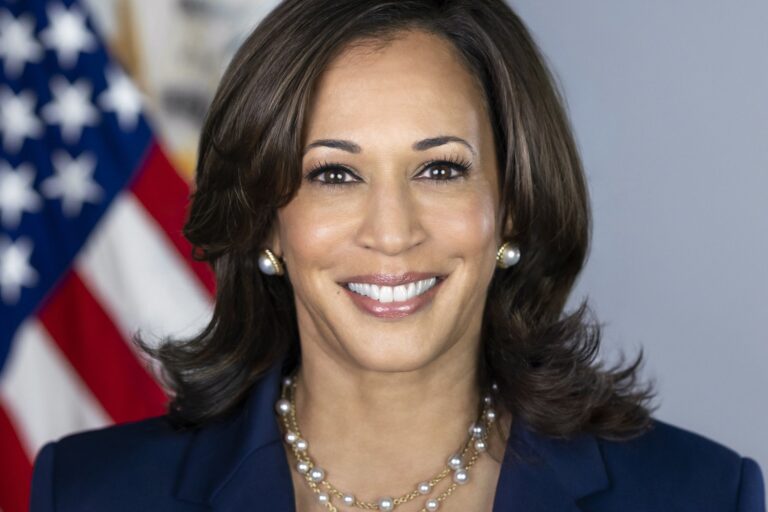
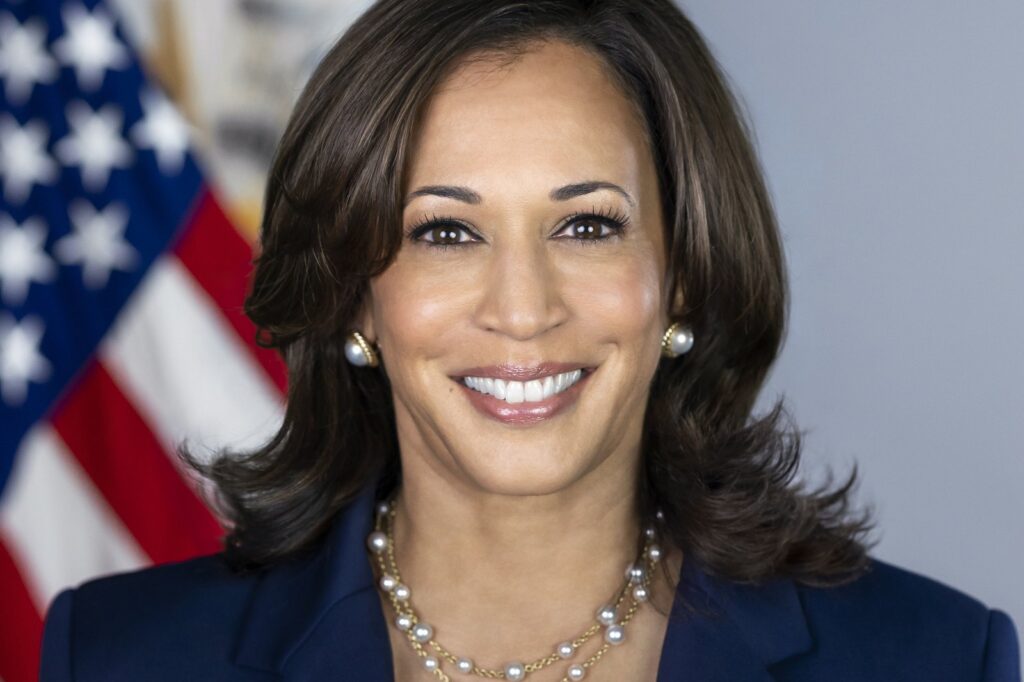
Harris’s path to the nomination was unprecedented in modern American politics, as she became the presumptive nominee without winning a single primary election. Her political lineage is rooted in California, where she served as attorney general from 2011 to 2017 and as a U.S. senator from 2017 to 2021. As a senator, she gained a national profile through pointed questions during Senate hearings, including those involving Supreme Court nominee Brett Kavanaugh.
Her rise in California politics has long drawn questions about her relationship with Willie Brown, the powerful Assembly speaker who later became mayor of San Francisco. In a 2019 letter to the San Francisco Chronicle, Brown confirmed that the two had dated more than 20 years earlier, and wrote that he “may have influenced her career” by appointing her to two state commissions while he was speaker. A 1994 Los Angeles Times report on Brown’s patronage appointments described Harris as his “frequent companion”, and according to SF Weekly the two posts, on the Unemployment Insurance Appeals Board and the Medical Assistance Commission, paid her more than $400,000 over five years. Critics have pointed to those appointments as cronyism and argued that the relationship advanced her career. Brown, who was estranged from his wife at the time, also said he helped her first run for San Francisco district attorney in 2003, a race in which Harris sought to distance herself from him.
She had previously sought the Democratic presidential nomination in 2019 but withdrew from that race before the primaries began. In 2020, Biden selected her as his running mate, and their ticket defeated the incumbent President Donald Trump and Vice President Mike Pence. During her tenure as the 49th vice president from 2021 to 2025, Harris presided over an evenly split U.S. Senate, casting 33 tie-breaking votes, more than any other vice president in history. These votes included key legislation such as the American Rescue Plan Act of 2021 and the Inflation Reduction Act.
The broader stakes of her 2024 campaign were defined by her status as the first female, first African American, and first Asian American vice president, making her the highest-ranking female and Asian public official in U.S. history. Despite these historic distinctions, the campaign faced immediate scrutiny over the mechanics of her nomination. The fact that she was elevated through a virtual roll call rather than a competitive primary process signaled a strategic decision by the party to prioritize speed and unity over a broader democratic mandate from the base.
The Post-Election Video Controversy
Following her loss in the 2024 election, Harris’s public appearances became the subject of intense public scrutiny and viral criticism. On November 26, 2024, she posted a 28-second video message to supporters on the Democratic Party’s X account, intended as a pep talk after the election defeat. In the clip, filmed from what appeared to be a living room, Harris told her supporters, “I just have to remind you: don’t you ever let anybody take your power from you”.
The video, which racked up more than 20 million views, prompted widespread mockery online, with many critics accusing her of appearing intoxicated. The criticism was not limited to casual internet users; right-wing accounts and politicians joined in the dunking. Rep. Virginia Foxx (R-N.C.) described the clip as less bearable than a dial-up modem sound playing on an infinite loop. Actor Kevin Sorbo asked in an X post, “Have you been drinking?”.
Some social media users edited the video to make it appear as if Harris was holding a bottle of cognac, while others joked that her demeanor resembled a speech given by a friend who was drunk at the end of the night. The controversy was compounded by reports that before filming the video, Harris had taken a post-election getaway to Hawaii, staying at a luxurious property on the Big Island that included complimentary bottles of wine. The narrative that emerged framed her delivery as tired and bleary-eyed, contrasting sharply with the energetic tone expected of a major political figure addressing the nation after a loss.
Continued Campaigning and the 2026 Midterms
Despite the 2024 defeat, Harris has remained an active figure in Democratic politics, campaigning in key states to support party candidates in the 2026 midterm elections. Her continued involvement signals that she views the 2026 elections as a crucial opportunity to push back against the Trump administration. In recent days, she has been on the stump in Nevada, Mississippi, New Hampshire, and Wisconsin.
On October 26, 2026, Harris campaigned in Milwaukee for David Crowley, the Democratic candidate for governor, who is facing Republican U.S. Rep. Tom Tiffany in a competitive race. At a short speech at the Pfister Hotel, Harris told the crowd of several hundred that the race offers Democrats a chance to act against the White House. “The power of the people is demonstrated by what we do to organize, to activate,” she said, urging supporters to “get out there and do everything we possibly can” in the final days before the election.
Her presence in Wisconsin was part of a broader surge of Democratic surrogates, including Georgia Sen. Raphael Warnock, actress Kerry Washington, and Maryland Gov. Wes Moore, who had also campaigned for Crowley. In contrast, President Donald Trump, who endorsed Tiffany, did not have a scheduled stop in Wisconsin during this final stretch, though he was campaigning elsewhere in support of Republican candidates. Harris’s focus in Wisconsin was on channeling voter anger at the Trump administration into action, arguing that electing Crowley would demonstrate what Americans want from their leadership.
In Georgia, Harris also appeared at a rally for Sen. Jon Ossoff on October 29, 2026, where she criticized the Trump administration’s “reckless tariffs,” “war nobody asked for,” and cuts to Medicaid and food stamps. During this event, she flubbed her opening line, briefly referring to Ossoff as “the next” senator from Georgia before correcting herself to “the next … and continuing senator”. These campaign stops highlight her strategic role as a national surrogate, aiming to mobilize the base in key battleground states ahead of the November 2026 elections.
Sources
- The DNC's virtual roll call to nominate Kamala Harris started Aug. 1. Here's how the vote works.
- 'Stranger at the club': Everyone is dunking on Kamala Harris' post-election video for the same reason
- Kamala Harris accused of being drunk as she appears tired and bleary-eyed in video message to supporters
- Kamala Harris opens rally for Georgia Democrat with a brutal verbal stumble
- Kamala Harris – Wikipedia
- Kamala Harris
- Kamala Harris stumps for David Crowley in final week of governor's race
- USA Today: Willie Brown on Kamala Harris: ‘We dated’
- San Francisco Chronicle: Sure, I dated Kamala Harris. So what?
Photo: Lawrence Jackson (Public domain)