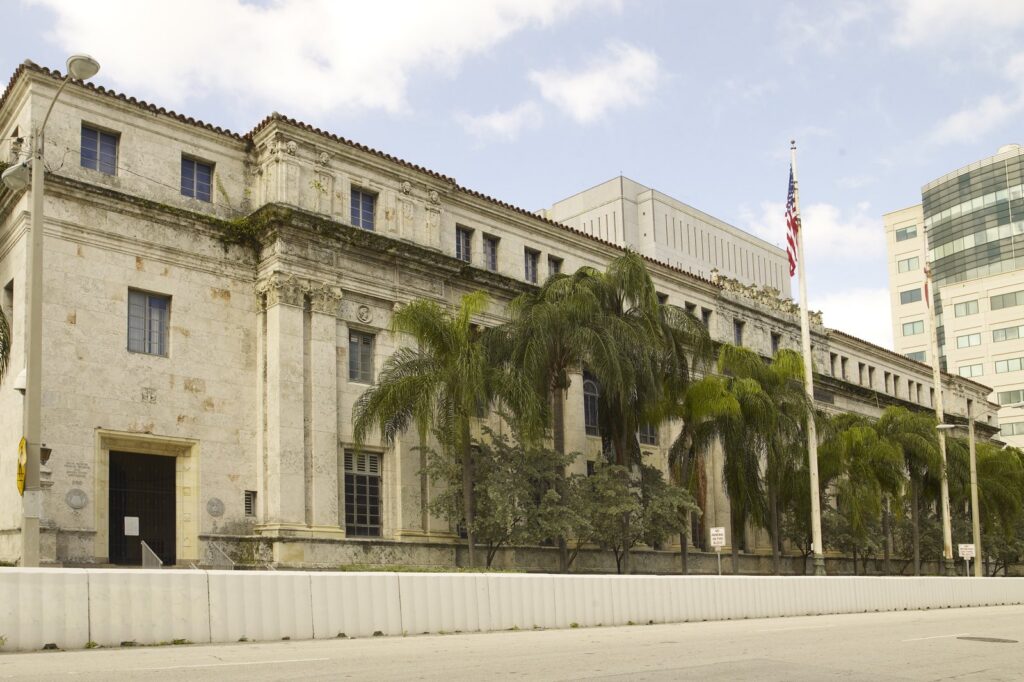
A federal jury in Florida convicted Peter Holly, a 39-year-old Slovakian national and lawful permanent resident, of making a false claim of U.S. citizenship to register and voting by an alien in the 2024 federal election. The conviction carries a maximum penalty of five years in federal prison, a sanction that sits at the sharp end of a widening gap between how the justice system treats non-citizen voting and citizen double-voting.
The Federal Statutes in Play
Both carry a maximum of five years in federal prison. Holly registered online in July 2024 and voted on October 27, later admitting to Homeland Security Investigations that he knew he was not a citizen. The case was prosecuted by Special Assistant U.S. Attorney Bianca S. Bansal under U.S. Attorney Gregory W. Kehoe.
Contrast With Citizen Double-Voting
The technical reality is that citizens who vote twice are rarely charged federally. Instead, those cases typically remain at the state level, where penalties vary widely but often top out at misdemeanour exposure — fines, probation, or short local jail sentences — rather than multi-year federal terms. The distinction turns on the false citizenship claim. A citizen who double-votes has not claimed a status they do not hold; they have abused the status they possess. That difference in statutory architecture drives the sentencing disparity.
Florida’s Statewide Sweep
Holly’s conviction sits inside a broader dragnet. Florida Attorney General James Uthmeier announced a statewide sweep in September, just before the midterms, eventually charging 20 defendants across 13 counties: 16 non-citizens and four convicted felons, according to the full list released on November 13. Among them, Astrid Quintana, a lawful permanent resident since childhood married to a U.S. veteran, received a voter ID card before voting in 2024 and believed she was eligible, her attorney said. At least eight non-citizen defendants face charges under a Florida law that did not exist at the time of their alleged voting, raising ex post facto concerns that defence attorneys argue should invalidate the prosecutions.
Entrapment Questions and Erroneous IDs
The detail that matters in several of these cases is the paperwork. Defendants including Quintana and Donta White, a convicted felon on probation for grand theft, were sent voter ID cards by the state before they voted. White’s attorney described an entrapment issue: the state wants to prosecute voting but has not put checks in place to let people know when they are ineligible. The attorney general’s spokesperson said those investigations are still pending.
National Surge Before the Midterms
The Florida sweep mirrors a federal pattern. The Justice Department charged 239 people with voting fraud-related offenses since the administration’s start, including 195 non-citizens across 25 states in a nine-week pre-midterm surge, according to its November 2 announcement. Federal election fraud cases surged before the 2026 midterms but the pace of new cases slowed after Election Day. President Trump suggested an FBI database hack might reveal voter fraud evidence, continuing election denialism after accepting midterm results.
What Comes Next
Holly awaits sentencing. The eight-plus Florida defendants challenging their charges on ex post facto grounds will test whether a law enacted after the act can sustain a conviction. Duval County leads the state docket with four cases; Hillsborough has three. The rest are scattered across 11 other counties.
Sources
- Jury Found Permanent Resident Guilty of Voter Fraud in Florida
- Electoral fraud
- Florida releases full list of 20 charged in voter fraud sweep; some arrests spark questions
- Trump sees silver lining in FBI getting hacked: ‘Maybe we’ll learn about all the voter fraud’
- Voter fraud cases surged before midterms. Then the pace of new cases slowed
- Trump claims recent FBI hack could have positive impact and help uncover truth about 'hoaxes'
Photo: Carol M. Highsmith (Public domain)