UIWANG, October 26, 2026 — Hyundai Motor and Kia have officially formalized their vision for an “autonomous operating factory” that will deploy humanoids in future new plants to be built after 2032.
A New Era of Factory Autonomy
Hyundai Motor Group hosted a media event on the 16th at its Uiwang Research Center in Uiwang, Gyeonggi Province, to preview key content from “E-FOREST Tech Day 2026,” a smart factory technology exhibition running from the 19th to the 21st.
Now in its seventh year, the event will showcase approximately 200 new manufacturing technologies. The technologies unveiled on this day focused on two themes: internalization to reduce external dependence, and virtualization to validate systems in virtual space before physical installation.
This transition marks a significant shift for families who rely on these vehicles, as the goal is to create facilities that make decisions and learn on their own. By unveiling in-house developed core manufacturing technologies including finished-vehicle exterior inspection and logistics robots, the companies are preparing for this stage where factories operate with greater independence.
Bringing Core Technology In-House
The flagship example of internalization is vision technology. Hyundai Motor and Kia have historically relied heavily on foreign-made systems for finished-vehicle exterior inspection.
To change this, the company established a dedicated vision technology internalization team and developed a “tunnel-type finished-vehicle exterior inspection” system with fully proprietary hardware and software.
The system captures approximately 5,000 images per vehicle and detects defects as small as 1mm. When a defect area is tapped on the screen, the system displays the defect type (dent, scratch, etc.), size, and drawing information together.
Addressing the challenge of insufficient defect data, the team uses image augmentation and automated labeling technologies to build a robust dataset for training their internal systems.
Application is being expanded starting from Kia’s Hwaseong EVO West plant to the Ulsan and Asan plants, ensuring that these inspection capabilities are available across their global production network.
Logistics Robots and Battery Innovation
The hardware design and navigation software for logistics robots have also been brought in-house. The logistics robot standardization platform, based on standard specifications, is designed to deliver identical performance and quality regardless of which vendor assembles it.
This approach reduces production costs by approximately 30%. By combining LTO (lithium titanate oxide) batteries with lithium-ion batteries, charging time has been cut from the previous two hours to a maximum of 12 minutes.
The next-generation control system “HACS 2.0” prevents deadlocks by calculating robots’ estimated arrival times and pre-emptively reserving points along their routes.
For workers on the floor, these improvements mean fewer interruptions and a smoother flow of parts throughout the manufacturing day. The reduction in charging downtime allows the production line to maintain momentum without waiting for long pauses.
Virtual Testing with Physics AI
Hyundai Motor’s Manufacturing Solutions Division is developing “physics AI-based virtual commissioning” technology in collaboration with Nvidia.
This system uses physics AI to simulate and optimize manufacturing processes virtually, reducing the need for physical testing and accelerating development cycles. This capability allows engineers to solve problems before they ever touch a robot arm on the factory floor, saving time and resources for the teams building these complex machines.
What This Means for the Future
The “autonomous operating factory” concept represents a fundamental change in how cars are made. By integrating humanoids into facilities that can make their own decisions, Hyundai Motor Group aims to streamline operations and improve efficiency.
This shift is designed to benefit families by ensuring vehicles are built with higher precision and fewer defects, thanks to advanced inspection systems that catch issues invisible to the naked eye.
The technology also brings more stability to the supply chain. By internalizing key technologies like vision systems and robot logistics platforms, the company reduces its dependence on foreign suppliers, securing a more resilient foundation for global production.
This move is part of a broader strategy to lead in smart manufacturing, where machines learn and adapt, ensuring that when you drive a Hyundai or Kia in the future, it was built with cutting-edge technology designed to serve people better.
Strategic Partnerships and Global Expansion
Hyundai Motor Group has established a research collaboration with the Rhode Island School of Design to explore biomimicry and biodesign as pathways toward innovative manufacturing methods and circular product lifecycles. Now in its seventh year, the partnership examines how nature solves problems of motion across extreme environments, from rocky intertidal sites to wetlands and forests, with findings applied to technology development. Within this framework, researchers are studying physical AI mobility—robots operating in uncontrolled environments—and taking cues from nature, the oldest engineer, to design working forms based on those principles. The collaboration also supports the development of regenerative biodesign strategies aimed at creating more circular and less harmful manufacturing processes, reflecting a broader commitment to sustainability alongside automation goals.
Additionally, Hyundai Rotem has consolidated its defense operations by acquiring Hyundai WIA’s defense division in a 358.4 billion won deal. This acquisition brings K2 Black Panther tank main gun production in-house, allowing for greater technical collaboration and reduced coordination barriers between design and manufacturing. According to a Hyundai Rotem official, the primary benefit stems from closer integration on the tank’s main gun barrel, a core component of firepower, which could lower manufacturing costs and strengthen the company’s position in overseas defense bids by eliminating previous supplier markups. The group is also expanding localization efforts in Europe, planning to jointly produce customized K2PL main battle tanks with Poland’s state-owned defense firm Bumar-Labedy, integrating Polish components and involving local engineers in maintenance and repair services to meet growing international demand for turnkey procurement packages.
Sources
- Hyundai Motor, Kia Unveil 'Autonomous Operating Factory' Roadmap with Humanoid Deployment by 2032 — BigGo Finance
- Hyundai Motor Group & Rhode Island School of Design Collaborate on Regenerative Biodesign Strategies and the Future of Mobility – CleanTechnica
- Hyundai Motor Group unites defense arms in global export push
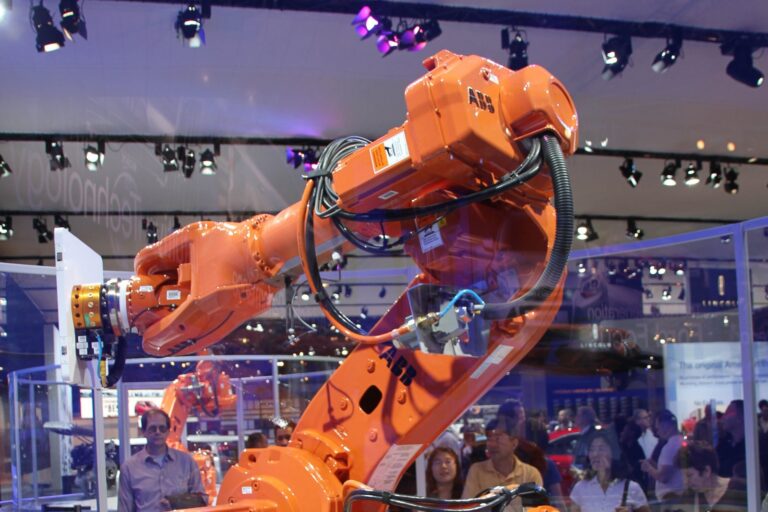
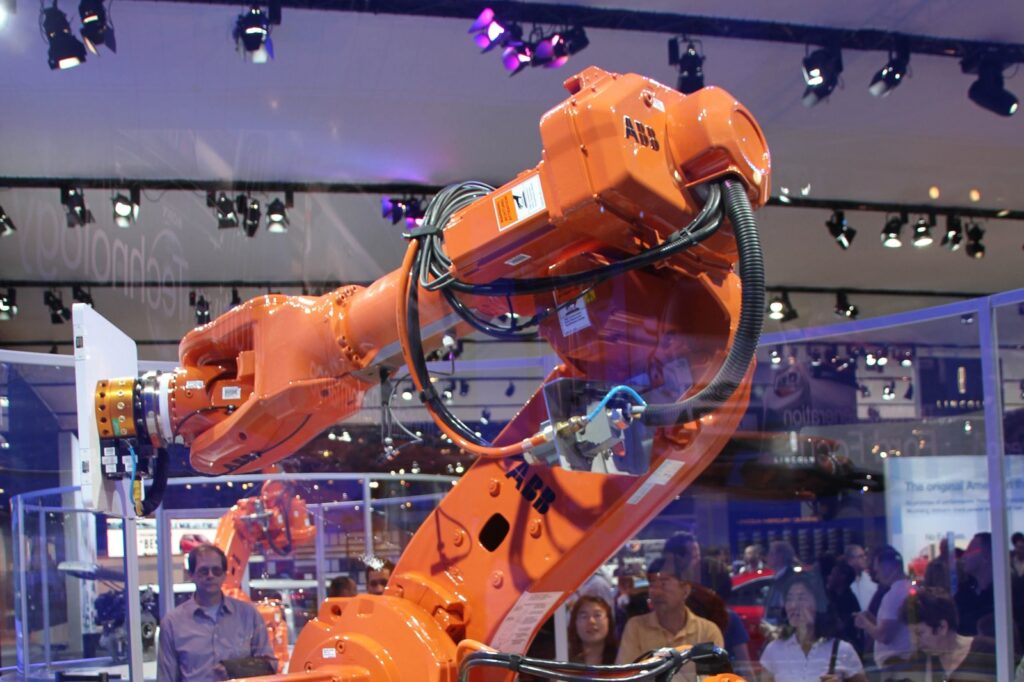
Photo: Razvan Orendovici from United States (CC BY 2.0)