HUNTSVILLE, November 15, 2026 — John Allen Rubio was executed by lethal injection at the state prison in Huntsville at 6:47 p.m. on Thursday, November 12, 2026, following his conviction for murdering and beheading three children in Cameron County on March 11, 2003.
The Geopolitical Chessboard of Texas Justice
For decades, Texas has stood as the epicenter of capital punishment in the United States. The state has executed 604 people since the U.S. resumed the practice in 1976, accounting for more than a third of the national total. This formidable record, established over a half-century, positions the Lone Star State as a critical player in the broader debate on the death penalty, a system now facing its most significant political recalibration in modern history.
The Role of the Texas Court of Criminal Appeals
At the heart of Texas’s capital punishment apparatus is the Texas Court of Criminal Appeals, a nine-member court solely responsible for reviewing all death penalty appeals. This final state court of review has historically been a formidable barrier for inmates, with a reputation for upholding convictions and death sentences. However, the political landscape of this court has shifted dramatically. In the recent election, Democrats won three seats on the nine-member bench, altering the calculus of future reviews while still leaving them in the minority. This shift signals a potential, albeit limited, change in the approach to capital cases, particularly in the most contentious ones.
A Governor’s Evolving Stance
The most consequential change at the state level is the election of Governor-elect Gina Hinojosa. Her victory represents a historic break from the past. No Texas governor in recent history has openly opposed the death penalty. Hinojosa has stated, “I personally do not support the death penalty,” though she clarified her executive role, “As governor, it will be my responsibility to look at each case individually.” This personal opposition, coupled with her incoming authority, introduces a new variable into the state’s execution protocol.
The Mechanics of Clemency
Under the Texas constitution, the governor’s power over the death penalty is not absolute. She cannot unilaterally commute a sentence or declare a moratorium. Her primary tools are granting a one-time, 30-day reprieve to pause an execution and appointing members to the Texas Board of Pardons and Paroles. The board requires a majority vote to recommend commuting a death sentence to life imprisonment. Opponents of capital punishment are urging Hinojosa to use her reprieve authority to slow the system and to appoint board members who would support sentence reductions.
The Future of Death Row
With the political winds shifting, the focus is now on what this means for the 200-plus inmates on death row. While Hinojosa’s personal stance is clear, her administration’s priorities remain to be seen. The state’s execution machine, however, is not pausing. Texas is planning to execute Reinaldo Dennes on November 19, 2026, its last scheduled execution of the year. The case of Dennes, convicted of masterminding a diamond heist that ended in murder, underscores the ongoing tension between the state’s historical commitment to capital punishment and the new political reality.
The next scheduled execution is Reinaldo Dennes on November 19, 2026.
Sources
- Capital punishment in Texas
- This Might Be the Most Shocking Thing About Gina Hinojosa’s Election
- Anti-capital punishment group calls on governor-elect Hinojosa to end death penalty in Texas
- Will Blue Wave Slow Executions in Texas? • The Austin Chronicle
- Texas executes man who beheaded three children, including 2-month-old baby
- Texas man convicted in beheading of 3 children is put to death, hours after an Oklahoma execution
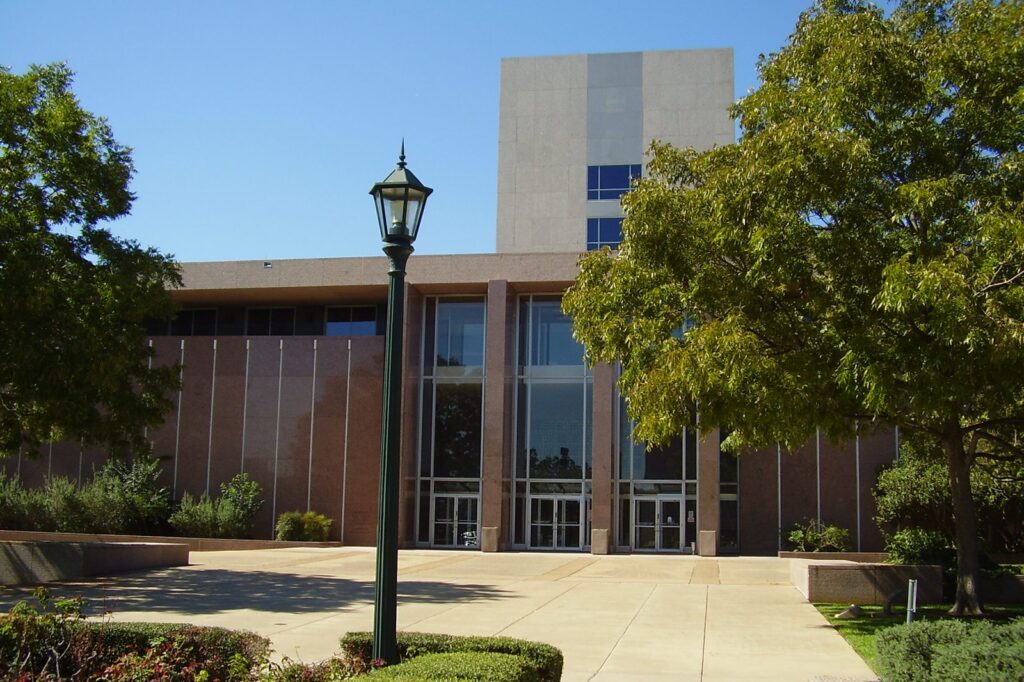
Photo: WhisperToMe (Public domain)