A 40-year-old woman handed over $3,500 in cash and roughly $20,000 in foreign currency and jewellery to a stranger outside a block on Edgedale Plains in Punggol. On Monday morning, Oct 26, the man accused of collecting it was brought back to the same spot.
Saravanan Ramu, 25, a Malaysian, arrived with three police investigators at about 9.35am. He wore a white polo shirt and navy blue shorts, and his wrists and ankles were restrained. Asiaone reported that he spent about 10 minutes at the site, retracing where he took the items. Investigators put questions to him and pointed to areas ahead of them. He kept his head mostly bowed and glanced up only when a spot was singled out.
What the victim was told
The woman had been contacted by unknown persons after she said she had not bought anything from the electronics retailer Harvey Norman. She was then told to hand over her valuables for further “checks”. That, according to the account, is how the cash, foreign currency and jewellery ended up changing hands at the residential development.
The charges
Saravanan is one of two Malaysians charged on Oct 21 over what police describe as a government official impersonation scam. He faces a charge of abetment by conspiracy to assist another person to retain benefits from criminal conduct. The second man, Anson Lu Ting Hing, also 25, was not at the revisit. If convicted, each could be jailed for up to 10 years, fined up to $500,000, or both. Saravanan is due back in court on Wednesday.
Punggol, briefly
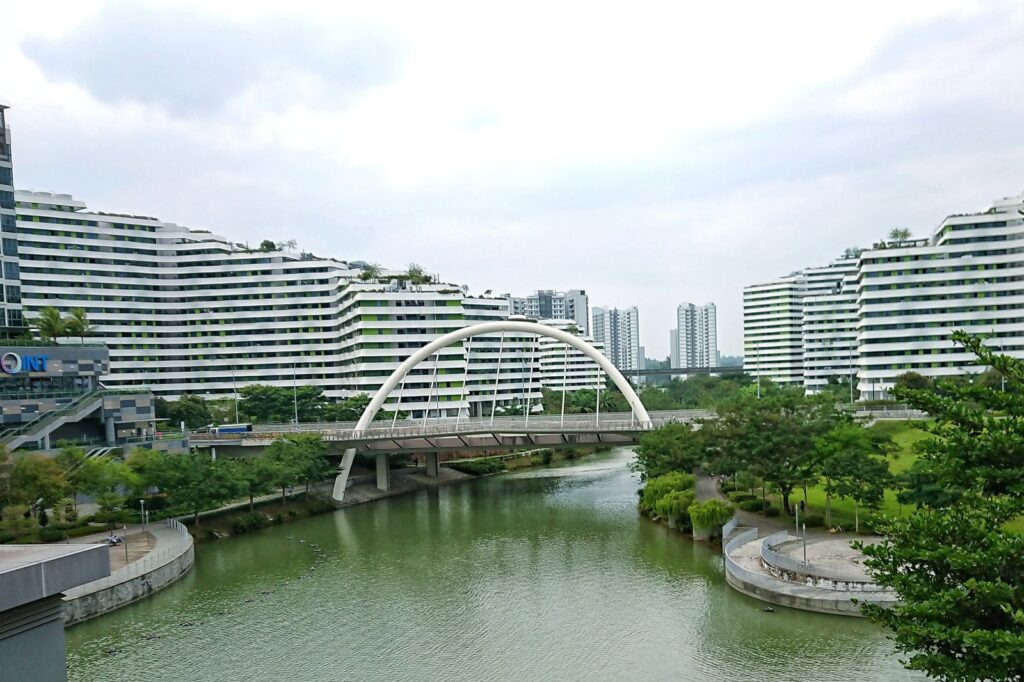
Punggol is a planning area and new town on the Tanjong Punggol peninsula in the North-East Region. Sengkang lies to its south, Seletar to the west and Pasir Ris to the east, with the Straits of Johor along the north and north-east. Coney Island falls within its boundaries.
The name, also spelled Ponggol, comes from a Malay term for knocking fruit down from trees with thrown sticks. Another theory ties it to “punggor”, a fallen tree trunk. Before the housing estates, it was a rural district, mostly Malay at first, with Chinese settlers arriving from the mid-19th century to work rubber plantations and later raise poultry, pigs and fish. The last pig farm closed in 1990.
Development as a residential town began in 1998 under Punggol 21, then stalled after the 1997 Asian financial crisis and the construction industry’s troubles in 2003. The 2007 Punggol 21 Plus plan brought the waterfront town concept and Punggol Waterway, Singapore’s largest man-made waterway. Today the town is split into seven subzones: Coney Island, Matilda, Northshore, Punggol Canal, Punggol Field, Punggol Town Centre and Waterway East.
Sources
- Malaysian accused of collecting scam proceeds from victim taken back to Punggol crime scene
- Punggol
- Motorists advised to avoid section of Punggol Way due to risk of flash floods
Photo: Deoma12 (CC BY-SA 4.0)