The sun had set over the Hudson River on a mild fall Tuesday when a former NYPD detective and a veteran Con Edison worker approached the George Washington Bridge in separate vehicles. Within minutes, what started as an ordinary evening commute devolved into a deadly confrontation on the world’s busiest motor vehicle bridge, leaving 46-year-old Koran Irvine dead from a single gunshot wound and former detective Victor Romero facing a second-degree murder charge.
A Span Built for Volume
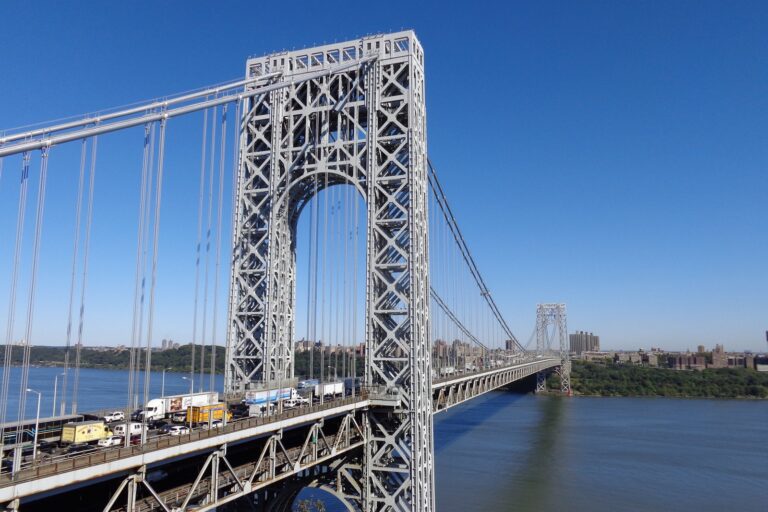
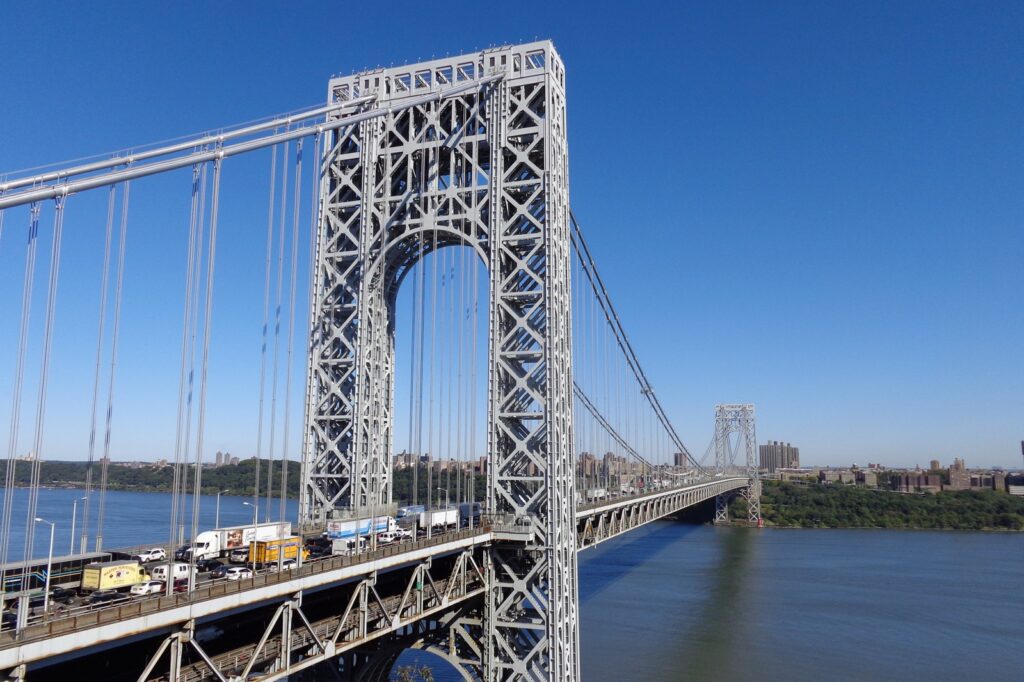
The George Washington Bridge carries more than 101 million motor vehicles a year across the Hudson River, connecting Fort Lee, New Jersey, with the Washington Heights neighborhood of Manhattan. It is the only suspension bridge in the world with 14 vehicular lanes, split across two decks: eight lanes on the upper level and six on the lower. The span stretches 4,760 feet in total, with a main span of 3,500 feet that held the world record for length from its opening in 1931 until the Golden Gate Bridge surpassed it in 1937.
Chief civil engineer Othmar Ammann designed the bridge alongside design engineer Allston Dana and assistant chief engineer Edward W. Stearns, with Cass Gilbert serving as consulting architect. Construction began in September 1927 and the bridge opened to traffic on October 25, 1931. The lower deck, part of the original plan but not built initially, opened in 1962 to handle rising demand. The Port Authority of New York and New Jersey owns and operates the crossing, which carries Interstate 95 and U.S. Routes 1 and 9.
Suicide Prevention on the World’s Busiest Bridge
The bridge’s massive traffic volume and pedestrian access on the upper level have long made it a site for suicide attempts. In recent years, the agency added climb-deterrent fencing on the upper-level paths and increased patrols by Port Authority police, who are trained in crisis intervention. The authority does not release annual attempt or fatality figures publicly, but officials have said the combination of physical barriers, signage, and rapid police response has saved lives.
Violent Crime on the Span
Shootings on the bridge itself are rare. The October 20 killing of Irvine appears to be the first fatal shooting on the span in recent memory. The bridge is blanketed by surveillance cameras monitored at the Port Authority’s Joint Operations Center, and police booths sit at both the New York and New Jersey approaches. Most criminal incidents on the crossing involve traffic disputes, toll evasion, or vehicles stopped for outstanding warrants. The Romero case, captured on bridge surveillance video from the near-collision through the shooting and the SUV’s high-speed departure, moved quickly from investigation to indictment because the entire sequence was recorded.
What the Numbers Mean for Commuters
A single lane closure during peak hours can back traffic up for miles on the Cross Bronx Expressway, the Trans-Manhattan Expressway, and the New Jersey Turnpike approaches. The bridge’s design — 14 lanes without shoulders on the lower deck — leaves no room for disabled vehicles or emergency response without blocking live traffic. When Irvine’s car stopped for about 40 seconds before veering across four lanes into the median, the resulting backup stretched deep into both states.
The bridge’s speed limit is 45 mph. The upper deck carries pedestrian and bicycle traffic on paths separated from the roadway by barriers. U.S. Route 46 terminates at the state line halfway across the span.
Sources
- He tried to merge on the George Washington Bridge. A minute later, he was fatally shot. | CNN
- George Washington Bridge
- The Post’s 225 icons: George Washington’s surprise attack was America’s greatest Christmas gift
Photo: Hudconja (CC BY-SA 3.0)