
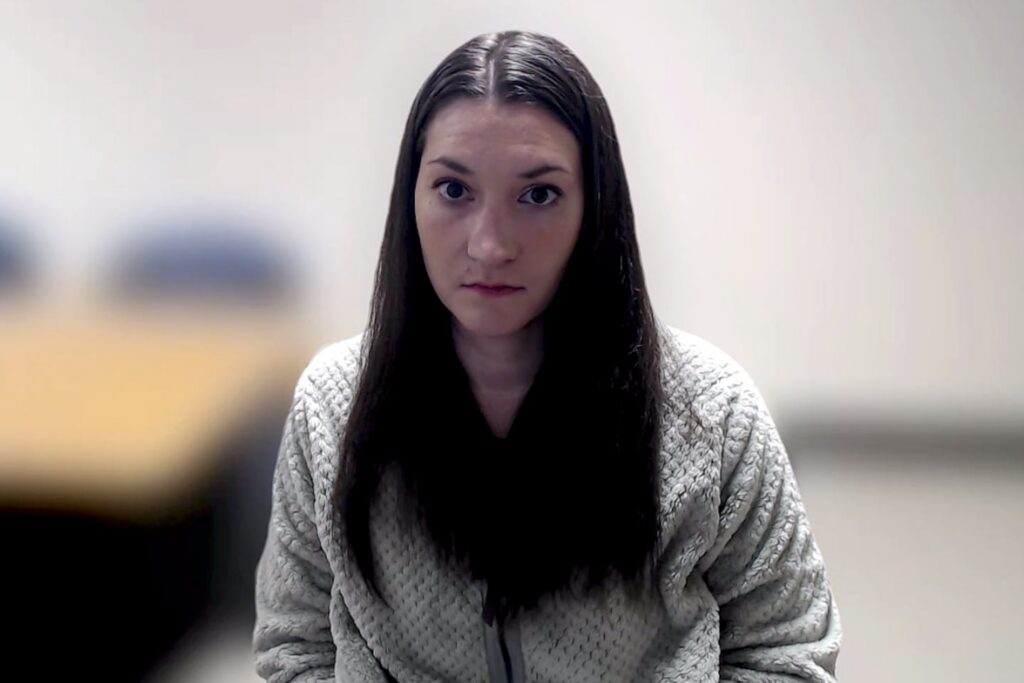
Eleven jurors concluded that Lindsay Clancy’s mental illness left her not criminally responsible for killing her three children. One juror voted for first-degree murder. Without a unanimous verdict, Judge William Sullivan declared a mistrial on Sept. 4, 2026.
That 11-1 split is now at the center of the legal argument. A hearing scheduled for Monday, Nov. 2, in Plymouth was expected to address whether Massachusetts prosecutors can try Clancy again, not to resolve her guilt.
Three charges remain pending
Clancy, 36, faces three first-degree murder charges. The children were strangled at the family’s Duxbury home on Jan. 24, 2023. Cora was 5, Dawson was 3, and Callan was 8 months old.
Clancy does not deny killing them. Her defense argues that postpartum psychosis and bipolar disorder prevented criminal responsibility. Prosecutors contend she acted intentionally, rationally and with planning.
The Plymouth County district attorney’s office had not announced whether it would pursue a second trial or, if so, whether it would retain the first-degree charges. Lesser charges or a plea agreement remained possibilities.
In a motion, prosecutor Jennifer Sprague asked the court to let the Commonwealth “continue to pursue justice for Cora, Dawson and Callan Clancy.” The filing says “double jeopardy does not operate to bar a retrial.”
The fight over the lone juror
The criminal trial began on July 20, 2026. After nearly seven weeks, the foreperson reported an impasse and said one member of the 12-person jury might be ignoring instructions on reasonable doubt.
Defense attorney Kevin Reddington wanted that juror questioned and potentially replaced. He now argues that Sullivan ended the trial unnecessarily and that another prosecution would violate the constitutional protection against double jeopardy.
Prosecutors say further questioning could have coerced the juror and interfered with deliberations. Their position is that a genuinely deadlocked jury created the manifest necessity required for a mistrial.
Sullivan has separately refused a defense request to investigate holdout juror Michael Péguy Desronvil. On Oct. 21, he called the proposed inquiry an “inappropriate” violation of jury privacy and said it was raised too late.
Reddington had sought cellphone records and the juror questionnaire. Desronvil says fellow jurors who spoke publicly misrepresented his position.
The judge also rejected a defense request for a not-guilty finding based on insufficient evidence. Juror names remain sealed, and trial exhibits are impounded.
A possible retrial schedule
Sullivan asked both sides to discuss possible timing during the November hearing. Reddington said he could not be ready for another trial until at least June 2027.
Keith Halpern, a criminal defense lawyer unconnected to the case, read the prosecution’s language as a clear signal: “I don’t think there was ever any question that they were gonna retry this case in one form or another.”
Mental-health law professor Heather Cucolo expects the judge to uphold the mistrial and move toward scheduling. She described the narrow issue as whether this was a routine deadlock or an improperly terminated trial.
Prosecutors also requested an order preventing attorneys from discussing the case publicly, citing a “carnival atmosphere” around the trial. The defense calls that proposed restraint “speculative” and “vague.”
A conviction could bring life imprisonment. A finding that Clancy lacks criminal responsibility would likely start proceedings to commit her to a psychiatric hospital.
The children and Clancy’s treatment
On the day of the killings, Patrick Clancy left home to collect food and medication at Lindsay’s request. He returned shortly after 6:00 p.m., found her injured outside and called 911 at 6:11 p.m.
Cora and Dawson were pronounced dead at Beth Israel Deaconess Hospital in Plymouth. Callan was transferred to Boston Children’s Hospital and removed from life support on Jan. 27 after being declared brain dead.
Clancy cut herself and jumped from a second-story window after the killings. She survived with paralysis and has remained at Tewksbury Hospital since 2023.
Her months of psychiatric treatment became central trial evidence. Prosecutors noted that clinicians did not report observing psychosis and emphasized that her account of a commanding voice concerned the day of the killings.
The defense described repeated treatment for insomnia, intrusive thoughts and suicidal ideation. At McLean Hospital in January 2023, psychiatrist Alia Goodheart diagnosed “major depressive disorder, severe, without psychotic features.”
Clancy and Patrick Clancy have each filed civil claims against former healthcare providers, alleging negligent or inadequate care contributed to the children’s deaths. Those allegations are also contested.
For the criminal case, the immediate procedural fact was unchanged before Monday’s hearing: all three first-degree murder charges remained pending.
Sources
- Killing of the Clancy children
- Lindsay Clancy is due in court Monday. The hearing may settle if she'll face new trial
- Lindsay Clancy will reappear in court – but will her case be retried?
- Lindsay Clancy returns to court as retrial remains unclear | CNN
- Lindsay Clancy murder case could take major turn as judge hears key motions Monday
- Lindsay Clancy has "horrible dreams," has been on suicide watch since allegedly killing her kids, attorneys say
Photo: Plymouth Superior Court (Public domain)