The Figure That Matters: 261,773
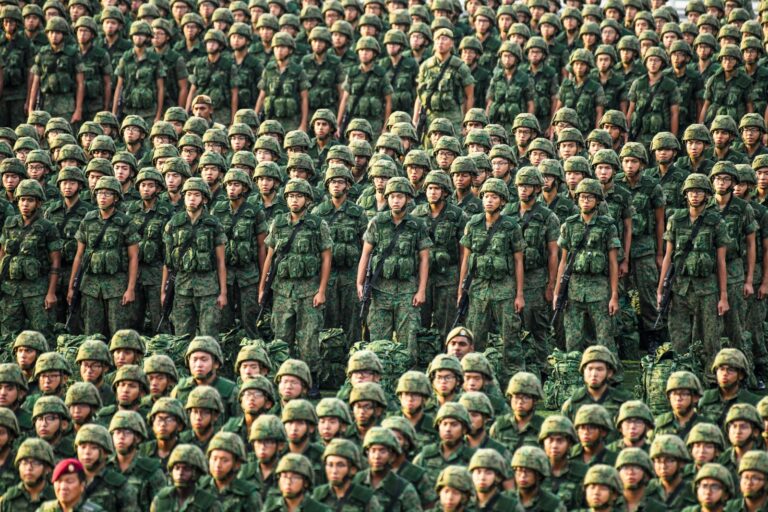
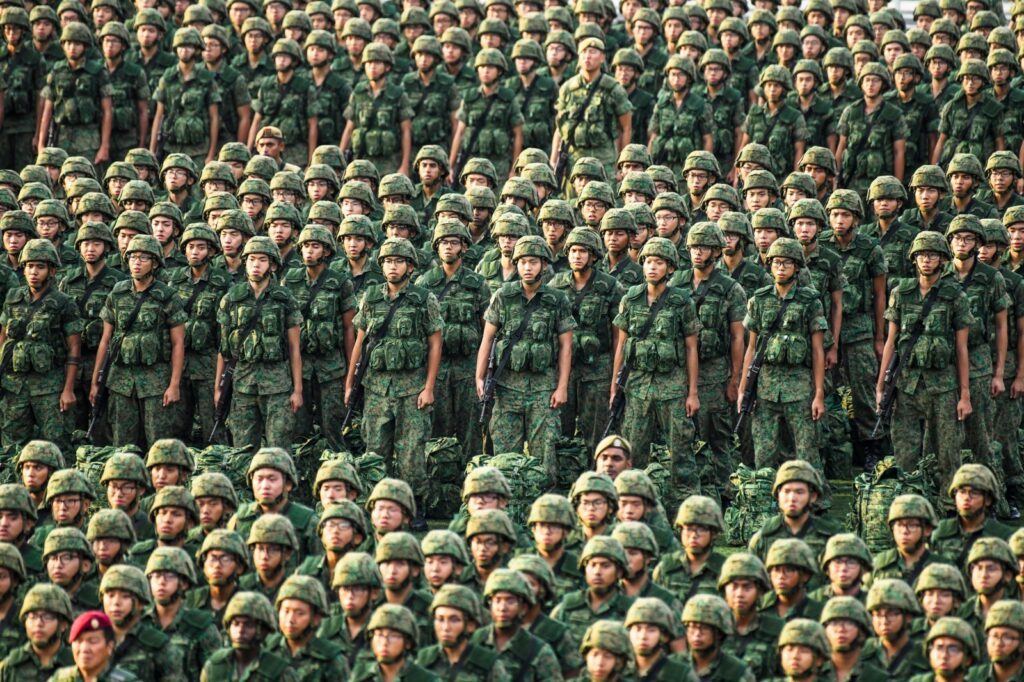
The Mexican Army fields 261,773 active-duty servicemembers as of 2024, the largest component of the country’s armed forces. That force answers to a single chain of command running from the Secretariat of National Defense, known as SEDENA, up to a secretary who reports directly to the president. The bottom line: when discipline fails inside that chain, there is no independent body standing between the soldier and the commander-in-chief.
The structure is the story. The Army is not a land force alone. It includes the Mexican Air Force, the Special Forces Body and the National Guard, and it runs state-owned military industrial and corporate business branches on the side. One institution carries conventional combat, internal security, disaster response and commercial operations at once, and every one of those roles reports through the same vertical line.
From the Calmecac to Counter-Narcotics
Military training in central Mexico is older than the Mexican state. In Aztec society, the Calmecac school gave the children of priests and nobility rigorous religious and military instruction, teaching doctrines, the interpretation of codices and calendar skills. Service was compulsory for all young males, nobles and commoners alike, from the age of 15, with conscripts organized through regional and clan groups into units of roughly 8,000 men.
The modern force’s external reference points run through the nineteenth century. The Mormon Battalion marched more than 2,000 miles from Council Bluffs, Iowa, to San Diego between 1846 and 1847 during the Mexican-American War, the longest infantry march in U.S. military history. The Alamo, under siege by the Mexican army for 13 days in 1836, is now a World Heritage Site and museum in San Antonio whose website states that political activities are prohibited there.
What changed in the last two decades is the mission. The Army’s defining role today is confronting drug cartels, and that work is where the institution’s failures surface fastest.
How a Cartel Raid Actually Unfolds
Last winter, soldiers descended on a cabin in Tapalpa, a tourist town south of Guadalajara, where Nemesio Oseguera Cervantes was spending a Sunday. Oseguera, known as El Mencho, led the Cártel de Jalisco Nueva Generación. The U.S. government had offered $15 million for information leading to his arrest, and the U.S. District Court for the District of Columbia had indicted him several times since 2017 on firearms and drug trafficking offenses, including a kingpin charge.
According to the Mexican Defense Ministry, a firefight broke out at the cabin. Oseguera was chased on foot into nearby woods, where more gunfire was exchanged, and he died hours later while being flown by helicopter to a hospital. He was not arrested. The operation ended with the cartel leader dead and a state-wide emergency beginning.
The cartel’s answer was immediate. It set convenience stores and other businesses in Jalisco on fire and blocked roads and highways with burning vehicles in at least twenty states. Airlines suspended flights to and from Guadalajara and Puerto Vallarta, where tourists heard gunshots and saw smoke rising from the streets. Sporting and entertainment events in Jalisco were suspended, and nine other states canceled classes the following day to keep people at home. By nightfall, twenty-five members of the militarized national guard had been killed in firefights with alleged cartel members.
At a press conference that Monday, President Claudia Sheinbaum’s defense secretary, Ricardo Trevilla Trejo, described how military intelligence had tracked a girlfriend of Oseguera to Tapalpa. Trevilla’s voice cracked as he spoke about the service members killed in the operation. “It can be viewed from many perspectives, but it is clear that they fulfilled their mission,” he said.
The Accountability Gap
Investors will note what the raid’s aftermath did not produce: any public accounting of how a cartel leader spent a Sunday in a gated community in his own organization’s home state, or of how many civilians and guardsmen paid for the operation. The Defense Ministry’s account covers the firefight and the death. It does not cover the failures that let El Mencho sit in Tapalpa in the first place.
That is the pattern the barracks revelations expose. Authority is concentrated at the top of SEDENA and flows downward through the Air Force, the Special Forces Body and the National Guard. The same secretary who briefs the president on a successful raid is the official to whom every abuse complaint inside the force ultimately runs. A soldier who reports mistreatment in his unit is reporting up the chain that employed the person he is reporting.
By the numbers, the scale is hard to audit. A force of 261,773 is larger than the combined uniformed personnel of most Latin American armies, and it is deployed across combat, policing and disaster work. In Los Cabos this week, following flooding from the remnants of Tropical Storm Vance, the Army deployed alongside the National Guard, the Navy, municipal police and firefighters to pull motorists from flooded vehicles and clear blocked roads. The same institution that hunts cartel kingpins is the one residents call when an arroyo swallows their car.
That breadth is the institutional culture problem in miniature. A military built for external defense acquired domestic policing duties, commercial branches and emergency response without acquiring an outside inspectorate to match. The legal gaps follow from the structure: the secretary answers to the president, and the president answers to voters, which means accountability arrives, if at all, through politics rather than through an independent military justice process.
What It Means Now
For ordinary Mexicans, the practical question is whether the force that killed El Mencho can police itself. The Tapalpa operation showed the Army can find a man with a $15 million U.S. bounty on his head and a 30 million peso Mexican reward. It also showed what happens when it does: twenty-five national guard members dead, fires in at least twenty states, flights suspended and schools closed in nine states.
Public trust turns on the same arithmetic. A force of 261,773 servicemembers operating under a secretary directly answerable to the president has no independent body to hear a barracks complaint, no external check on how discipline is enforced, and no published accounting of what a raid costs in lives beyond the target’s. The revelations of abuse inside the barracks did not create those gaps. They made them visible.
The figure that matters is not the bounty or the body count. It is 261,773, the number of people inside a chain of command with one exit at the top.
Sources
- Mexican Army
- Bridges and Bullets | Ricardo López Cordero
- New initiative honors Mexican-American War veterans interred in Lehi – Lehi Free Press
- Ken Paxton campaign in chaos: Insiders call election day his 'funeral'
- Ken Paxton campaign no longer has Alamo event scheduled
- Vance Remnants Flood Los Cabos, Sweep Cars Into Sea
Photo: Bao Menglong / Unsplash (Unsplash License)