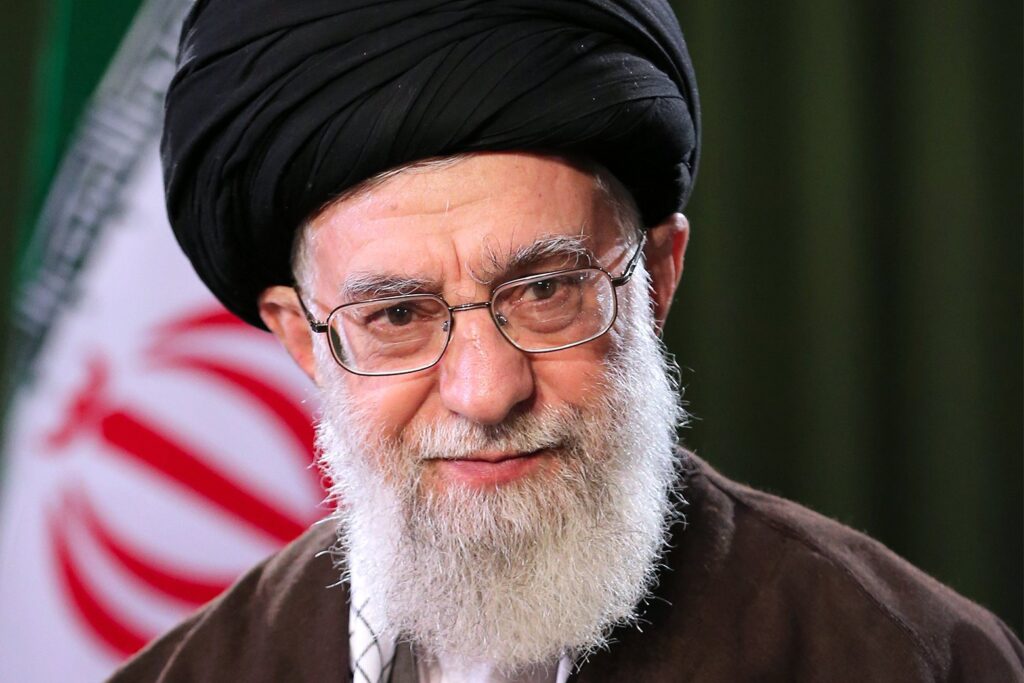
Ali Khamenei was killed on 28 February 2026 in an attack by Israel and the United States. He had led Iran for 36 years, longer than any supreme leader before him.
His state funeral ran from 3 to 9 July and drew millions of people. Ceremonies took place in Tehran and Qom, with separate events in Iraq, before he was buried at the Imam Reza shrine in Mashhad. On 8 March the Assembly of Experts had already chosen his son Mojtaba as successor.
A poor childhood in Mashhad
The story begins in Mashhad, where Khamenei was born on 19 April 1939, the sixth of eight children. His father, Javad, was a cleric. Khamenei later described a childhood of poverty. His mother sewed his clothes from his father’s old garments, and the family sometimes had little to eat beyond raisins or milk bought with small sums from relatives.
He studied at the seminary in Mashhad, then settled in Qom in 1958 and attended the classes of Ruhollah Khomeini. Politics pulled him harder than scholarship. He joined the opposition to Shah Mohammad Reza Pahlavi, and by his official website’s count the Shah’s intelligence agency, SAVAK, arrested him six times between 1963 and 1976. In 1976 he was exiled for three years.
Revolution, a bomb and the presidency
After the 1979 revolution he held a string of government posts. On 27 June 1981 he went to the Aboozar Mosque to lecture worshippers. A young man posing as a journalist set a tape recorder on the desk in front of him. About a minute later it exploded. Khamenei’s arm, vocal cords and lungs were badly hurt, his treatment took months, and he never regained use of his right arm.
That October he won the presidency with 97 percent of the vote, the first cleric to hold the office. He was re-elected in 1985 with 87 percent. During the war with Iraq he built close ties to the Islamic Revolutionary Guard Corps.
Supreme Leader
When Khomeini died in 1989, the Assembly of Experts elected Khamenei to succeed him. He voiced doubts about his own standing. A mid-ranking cleric, he lacked the rank of marja’ the constitution required, so the constitution was amended to drop that requirement.
In office he favored privatizing state industries and used Iran’s oil and gas to turn the country into what he called an “energy superpower”. He built up the Guards as a tool of domestic control and regional reach. Iran backed the Axis of Resistance coalition in Syria, Iraq, Yemen and Gaza, and fought proxy wars with Israel and Saudi Arabia. Khamenei was a staunch critic of Israel, and his rhetoric included calls for its destruction.
On nuclear policy, he supported the program for civilian use and issued a fatwa against weapons of mass destruction. In 2015 he endorsed the nuclear deal. It unraveled after the United States withdrew in 2018. By 2025 and 2026, tensions with Israel and the United States had escalated into the Twelve-Day War and then a larger conflict, in which he was killed.
Critics called him an authoritarian responsible for repression and state violence. People were jailed or flogged for insulting the supreme leader. Iran’s economy went through stretches of stagnation and decline while large sums went to the nuclear program, and major protests broke out in 1999, 2009, 2017-2018, 2018-2019, 2022-2023 and 2025-2026.