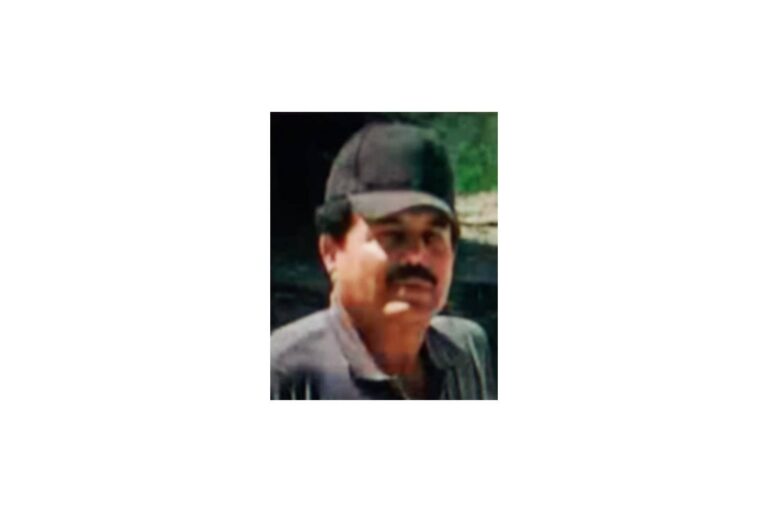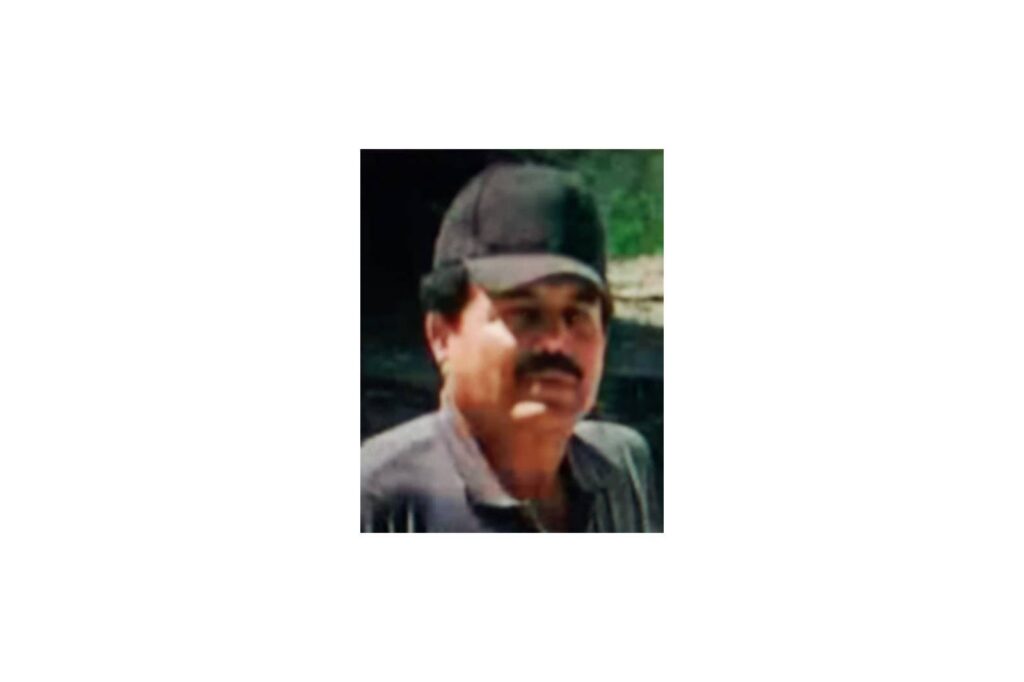
Mexican special forces captured Fausto Isidro Meza Flores, a top fentanyl trafficker and ally of the Zambada faction, in a weekend raid that triggered Black Hawk helicopter strikes and burning roadblocks across Sinaloa. The violence underscored how deeply the cartel has fractured since Ismael “El Mayo” Zambada García was seized in July 2024, ending a half-century run in which the co-founder of the Sinaloa Cartel never spent a night in custody.
Logistics First, Leadership Later
Born 31 January 1950, Zambada García cut his teeth not as a gunman but as the logistical coordinator for the Zambada García faction. Before the Sinaloa Cartel existed, he oversaw a supply chain that moved cocaine and heroin into Chicago and other U.S. cities by aircraft, narco-submarines, container ships, go-fast boats, fishing vessels, buses, rail cars, tractor trailers and automobiles, according to court records compiled in S1. When Miguel Ángel Félix Gallardo was arrested in 1989, his Guadalajara Cartel split. The Sinaloa Cartel emerged under lieutenants including Zambada García, Héctor Luis Palma Salazar, Adrián Gómez González, Ignacio Coronel Villarreal and Joaquín “El Chapo” Guzmán Loera.
From the start, Zambada García worked closely with the Juárez Cartel and the Carrillo Fuentes family while keeping independent ties to Colombian cocaine suppliers, the records show. By 1998, Mexico’s attorney general had placed bounties totaling $2.8 million on him and five other Juárez Cartel leaders. He was 48 and already a ghost in the system.
Mountains, Bribes and a Clean Record
For the next 26 years, Zambada García operated primarily in Sinaloa and Durango, with influence stretching along the Pacific coast into Quintana Roo, Sonora and Nuevo León. He avoided cities, preferring mountain strongholds where residents describe a shadow governance built on payroll rather than fear. Federal prosecutors in New York later accused him of overseeing an organization that paid millions in bribes “at all levels of the Mexican government” to protect operations, according to S4.
The bribe budget alone ran as high as $1 million a month, his son Vicente Zambada Niebla testified during El Chapo’s 2019 trial. Payoffs reached state prosecutors, public security secretaries and municipal presidents across party lines. In a 2011 arrest file cited by journalist Anabel Hernández in S2, Felipe Cabrera Sarabia — a future Zambada ally — boasted he controlled security officials in Durango and offered $400,000 to the state prosecutor’s office and $365,000 to the Public Security Secretariat for his release.
Until 25 July 2024, Zambada García had never been arrested or incarcerated, a fact repeated across every docket and profile in S1. The FBI had offered $5 million for him since 2007. In 2011, rumors spread he had undergone plastic surgery to move freely. He headed the cartel in partnership with El Chapo until 2016, when Guzmán’s capture left Zambada García in sole command of what U.S. officials called Mexico’s most enduring and powerful drug lord.
Innovation in Motion
While rivals relied on established corridors, Zambada García treated trafficking as a logistics problem to be engineered. His faction received multi-ton cocaine shipments mostly by sea from Colombia, then dispersed them through a rotating menu of methods: airplanes, trucks, cars, boats, tunnels, even rail cars. Distribution cells fanned out to Arizona, Atlanta, California, Illinois and New York. The narco-submarines and go-fast boats that became cartel hallmarks were Zambada García signatures long before they were common currency.
By the time fentanyl replaced heroin as the high-margin product, the infrastructure was already built. The Meza-Flores group, which later allied with Zambada’s faction, spent two decades flooding the U.S. with fentanyl, cocaine and heroin via the Mexican border, according to the FBI profile in S3. In late 2024, more than a ton of fentanyl was seized in Guasave — the largest such seizure in Mexican history.
The Flight and the Fracture
On 25 July 2024, Zambada García boarded a private plane in Mexico. It landed in New Mexico, where U.S. authorities were waiting. The circumstances — whether he was betrayed by Joaquín Guzmán López, a son of El Chapo, or lured under false pretenses — remain the subject of a Netflix documentary series and dueling government narratives, according to S4. The capture fractured the Sinaloa Cartel instantly.
By nightfall, a civil war had erupted between La Mayiza — loyal to Zambada García — and Los Chapitos, the four sons of El Chapo. The fighting has since scorched Sinaloa and Durango. Drone strikes hit communities in Durango in October 2024, January 2025 and May 2026, with leaflets accusing Governor Esteban Villegas of protecting the Cabrera Sarabia family, Hernández reported in S2. Los Chapitos allegedly stopped paying gunmen and plaza bosses, prompting defections to the Zambada camp.
Guilty Plea, Life Sentence, $15 Billion
On 25 August 2025, Zambada García pled guilty in a Brooklyn federal court to racketeering conspiracy and running a continuing criminal enterprise. He was sentenced to life imprisonment on 20 July 2026 and agreed to forfeit $15 billion in assets, according to S1 and S4. Attorney General Pam Bondi said he would “spend the rest of his life behind bars.” Mexican President Claudia Sheinbaum celebrated the plea but demanded the Trump administration share recovered assets with Mexico’s poorest and sought to question Zambada García about his bribery claims.
Mexico’s Secretary of Security Omar García Harfuch stated the Sinaloa Cartel is heavily damaged but not extinct after the guilty plea, S4 reports. Zambada García apologized in court for the damage caused by the organization. His lawyer, Frank Perez, said the 76-year-old “doesn’t want to go to trial and is willing to accept responsibility for a charge that doesn’t carry out the death penalty.” He remains in U.S. custody with daily legal visits.
Sons in the Mountains
As of mid-2026, Zambada García’s sons Ismael Zambada Imperial (“El Mayito Gordo”) and Ismael Zambada Sicairos (“El Mayito Flaco”) are reportedly operating in the mountains of Durango to defend their father’s empire against Los Chapitos, according to S2. Journalist Anabel Hernández, citing U.S. intelligence sources, reported that El Mayito Gordo escaped U.S. supervised release — due to run through 2027 — to join the offensive. Serafín Zambada Ortiz (“El Sera”) has reportedly joined them.
El Mayito Flaco, born in California in 1982, took charge of the faction after the 2024 capture. Hernández identifies him as responsible for logistics, finances, money laundering and drug trafficking. He fled Sinaloa first to Baja California, then to Durango under the protection of the Cabrera Sarabia family. The Zambada faction has allied with the Cabrera Sarabia clan, the Arzate brothers and Juan José Ponce Félix (“El Ruso”) in the ongoing conflict. Hernández reported that since El Mayito Gordo’s arrival, the balance had begun to shift in favor of La Mayiza.
The older brother, Vicente Zambada Niebla (“El Vicentillo”), remains a protected witness in Miami. Hernández raised the question of whether he knows about the project to rebuild the empire — and whether orders still come from El Mayo in his U.S. cell.
Sources
- El Mayo
- “El Mayito Gordo” Returns to Mexico to Take on Los Chapitos
- Mexican military unleashes Black Hawk helicopters after drug lord captured
- El mayo zambada news & latest pictures from latintimes.com
Photo: www.state.gov (Public domain (government work))