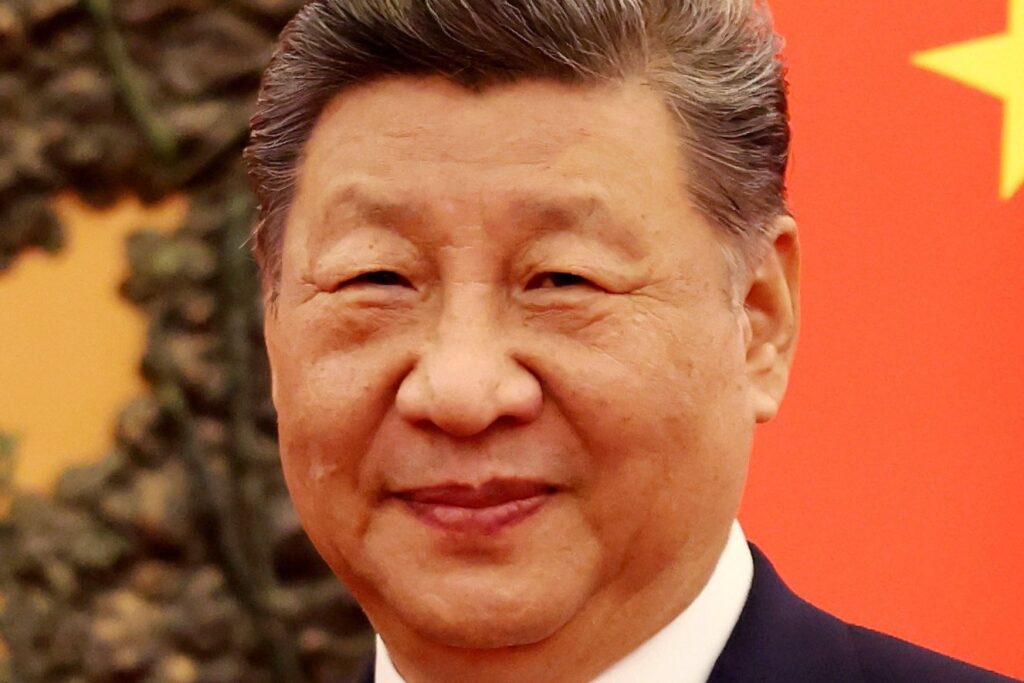
Xi Jinping spent seven years in a cave house. He was 15 when he got to Liangjiahe, a village in Yan’an, Shaanxi, in 1968, one of the poorest places in China at the time. His father, the revolutionary Xi Zhongxun, had been in prison that year.
Today Xi is China’s paramount leader.
A princeling’s fall
Xi was born in Beijing on June 15, 1953, the third child of Xi Zhongxun and his second wife, Qi Xin. His father held posts including vice premier. In 1963, when Xi was ten, the elder Xi was purged and sent to work in a factory in Luoyang. Once the Cultural Revolution began in 1966, student militants ransacked the family home, and his mother was made to denounce his father in public.
Xi could not take village life at first. After a few months he ran back to Beijing, was arrested in a crackdown on deserters and sent to a work camp to dig ditches. His aunt and uncle persuaded him to return. He lived in the yaodong, joined the party only after earlier attempts failed, and became the village party branch chairman. In 1975 he put Tsinghua University as all three of his choices and studied chemical engineering there until 1979.
Climbing the provinces
After graduating he worked for Geng Biao, the Central Military Commission’s secretary-general. In 1982 he went to Zhengding County in Hebei as deputy party secretary. He and a colleague wrote to the central government about heavy requisitions on farmers and got the annual amount cut by 14 million kilograms. Later, as county secretary, he secured 3.5 million yuan to build Rongguo Mansion, a filming base for “Dream of the Red Chamber.” The county’s tourism revenue that year reached 17.61 million yuan.
He moved to Xiamen as vice mayor in June 1985 and drafted the city’s first development strategy. He married Peng Liyuan there. In 1988 he became party secretary in Ningde, a region poorer than Fuzhou or Xiamen, and later wrote a book on his work there, Getting out of Poverty. He ran Fuzhou’s party committee from 1990, became Fujian’s governor, serving from 1999 to 2002, then moved to Zhejiang in 2002 as governor and party secretary until 2007.
In 2007 he briefly replaced the disgraced Shanghai party secretary Chen Liangyu and joined the Politburo Standing Committee. He became vice president in 2008 and vice chairman of the Central Military Commission in 2010.
In power
Xi succeeded Hu Jintao as party leader in 2012 and became president in 2013. He is the first paramount leader born after the People’s Republic was founded.
His rule has included a sweeping anti-corruption campaign, a restructuring of the People’s Liberation Army, and the Made in China 2025 policy, aimed at higher-value manufacturing and less reliance on foreign technology. Regulators cracked down on private business in real estate, technology and for-profit tutoring. Censorship and mass surveillance expanded. China imposed zero-COVID rules for two years and lifted them after widespread protests.
Abroad, he pushed the Belt and Road Initiative and took a firmer line in the South China Sea and on the Indian border. He met Taiwan’s president Ma Ying-jeou in 2015, the first cross-strait leaders’ meeting since the civil war. He oversaw the 2020 Hong Kong national security law. In 2018 he amended the constitution to remove presidential term limits, and in 2023 he became the first Chinese president to serve more than two terms.