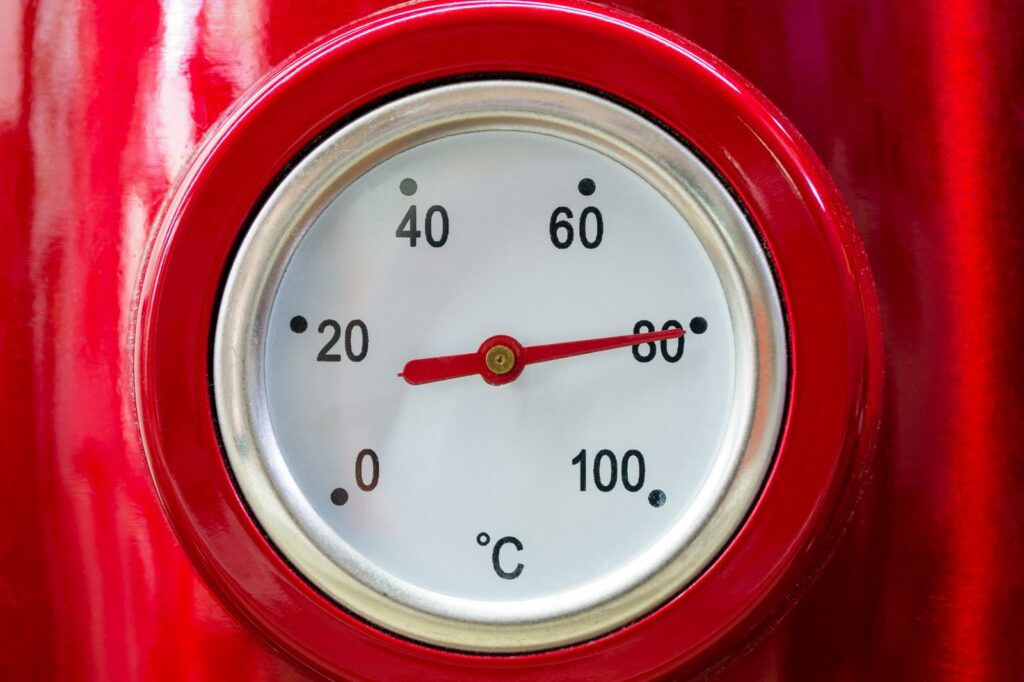
Picture a parked car on a mild afternoon. The air outside is 21 degrees Celsius, about 70 Fahrenheit. Inside a car sitting in direct sun, the temperature can quickly top 49 degrees, or 120 Fahrenheit. Now picture a small child strapped into the back.
Why it happens so fast
Heat stroke is a severe heat illness: body temperature above 40 degrees Celsius (104 Fahrenheit), with red skin, headache, dizziness and confusion. The classic, non-exertional kind usually brings no sweating at all, so the body loses its main way to cool. Small children are especially exposed. They have more body surface relative to their mass, so they absorb more heat from the environment. Their temperature control is underdeveloped, they sweat less, and they carry less blood for their size, which limits how much heat they can shed by sending blood to the skin.
Young children and older adults are at particular risk in vehicles. Heat stroke can set in within minutes, even with a window cracked. They may be unable to open the door or call out, so no one nearby notices. In 2018, 51 children in the United States died in hot cars, more than the previous high of 49 in 2010. Dogs fare worse, because they cannot sweat across the whole body.
What heat stroke does
Early signs include confusion, delirium, dizziness, weakness, agitation, slurred speech, nausea and vomiting. Without treatment, organs are damaged and fail, and complications can include seizures, rhabdomyolysis and kidney failure. In the United States, heat stroke kills more than 600 people a year, and rates rose between 1995 and 2015. Between 21 and 65 percent of people hospitalized with the classic form die. The exercise-induced kind is deadly in fewer than 5 percent of cases.
Treatment is rapid cooling plus supportive care. The person should be moved somewhere cool, with clothes off. Ice-water immersion is the gold standard, or cool water spray with a fan, or cold intravenous fluids. Ice packs help but alone are not the fastest route.
A college hockey player and the clock
The cost of delay is clear in the case of Matthew Mayich, a 21-year-old from Ontario, Canada, who collapsed during an outdoor workout on August 20 with Arizona State University’s hockey team. More than two months later he remained on life support and was not expected to recover. He had been in Arizona only about a week. An Army special forces veteran led the session while an extreme heat warning was in effect, and players say Mayich and many others got no water break in more than an hour of work. In a September letter, seven anonymous teammates wrote that there was “no immersion tub, no ice chest, no ice for cooling, no fan, and no stretcher.”
Douglas Casa, CEO of the Korey Stringer Institute at the University of Connecticut, says the deaths almost always come in the first week of practice, when athletes have not become heat acclimatized, a process that takes seven to 10 days. He puts fatal cases at about three to four a year in high school and a similar number in college, with many more survivors left with liver trouble, dialysis, kidney transplants, cognitive and cardiac problems, or heat intolerance. The institute’s research shows heat stroke can be almost 100 percent survivable when athletes are plunged into icy water. “You can’t lose those valuable minutes,” Casa said.
ASU’s police are investigating, and the university has retained former Arizona Supreme Court Chief Justice Scott Bales to review the facts. Mayich family attorney Robert Carey says a policy review will not reach the root of the problem, and that the family will decide on a lawsuit after both findings. Universities usually lose such cases, Casa says; he has testified in more than 80. The University of the Cumberlands paid more than $14 million over a wrestler’s 2020 death, and California State University San Bernardino paid $39 million to a student left permanently disabled. In his telling, it comes down to “a $150 tub and ice and water.”
Sources
- Heat stroke
- In athlete heatstroke lawsuits, universities never win, expert says
- Dog’s death, director’s resignation spark questions about Marion County Animal Services
Photo: Daniela Paola Alchapar / Unsplash (Unsplash License)