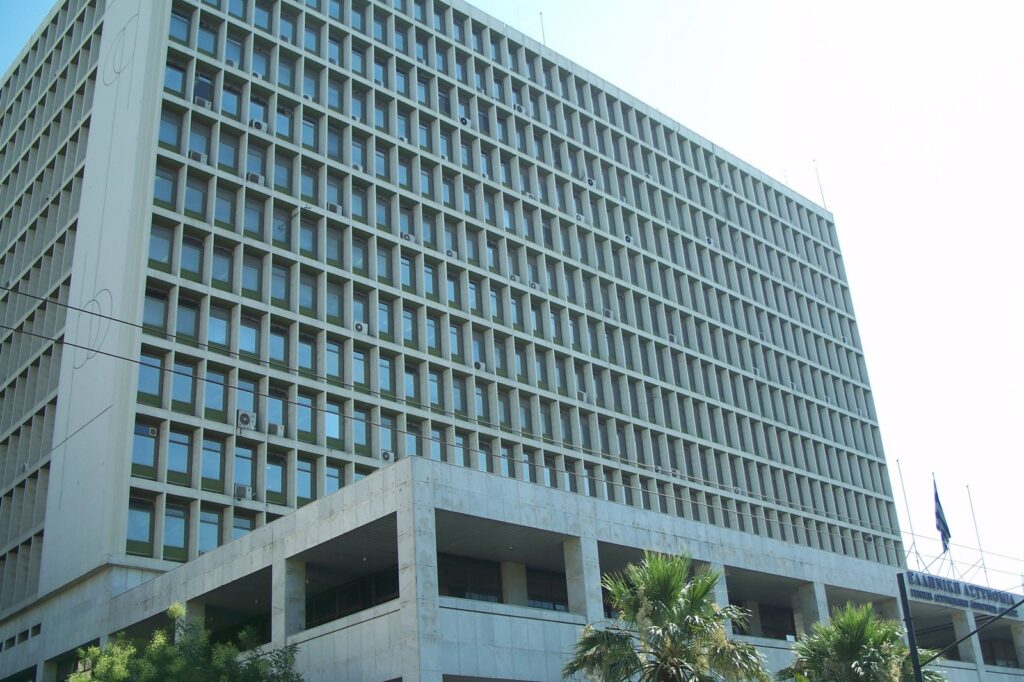
Greek authorities arrested Angelos Giannakopoulos, the owner of the “Choriatiko” bakery chain, on October 25, 2026, after police received a tip that he intended to flee to Albania, the National Herald reported.
The Arrest and Immediate Context
The operation was carried out by the Directorate for Combating Organized Crime, widely known in Greece as the “FBI,” as part of a months‑long probe that began in January 2026, according to the same source. Giannakopoulos had been staying in Dubai for several weeks, a fact that repeatedly delayed the raid. When he returned to Athens, police learned he planned another departure, this time across the border to Albania, prompting officers to bring forward the arrest that had originally been scheduled for the following Monday.
A second suspect, an accountant believed to have played a key role in the financial scheme, was also taken into custody. Police indicated that the original plan envisioned roughly 50 arrests, and further operations have not been ruled out, the National Herald added.
The Corporate Web: 200 Companies and Straw Men
Investigators are scrutinising an alleged network of about 200 companies that were used to channel transactions and to conceal the true owners of the enterprises. Sources say that many of these entities were registered under nominees, commonly referred to as “straw men,” whose names appeared on official documents while the real control remained with Giannakopoulos and his inner circle.
The “Choriatiko” brand, which operates dozens of outlets across Attica and other regions such as Volos, includes both company‑owned stores and franchised locations. However, the probe extends far beyond the bakery chain. Police reports indicate that Giannakopoulos also owns nightclubs and a suite of businesses along the Athens Riviera, all of which were allegedly folded into the same opaque corporate structure.
According to tovima.com, the scheme involved fictitious transactions designed to evade taxes and to generate artificial debts to the state’s social security agency, EFKA. By moving money through the labyrinth of shell firms, the perpetrators could hide revenue, under‑report VAT, and avoid paying the mandatory social security contributions that businesses owe for their employees.
The Scale of the Fraud: €100 Million to EFKA
The financial impact on the Greek state is staggering. The losses to EFKA are reported to be approaching €100 million, a figure that places the case among the most serious tax‑evasion scandals in recent Greek history, the National Herald noted.
Charges filed against Giannakopoulos include forming a criminal organization, fraud against the state, tax evasion, and failure to pay both VAT and social security contributions. The breadth of the allegations reflects the depth of the alleged deception: by exploiting the shell‑company network, the accused allegedly built up substantial unpaid liabilities that the state now seeks to recover.
While the exact mechanisms of the fraud remain under investigation, the authorities’ focus on the 200‑company web suggests a systematic approach to siphoning revenue. Each shell could issue invoices for services never rendered, inflate expenses, or simply serve as a conduit for moving cash away from the tax net, thereby inflating the apparent profit margins of the visible businesses while leaving the hidden entities to shoulder the unpaid obligations.
A History of Criminal Enterprise
Giannakopoulos is not a newcomer to the Greek judicial system. In 2010 he was arrested as part of a broader investigation into a human‑trafficking ring, according to the National Herald. Five years later, in April 2015, a first‑instance court convicted him of offenses related to a criminal organization and human trafficking, a ruling he later appealed while remaining under restrictive conditions.
Media reports from that period describe a network that recruited women, primarily from Eastern Europe, and forced them to work in nightclubs. The same investigations uncovered a parallel flow of illicit proceeds into legitimate businesses, a pattern that appears to have been replicated in the recent fraud case.
Further, his name resurfaced in 2025 during an inquiry into an extortion ring that allegedly demanded large sums of money from him, suggesting that he has long been a focal point for organized‑crime investigations. The 2015 conviction carried a suspended sentence of ten years and six months, coupled with a travel ban and a requirement to report regularly to police, conditions that were still in force when the October 2026 arrest took place.
What Lies Ahead: Ongoing Investigations and Legal Outlook
The immediate aftermath of the raid points to a broader sweep. Police have indicated that the original plan targeted about 50 individuals, and that additional arrests are expected in the coming days. The involvement of an accountant as a co‑arrested suspect underscores the financial sophistication of the operation and suggests that forensic accounting teams will play a central role in untangling the web of transactions.
Legal experts anticipate that the charges of forming a criminal organization and fraud against the state will carry severe penalties under Greek law, especially given the scale of the alleged €100 million loss to EFKA. The case also raises questions about the effectiveness of regulatory oversight in Greece’s vibrant small‑business sector, where rapid expansion of franchises and hospitality venues can sometimes outpace the capacity of tax authorities to monitor compliance.
Beyond the courtroom, the scandal may prompt a reassessment of how Greece monitors corporate ownership structures. The use of “straw men” to mask true beneficiaries has been a recurring theme in European financial crime investigations, and the current probe could catalyse legislative reforms aimed at increasing transparency in company registries.
For now, Giannakopoulos remains in custody, pending further judicial proceedings. As the investigation unfolds, the eyes of both Greek and international observers will be on how the authorities dismantle the alleged network and recover the funds owed to the state, a process that could set a precedent for tackling similarly complex fraud schemes across the continent.
Sources
- Owner of “Choriatiko” Bakery Chain Arrested in Multimillion-Euro Fraud Case
- Owner of “Choriatiko” Bakery Chain Arrested in Multimillion-Euro Fraud Case
- Owner Of “Choriatiko” Bakery Chain Arrested In Tax Fraud Probe – tovima.com
Photo: Badseed (CC BY-SA 3.0)