
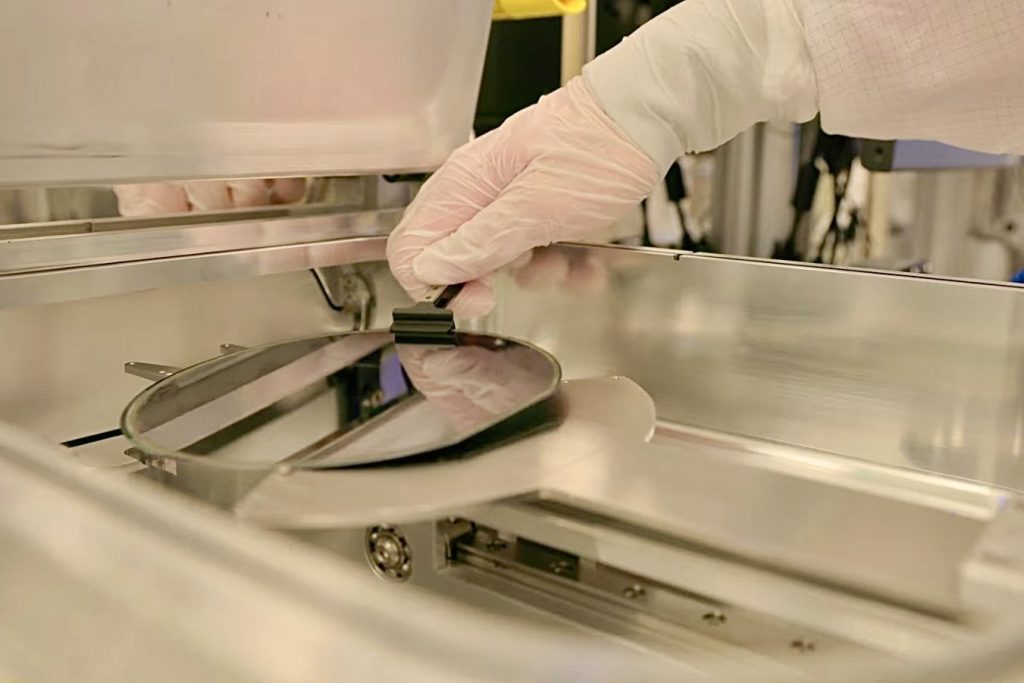
Singapore’s electronics exports jumped 43.1 percent in June 2024 compared with the same month a year earlier, marking the strongest growth in months, according to official data released Wednesday. The surge is being driven by worldwide demand for artificial intelligence chips and related components, including semiconductors, integrated circuits, and disk drives used in AI servers and data centers. The city-state has long served as a major hub for semiconductor manufacturing and testing, hosting facilities operated by Micron Technology, GlobalFoundries, and STMicroelectronics, among others.
The AI boom, led by US-based firms such as Nvidia, AMD, and Intel, has accelerated demand for high-bandwidth memory and advanced logic chips, feeding directly into Singapore’s export pipeline. For a small, trade-dependent economy with no natural resources, the concentration of semiconductor fabrication and testing capacity means the island is directly exposed to shifts in AI chip demand.
Broad Trade Figures Reflect AI-Driven Growth
The electronics surge contributed significantly to the overall 20.7 percent rise in Singapore’s non-oil domestic exports (NODX) for June. That headline figure, however, missed the 22.1 percent forecast recorded in a Reuters poll of economists. Non-electronics exports grew 14.8 percent, with pharmaceuticals and machinery also benefiting from AI-related capital spending, officials noted.
The data shows a clear pattern: global investment in AI infrastructure is pulling Singapore’s manufacturing and trade sectors along with it. The country’s economy, built on trade after independence in 1965 and a lack of natural resources, grew rapidly to become one of the Four Asian Tigers.
Today, Singapore is a global hub for finance, aviation, and maritime shipping, and it maintains a high sovereign credit rating while ranking highly in infrastructure and education. Because the economy relies on trade, it remains sensitive to global shifts in technology and industrial demand. The June numbers illustrate how quickly electronics trade can accelerate when global tech spending aligns with production capacity—and how dependent those gains are on a handful of major chip buyers.
Historical Trade Hub at a Crossroads
Singapore’s modern era began as a British trading post in the early 19th century, later becoming a Crown colony before gaining self-governance. After a brief period as part of the federation of Malaysia, the country became an independent sovereign state in 1965. Its transformation from a trading post to a high-tech manufacturing and logistics center reflects a deliberate strategy to attract foreign investment in advanced industries.
The island nation consists of a main island and numerous smaller islands and islets near the equator. Despite its small size and lack of natural resources, Singapore has built a resilient, export-oriented economy.
The current AI-driven demand for advanced chips and high-bandwidth memory components directly supports the country’s semiconductor ecosystem, which includes testing and assembly operations from global firms. Companies like Micron and GlobalFoundries have not announced new capacity expansions in Singapore tied specifically to the June surge, but the sustained demand for AI components suggests the manufacturing hub will remain a critical node in the global chip supply chain.
Lessons for Central Asia and the Path Ahead
For markets in Central Asia, the Singapore numbers offer a useful benchmark. Kazakhstan and Uzbekistan are both seeking to attract semiconductor assembly and testing investment as part of broader industrial diversification strategies. The Singapore data shows just how quickly electronics trade can accelerate when global tech spending aligns—and how dependent those gains are on a handful of major buyers.
The June export figure also raises questions about sustainability. What to watch next: whether the 43.1 percent growth rate can be maintained through the second half of 2024, and whether other Southeast Asian electronics exporters post similar gains.
As the AI-driven investment cycle continues to reshape global supply chains, Singapore’s position as a manufacturing and testing hub will be closely monitored. The country’s high sovereign credit rating and strong infrastructure provide a foundation for continued growth, but the trade-dependent nature of its economy means that any shift in AI chip demand could quickly ripple through its export numbers. For now, the data points to a clear link between US-led AI innovation and the output of Singapore’s semiconductor facilities—a connection that is expected to remain a key driver of the island’s economic performance in the months ahead.




