
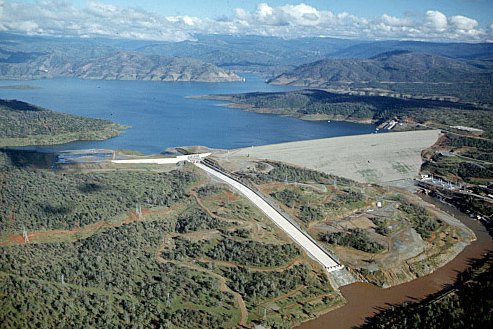
SACRAMENTO, October 16, 2026 — California is facing a massive $28 billion dam repair bill as the state’s aging infrastructure threatens the lives of 1.5 million residents. The situation has been exacerbated by delayed enforcement and funding shortfalls, leaving many to wonder what’s at stake.
Dam Safety And Risk
An audit found 57 California dams in poor or unsatisfactory condition as of May 2026, up from previous counts, according to the State Auditor. The 40 riskiest dams, rated high or extremely high hazard, are located throughout the state but cluster near densely populated coastal cities, including the Bay Area, San Diego, and Los Angeles areas. Should these dams fail, they could collectively endanger as many as 1.5 million people and cause more than $265 billion in economic damage.
History Of Enforcement Failures
The state has had the power to penalize negligent dam owners since 2017, but has never done so, despite referrals from state engineers. As of April 2026, state engineers had referred owners of 44 dams for enforcement, but the water resources department has never taken punitive enforcement actions against dam owners that fail to remedy their violations. This lack of enforcement has allowed serious deficiencies to persist, including a dam with a 47-foot-wide hole in its spillway that has gone unrepaired for more than 30 years.
Estimated Repair Costs And Funding Gaps
Repairing the state’s less-than-satisfactory dams could cost around $28 billion, according to estimates. While a 2024 ballot proposition delivered a $464 million infusion for the dam repair grant program, and a Federal Emergency Management Agency grant awarded California $629,198 in September 2026, the funding is a drop in the bucket compared to the estimated costs. Gov. Gavin Newsom had previously touted dam repairs in his drought-era water supply strategy, but in 2024, he and lawmakers slashed funding for the dam repair grant program.
Potential Human And Economic Impact
The potential human and economic impact of a dam failure is staggering. Residents describe the scene of a potential disaster as catastrophic, with flooding affecting nearly 300 people and more than $88 million in damage in just one case. By nightfall, the situation could be even more dire, with lives lost and communities devastated. On the ground, the reality of the situation is clear: California’s aging dams pose a significant risk to public safety, and urgent action is needed to address the issue. The audit urges lawmakers to set deadlines, require maintenance plans for high-hazard dams, and expand enforcement authority to prevent such disasters from occurring.
Geographic And Economic Context
California’s diverse geography, ranging from the Pacific Coast to the Sierra Nevada mountains, and from redwood forests to the Mojave Desert, plays a significant role in its dam safety and risk. The state’s large size and varied climates, including moist temperate rainforest and arid desert, contribute to the complexity of its water management systems.
The economy of California, the largest of any U.S. state, is also closely tied to its water infrastructure. With an estimated 2025 gross state product of $4.296 trillion, the state’s agricultural industry, which leads the nation in output, relies heavily on its dams and water supply systems. The potential economic damage from a dam failure, estimated at over $265 billion, could have a significant impact on the state’s economy and global trade, given California’s pivotal role in the global supply chain.
The state’s population of over 39 million people, with many living in densely populated coastal cities such as Los Angeles and San Diego, also increases the risk and potential consequences of a dam failure. The audit’s findings highlight the need for urgent action to address the state’s aging dam infrastructure and ensure public safety, particularly in light of the state’s growing population and economic importance.
Location Of High-Hazard Dams Near Population Centers
The 40 riskiest dams, rated high or extremely high hazard, cluster near densely populated coastal cities including the Bay Area, San Diego, and Los Angeles areas, according to the State Auditor’s findings. These dams are situated throughout the state but show a clear concentration in regions with significant population density.
Should these high-hazard dams fail, they could collectively endanger as many as 1.5 million people, as reported by the auditor. This risk is amplified by the proximity of these structures to major urban centers where large numbers of residents live and work.
The audit specifically notes that the clustering of these dams near the Bay Area, San Diego, and Los Angeles areas increases the potential for widespread impact in the event of failure, given the high population concentrations in these regions.
Recent Funding Initiatives and Policy Recommendations
In the wake of the audit, California secured a $464 million infusion for dam repairs through a 2024 ballot proposition, while the Federal Emergency Management Agency contributed a modest $629,198 grant in September 2026. Although these amounts fall far short of the $28 billion repair estimate, they represent the most recent state‑level financial commitment to the aging dam fleet.
The audit also issued a suite of policy recommendations. It urged lawmakers to impose clear deadlines for owners of high‑ and extremely‑high‑hazard dams to file detailed maintenance and repair plans with the Department of Water Resources. Additionally, the report called for an expansion of the department’s enforcement authority and for the creation of a fully staffed enforcement branch capable of defending actions in hearings.
State water managers, who finalized enforcement regulations in 2022, have warned that insufficient staffing hampers their ability to act, reinforcing the audit’s push for dedicated resources to ensure timely compliance and protect public safety.
Sources
- California
- Governor Newsom responds to unfounded Trump lawsuit that is desperate attempt to suppress California voters less than 3 weeks before election | Governor of California
- California’s riskiest dams are closer to big cities than you think
Photo: Alexis Pentzer (Public domain)




