Every garden starts with dirt. In the Chicago neighbourhood around the Academy for Global Citizenship, that dirt is the stubborn problem nobody can skip. The K-8 charter school sits two miles north of Midway Airport.
Two years ago, the blocks around it were mostly overgrown lots, asphalt, weeds. No trees.
No gardens. Nothing green. Residents decided to change that themselves.
They organised. They went through the city’s lot-transfer programmes.
They dug. But digging is the easy part. The hard part is what you find when you dig.
Soil quality on former industrial and residential lots varies wildly. That is not bureaucratic language. It means lead contamination.
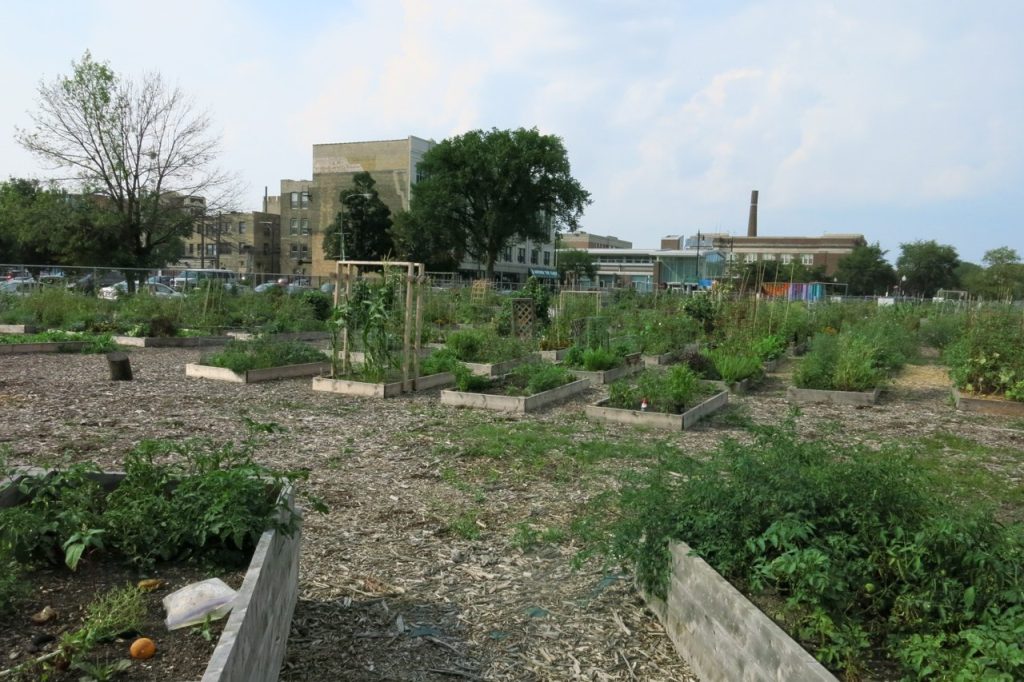
It means you cannot just plant tomatoes in the ground and hope. Some plots needed raised beds with imported topsoil before anything edible could go in.
Some needed drainage work. Unsexy work. The kind that does not make the brochure but makes the garden viable.
This is the detail that matters. The community gardens are real.
They are producing food. They are absorbing stormwater and reducing the heat-island effect that bakes unshaded concrete. But they are a patchwork.
Not every block has a garden. Not every garden thrives. Lead testing is not always affordable.
That is a constraint with teeth. You can have all the community will in the world, all the organised neighbours, all the permissions from the city.
If the soil is poisoned, you build raised beds. You import topsoil. You spend money you might not have on a problem you did not create.
The Academy for Global Citizenship became a hub. Students and families planted along the school’s perimeter and expanded outward.
That is how the pattern spreads. A barren block two years ago now has tomatoes, peppers, a row of sunflowers. Another block has a small orchard.
Apple trees. Pear trees. But the pattern spreads unevenly.
That is the honest picture. Some blocks remain barren.
Some gardens fail. The residents leading this effort are not city planners or outside NGOs. They are neighbours.
They do not have unlimited resources. They work with what they have.
What they have is a functional intervention in the urban landscape. Stormwater absorption. Local food production.
A modest reduction in heat. These are not ornamental projects. They are practical.
They are real. The technical reality is that this is resident-led.
That is the engine. Neighbours organised themselves. Neighbours secured permissions.
Neighbours did the digging. No one imposed this from above.
No outside group came in to save the neighbourhood. The neighbourhood saved itself, plot by plot, raised bed by raised bed. But the constraints remain.
Soil quality varies. Lead contamination is a known risk. Testing is not always affordable.
Some plots needed imported topsoil. Some needed drainage work.
The unglamorous grunt work that makes a garden viable. The result is a patchwork. That is not a failure.
It is the truth. Not every block has a garden.
Not every garden thrives. But the pattern is spreading. A block that was barren two years ago now has tomatoes, peppers, sunflowers.
Another has apple and pear trees. The green infrastructure is growing, one difficult plot at a time.