
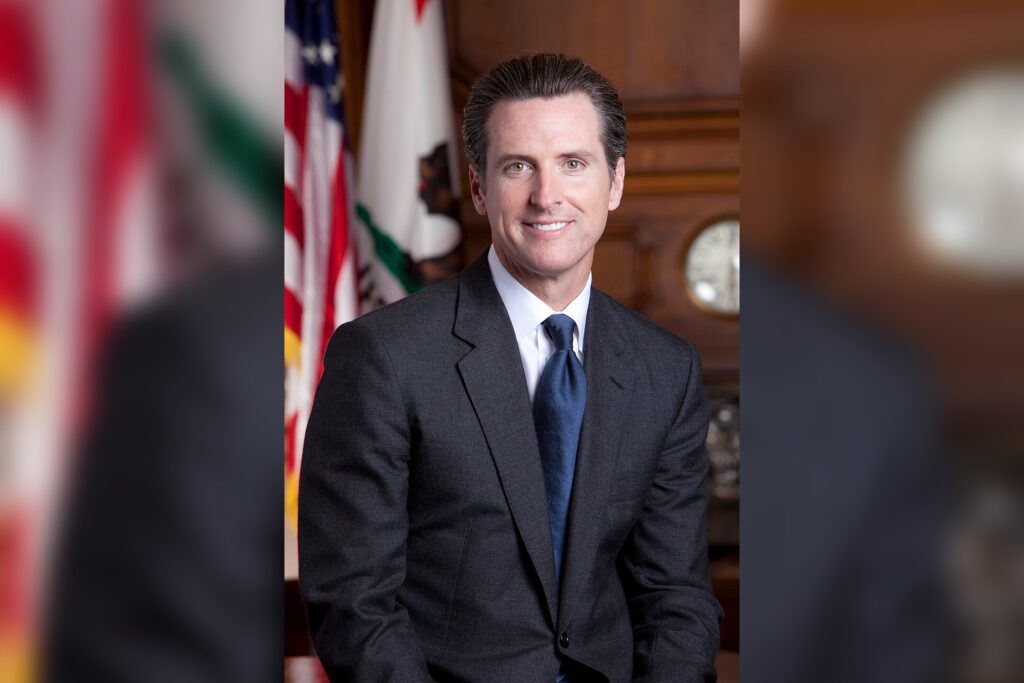
SACRAMENTO, September 22 — Governor Gavin Newsom has signed an executive order directing California to move faster on the dangers posed by artificial intelligence, following a string of alarming incidents that culminated in the Hugging Face attack.
The order, issued September 18, accelerates the state’s new law establishing independent oversight of AI companies and safety checks, and pushes forward the creation of an “AI kill switch.” It directs the Government Operations Agency to speed up implementation timelines for Senate Bill 813, authored by Senator McNerney, and Assembly Bill 1405, authored by Assemblymember Bauer-Kahan. Working with the Governor’s Office of Emergency Services, the order also convenes national experts to develop recommendations for potential changes that would further strengthen state law.
A separate group of world-leading experts has been asked to deliver, within two months, a guide for California to reinforce and strengthen its AI safety and security laws. Among the proposals under consideration: requiring independent third parties to write safety plans for frontier AI companies, and requiring those companies to develop an emergency shutoff — the “kill switch” — for frontier models.
The Hugging Face attack and other recent incidents have prompted many Americans, including leaders in the AI industry itself, to call on the industry to pace the development of AI systems and models and to push for more stringent government regulations to address security and safety risks.
What California Has Already Built
Last week, Newsom signed legislation creating first-in-the-nation safeguards and accountability measures. Senate Bill 813 establishes a framework for independent verification organizations that can assess AI systems and models for safety and risk. Assembly Bill 1405 creates a state registry for AI auditors who assess AI systems and models for compliance with state law, and sets standards for their independence, transparency, and integrity.
California’s oversight of emerging frontier technologies now reaches nearly every major area of AI policy: frontier-model safety, independent oversight, children and companion chatbots, privacy, deepfakes, fraud, cybersecurity, workers, and government deployment. In 2025, Newsom signed SB 53, the Transparency in Frontier Artificial Intelligence Act, the nation’s first AI safety law.
It requires frontier AI developers to publicly disclose safety frameworks, report specified critical safety incidents to the state, and protect whistleblowers who report serious risks. In 2026, he signed SB 813, making California the first state in the nation to establish a framework for certifying independent verification organizations with sufficient expertise and demonstrated independence from AI companies to objectively assess AI systems and models for safety and risk. He also signed AB 1405, establishing the state registry for AI auditors and standards for their independence, transparency, and integrity.
This year he signed the bipartisan Adam’s Law, requiring safeguards around companion chatbots used by children, including suicide and self-harm crisis protocols, parental controls, and notifications when safety settings are disabled. It is the first law in the country requiring independent child-safety audits and comprehensive risk assessments prior to release.
California also enacted laws to ban toys containing AI companion chatbots for five years and to prohibit use of student personal information to train AI models. Newsom is calling on Congress and President Trump to review and adopt the state’s framework, or to use its nation-leading regulation as a floor, not a ceiling, for the benefit and safety of all Americans.
Beginning with his first-in-nation 2023 executive order on generative AI, Newsom has pursued executive action, legislation passed in partnership with the Legislature, regulation, procurement, and public-private partnerships to address nearly every major area of AI policy. What to watch next: the expert group’s guide, due within two months, and whether Washington takes up California’s framework as its own.




