
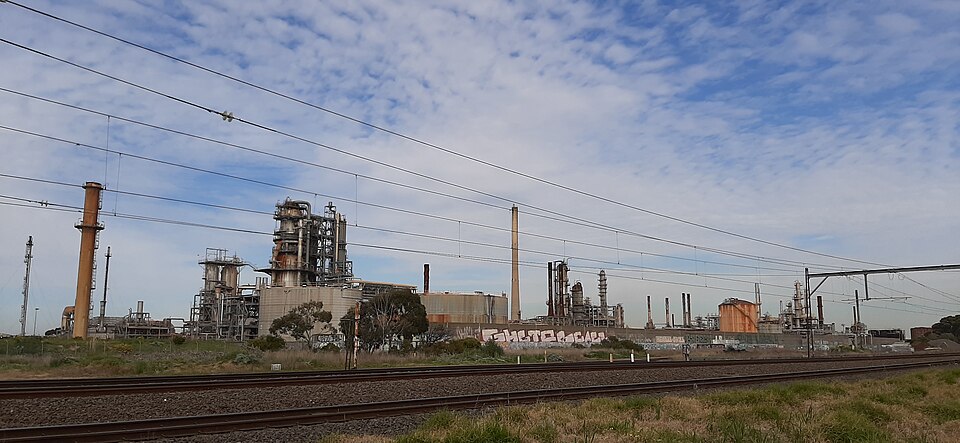
Russia’s crude oil processing in June fell 25 percent from a year earlier, to 3.95 million barrels per day. Energy Intelligence analyst Gary Peach, reporting on July 1, called it the lowest level in more than two decades. The cause is a Ukrainian drone campaign against refineries, and by midsummer analysts were arguing over how much it can actually achieve.
The International Energy Agency has described the disruption as significant in the history of the war. Fuel rationing is in force in at least 55 of Russia’s 83 federal entities, according to the AP. Russia can still pump crude. What it is losing is the capacity to turn that crude into diesel, aviation fuel and gasoline for the front and for ordinary drivers.
Moscow feels it
The strikes on the Kapotnya refinery, on June 12 and 18, made the damage political. Carnegie Endowment analysis, published in June, noted that a 2020 modernization had packed the plant’s processing into two closely spaced installations. That was efficient in peacetime. On June 18, five drones found both remaining units inside a single target area. Yaroslavl, Ryazan and Kstovo, the other three refineries that supply Moscow by pipeline, have also been hit.
The Kremlin has had to change its tone. For weeks, officials blamed shortages on “unscheduled maintenance.” Then the Energy Ministry’s statement on June 9 spoke of “enemy air attacks,” which RFE/RL recorded as the first official admission. By July 1, Newsweek reported, Putin had acknowledged petrol queues. The AP showed drivers filming empty pumps, signs reading “No diesel” and “No premium gasoline,” and hour-long lines at Lukoil and Gazprom Neft stations in Moscow on June 29.
Energy Minister Novak announced a total ban on petroleum and aviation fuel exports, the Washington Examiner reported, and said a diesel ban was under consideration. The ISW documented a strike on the Vtorovo pumping station on June 27, a sign that Ukraine has moved on to distribution as well as refining.
The money squeeze
Oil and gas taxes supply roughly a quarter of Russian federal budget revenue, per Kyiv Insider. Reuters confirmed that the damaged plants account for more than 30 percent of Russian gasoline production, and Urals crude had dropped to $50 a barrel. Carnegie described a trap: Russia exports crude at deep discounts while losing the higher-margin refined products, and still pays subsidies to keep pump prices as much as 30 rubles per liter below the market.
Russia has begun importing gasoline by sea, UNITED24 Media reported, and asked Kazakhstan for 50,000 tons, according to RBC Ukraine. ISW data showed 26 times more gasoline arriving from Belarus in June than a year before. The export ban protects supply at home but cuts the foreign currency that softens Western sanctions. And the harvest season, as Chris Weafer of Macro-Advisory told the AP, is pushing demand up just as output bottoms out.
The limits of the strategy
Analysts do not agree that this ends the war. Russia has absorbed strikes through quick partial repairs and by rerouting work to plants that were not hit, CREA analyst Isaac Levi told RFE/RL. Carnegie found processing swinging rather than sliding: under 4 million barrels per day in late May, back to 4.5 million in the first week of June, then down again after the mid-month Kapotnya and TANECO strikes. The Lviv Herald noted that 20 to 22 percent of Russian capacity sat idle before the campaign intensified, which cushioned the early blows. That cushion is spent, and shortages now reach regions with undamaged local refineries because the fuel system works as one network.
Russia also has tricks left. It eased the permitting of Euro-3 gasoline to be sold as Euro-5, opening up another third of the light distillate fraction for domestic pumps, Carnegie said.
Geography sets the ceiling. Meduza confirmed that the Omsk refinery, Russia’s largest, and the Angarsk complex remain undamaged and out of drone range. Former US Army Europe commander Ben Hodges told Newsweek that Ukraine needs greater capability to hit oil and gas infrastructure. The AP’s reporting from Crimea shows that when fuel runs short, the Russian military still gives itself priority over civilians.




