
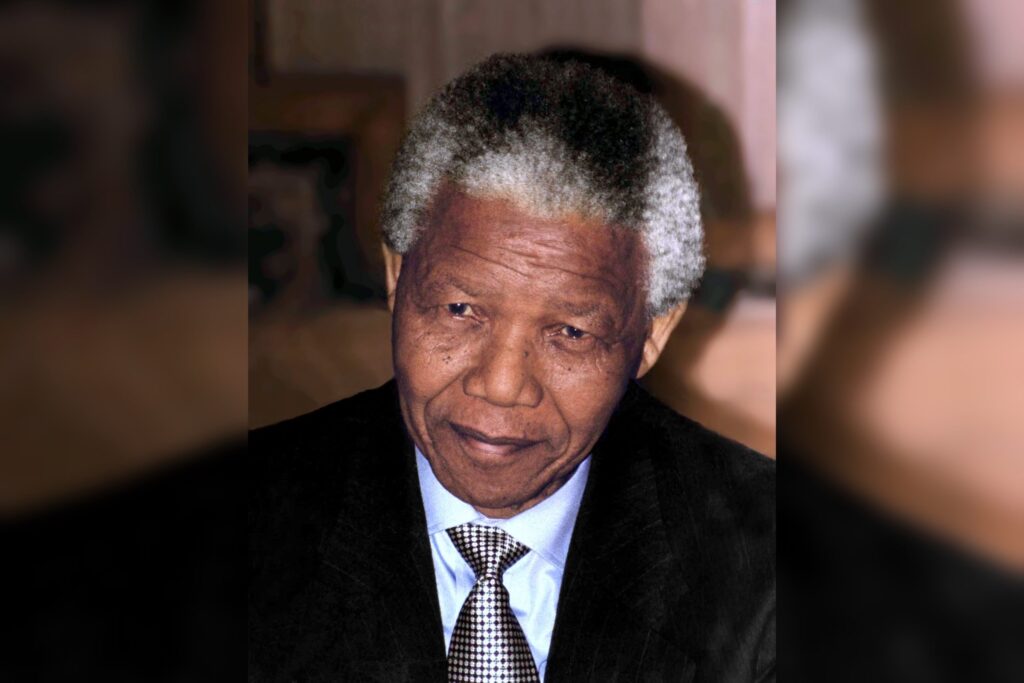
NELSON MANDELA’S GRAVE sits behind a dusty road in Qunu. Across from it lies his family’s burial site. The private grave is one of the last stops on a journey that traces the life of South Africa’s first black president, a century after his birth.
Mandela was born in Mvezo, a small village in the Eastern Cape. He lived there until age two.
Then his father lost his position as village chief. The family moved to neighboring Qunu. Mandela stayed there until he was nine.
The green rolling hills of the Eastern Cape shaped his earliest years. A tour guide, Velile Ndlumbini, described Mandela’s childhood walks.
“When Mandela was just a child, he walked for miles on this route, moving from one village to another,” Ndlumbini said. Those miles led somewhere. In Mqhekezweni, Mandela was adopted by the acting regent king.
He was groomed for leadership there. It was in Mqhekezweni that his interest in politics first sparked. He listened to tribal elders holding community meetings.
That education in governance and justice followed him to Soweto, where he became an anti-apartheid leader. It followed him to Robben Island, where he spent years in prison.
Twenty-seven years after his imprisonment began, Mandela returned to Qunu. He built a complex for his family along the N2 highway. Some of his relatives still live there today.
The Nelson Mandela Museum opened on February 11, 2000 — the 10th anniversary of his release from prison. The museum traces his journey: childhood, political awakening, imprisonment, election as president.
The stakes of this story are not abstract. Mandela’s path from a village boy to a prisoner to a president is the spine of South Africa’s transition from apartheid to democracy. That transition is now under strain.
Economic inequality remains stark. Political corruption has eroded trust. The African National Congress, Mandela’s party, has lost support.
Young South Africans, born after 1994, know Mandela as a statue and a banknote face, not as a living leader. What is at risk is the memory itself.
Not the hagiographic memory of a saint, but the concrete memory of a man who walked those Eastern Cape roads, who sat in a prison cell on Robben Island, who negotiated a peaceful end to a brutal system. If that memory fades into a smooth myth, the hard lessons of how apartheid was dismantled — through organization, sacrifice, compromise — vanish too. The museum in Qunu holds the evidence.
Exhibits show Mandela’s early days in the village, his years in prison, his presidency. They show a man, not a legend.
A man who walked miles between villages as a child. A man who returned to those same villages after nearly three decades behind bars. Visitors can follow that route today.
They can see the homestead where Mandela was born in Mvezo. They can see the complex he built on the N2 highway in Qunu. They can see his private grave.
The landscape has not changed much. The dusty roads are still there.
The rolling hills are still green. The legacy, though, is not a landscape. It is something people have to keep choosing.
Mandela’s death in 2013 removed the man. The centenary of his birth, July 18, 2018, was a global celebration.
But the real work — the work of making the country he helped build actually function for all its people — remains unfinished. The museum, the grave, the walking route: they are markers. They point to what was done.
They do not do the work themselves.




