
When Kenya’s police watchdog appeared before a Nairobi court on July 16, 2025, it brought photographs and video files, along with data pulled from a phone, all of it aimed at one question: whether Officer Isaiah Murangiri, the main suspect in the killing of protester Rex Masai, had told the court the truth about where he stood.
The record shows the officer did not budge.
According to the evidence laid out by the Independent Policing Oversight Authority, Murangiri was placed near the scene of the shooting by records spanning photos and phone data. He denied it anyway. Shown one image after another, and asked each time whether the man depicted was him, he gave the court the same answer. “I’m not the one.” Pressed again on a further picture, the reply came back identically flat: “It is not me.”
The confrontation drew on material from June 2024. Murangiri had earlier told the court he was off duty for the June 18 protests, held two days before Masai was shot. One file from that day, described in court as showing Murangiri firing a tear gas canister at compliant protesters, prompted a short exchange about the object in the man’s hands. Asked what the figure was holding, the officer answered, “I think that is a tear gas launcher.”
The Birthmark and the Wrist
Even a comparison with a mark on his own face failed to move him. The examiner invited the court to look closer at the image, then at the officer, asking him whether he saw the same feature when he looked in the mirror.
The questioning turned to his wrist. Pointing to body art visible in the pictures, the examiner asked, “Is this not the same African art in this image?” Murangiri did not concede the point.
Phone records and photographs were also put forward to disprove his earlier account that he had been stationed at KICC, the Nairobi convention complex, on the day Masai was fatally shot. The examiner pressed the contradiction directly: “Although you say that it is not you, this person
that bears a resemblance to you”. Murangiri pushed back on the framing. “Your honour, I’m saying the truth. I’m not lying to this court.”
Officials confirmed that Geoffrey Onsarigo, the presiding magistrate, directed Corporal Martin Githinji to make himself available to investigators, along with Constables Simon Waweru and Geoffrey Mbae, all assigned to Central Police Station. The magistrate also ordered the station’s original arms register turned over to the team investigating the killing.
“The pathologist’s report showed that Rex was killed by a live
bullet,” stated Paul Njihia, assistant director for forensics at the oversight authority.
A Killing That Shook 2024’s Protest Wave
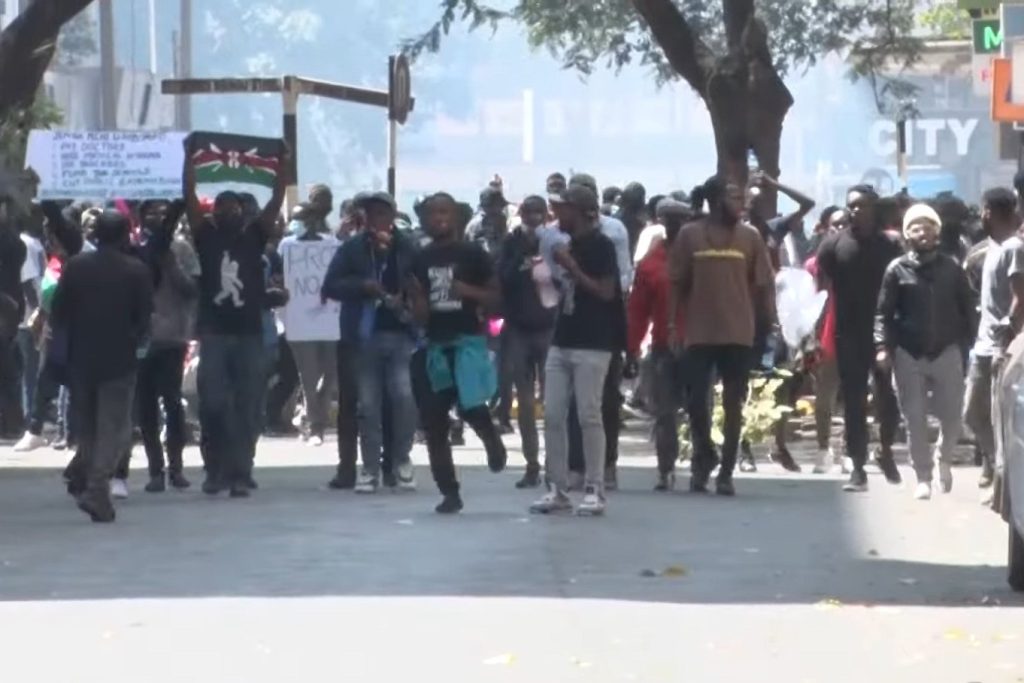
The case traces back to the anti-tax demonstrations that swept Nairobi in June 2024. Masai, according to contemporary reporting by the South African outlet Scrolla.Africa, was shot dead during those protests, allegedly by a police officer, and his death ignited outrage and sharpened criticism of police conduct.
The watchdog opened its investigation in the days after the shooting. It reported injuries among demonstrators and officers alike, made contact with Masai’s family, and publicly urged restraint on the police side. More than 200 people were detained over the course of the protests, with tear gas and injuries recorded on the streets.
The court proceeding, still under way at the time of the report, leaves the three directed officers and the arms register squarely in the paper trail.
Sources
- 'It wasn't me!' Police officer linked to Rex Masai killing maintains despite video evidence, phone data
- World news bites: Death of Nairobi protester investigated – Scrolla.Africa




