
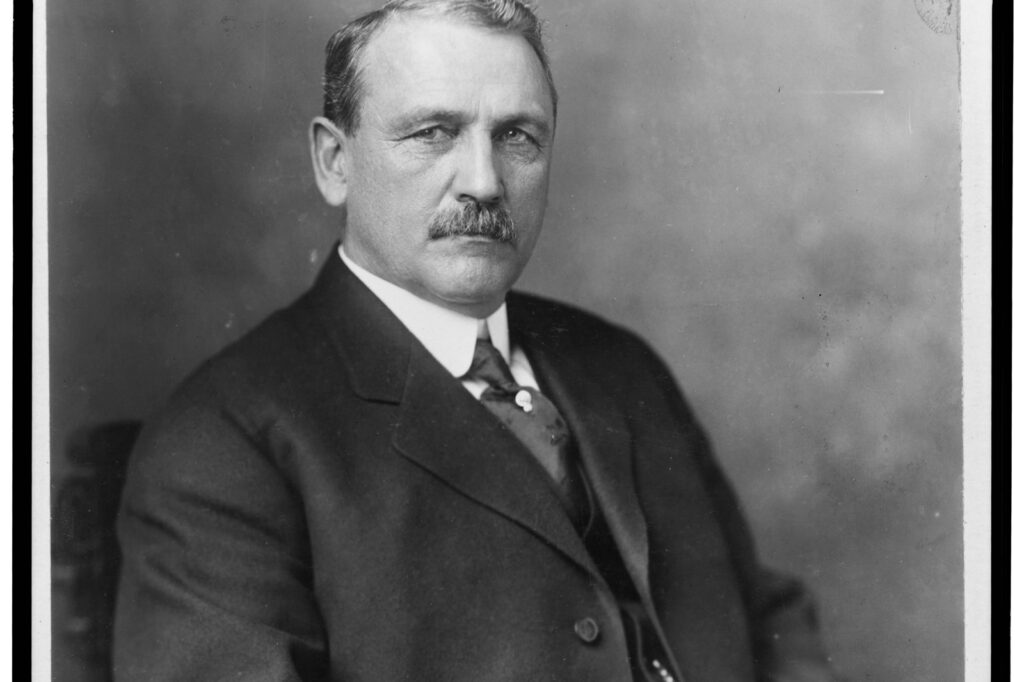
In the long history of the Panama Canal, no single figure compressed more consequential decisions into a shorter span than John Frank Stevens. The American civil engineer served as chief engineer of the canal for just two years, from 1905 to 1907, yet the choices he made during that period fundamentally reshaped one of the largest infrastructure projects ever undertaken. Appointed by President Theodore Roosevelt, Stevens arrived on the scene after France had already spent nearly a decade trying — and failing — to carve a sea-level passage across the Isthmus of Panama.
From French Failure to American Engineering
France began construction of the canal in 1881. That effort collapsed in 1889, brought down by a combination of engineering miscalculations and staggering worker mortality that drove away investors. The United States took over the project in 1904 and aimed to complete what the French had abandoned. Stevens made his first major call within months of taking the post: he scrapped the French plan for a sea-level canal.
In its place, he designed a lock-based system anchored by a large artificial lake — Gatun Lake. That single decision changed the entire engineering trajectory of the project, turning a graveyard of French ambitions into a feasible American undertaking.
Stevens understood that moving earth was only part of the challenge. He prioritized sanitation and worker welfare with the same intensity he brought to design. For the mostly West Indian labor force, he built housing, hospitals, and mess halls.
Disease and high turnover had crippled the French effort; Stevens recognized that keeping workers alive and fed was as critical as any engineering feat. He also oversaw the rebuilding of the Panama Canal Railway.
The railway was not a side project — it was the backbone of the operation, built to haul away the enormous volumes of excavated material. Without it, the lock system could not have been built at the pace Stevens demanded. His background as chief engineer of the Great Northern Railway, moving trains over mountains and through valleys, gave him the practical instincts that the French academic engineers had lacked.
The Man Behind the Design
Before arriving in Panama, Stevens had already built a distinguished career as a railroad engineer. That experience informed every aspect of his approach to the canal.
He resigned in 1907 after disputes with the Isthmian Canal Commission and was replaced by Lieutenant Colonel George Washington Goethals. Stevens walked away before the canal was finished, but his design and systems were already locked in. The canal opened in 1914 under American control, a reality that lasted until the Torrijos–Carter Treaties led to a gradual handover.
Panama took full control in 1999. Stevens died in 1943 at the age of 90.
More than a century after his work on the canal, he was inducted into the National Railroad Hall of Fame in 2017. The recognition matched the scale of his contribution — a contribution that transformed a failed French enterprise into a working American waterway.
A Lasting Framework for Global Trade
The Panama Canal remains a critical chokepoint for global commerce. It connects the Caribbean Sea and the Pacific Ocean by cutting through the narrowest part of the isthmus, allowing ships to avoid the long and hazardous route around the southern tip of South America. That shortcut shortened maritime communication, changed global trade patterns, and boosted economic growth in many regions by providing a cheaper transit route between oceans.
Modern expansions now allow larger ships to pass through the waterway, but the core of the system — Stevens’ lock-and-lake design — still operates today. However, the canal faces a new challenge that Stevens could not have anticipated.
Because the system relies on a freshwater lake to lift ships, droughts and low water levels now threaten its operation. Water scarcity can disrupt the flow of global goods. Any future expansion or modernization will have to work within the framework Stevens established — a framework that turned a failed French graveyard into a functioning American canal and that continues to shape international trade more than a century later.
Investors and policymakers watching the canal today would do well to remember that the two-year tenure of John Frank Stevens set the course for everything that followed.




