
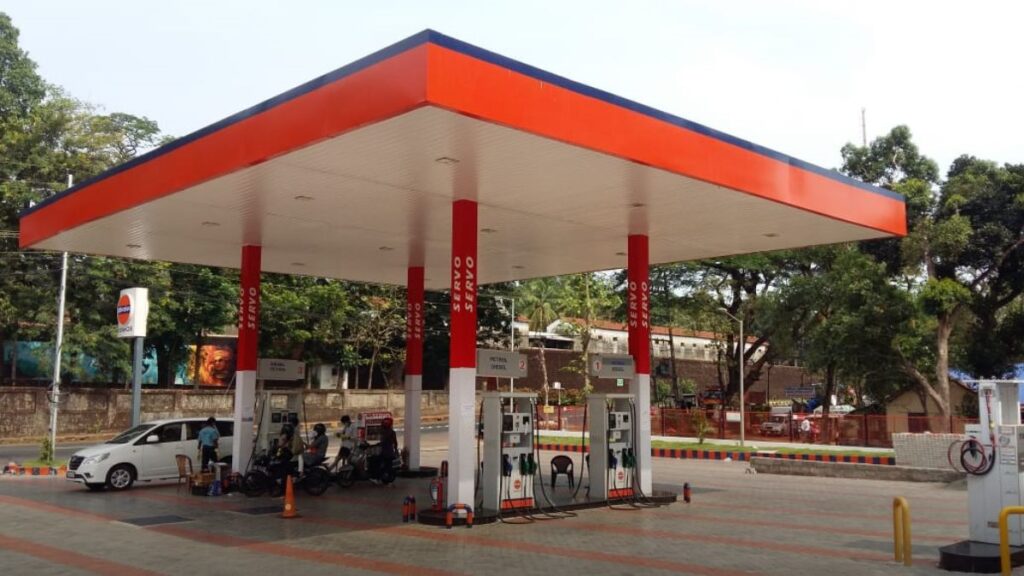
A dispute over ten Indian rupees, worth approximately 12 US cents, at a petrol pump in rural Karnataka’s Raichur district escalated into a homicide on July 8, adding to a documented pattern of fatal violence at Indian fuel stations over negligible sums. Meghnath, a 42-year-old man, died following an argument about the amount of fuel dispensed at a pump in the Hunchinala Camp area.
Local police are conducting the investigation, as they do with such incidents across the country.
Recurring Pattern of Petrol Pump Violence
The Raichur killing follows a grimly familiar script. A customer questions the amount of fuel delivered. Words are exchanged.
The argument escalates. Someone produces a weapon.
A life is ended over an amount of money that most people would not bother to pick up off the pavement. In 2020, a man was killed in Uttar Pradesh over a dispute involving INR 5 — about six cents — at a petrol station. That case made national headlines briefly before vanishing into the statistical noise of India’s crime records.
The National Crime Records Bureau recorded 33,000 cases of murder in India in 2022, with a notable proportion arising from trivial arguments that escalated beyond reason. A substantial share of those homicides stemmed from personal disputes, property arguments, and what the bureau classifies as “other motives” — a category that encompasses the kind of roadside rage that killed Meghnath.
For all the noise surrounding economic growth in India, the salient point is that an argument over pocket change can still end in homicide with dispiriting regularity.
Rural Vulnerabilities and Absent Regulation
Petrol pumps in rural areas such as Hunchinala Camp frequently lack basic security measures, making them vulnerable sites for confrontation. There are no barriers, no dedicated security personnel, and no formal procedures for resolving customer disputes on the spot. The combination of cash transactions, impatient queues, and the perception — real or imagined — of being cheated creates a volatile environment.
For all the modernisation of India’s retail fuel sector, the basic interaction between attendant and customer remains largely ungoverned by any formal mechanism for de-escalation. The Indian government has not implemented specific regulations for dispute resolution at fuel stations.
This leaves such incidents to the local police, who arrive after the fact. There is no centralised mechanism to track these incidents, no mandatory reporting requirement for fuel retailers, and no national policy on how to prevent them. Each killing is treated as a local law-and-order matter, investigated by the same police force that may have been minutes away when the violence occurred.
Broader Context: A Persistent Gap
India is a country in South Asia and the world’s most populous democracy, having gained independence in 1947. British Crown rule over the territory began in 1858 and shaped many of the administrative structures still used today. After independence, the republic developed a large rural landscape where small cash transactions remain common in daily commerce.
A filling station is a facility that sells fuel and lubricants for motor vehicles, and a gasoline pump is the device that dispenses fuel. These sites became widespread as vehicle use grew across the country over the decades.
The absence of specific national rules for handling disagreements at fuel stations leaves local police to respond after confrontations occur. For readers, this means a routine stop for petrol in many villages carries an unmanaged risk of escalation that urban infrastructure rarely faces. The Raichur police will proceed with their investigation into Meghnath’s death. Whether this case prompts any broader reassessment of safety at fuel stations remains to be seen.
Previous incidents of similar nature have not led to regulatory changes. The pattern — dispute, escalation, death, local investigation, public outrage, silence — has repeated itself without interruption.
For now, the men and women who run petrol pumps in places like Hunchinala Camp will continue to serve customers across counters that offer no protection from the next argument over a few rupees. The Indian government has shown no indication that it intends to introduce dispute-resolution protocols for fuel stations, leaving the matter to the same local police who must investigate whatever comes next.
{“@context”: “https://schema.org”, “@type”: “NewsArticle”, “headline”: “10-Rupee Petrol Pump Dispute in Karnataka Turns Fatal in Raichur”, “description”: “RAICHUR, July 10 — A dispute over ten Indian rupees, worth approximately 12 US cents, at a petrol pump in rural Karnataka’s Raichur district escalated…”, “datePublished”: “2026-07-10T09:30:00+00:00”, “author”: {“@type”: “Person”, “name”: “Beatrice Bianchi”}, “publisher”: {“@type”: “Organization”, “name”: “InfoPulse Today”, “url”: “https://newsfeed.infopulsetoday.com/”}}




