
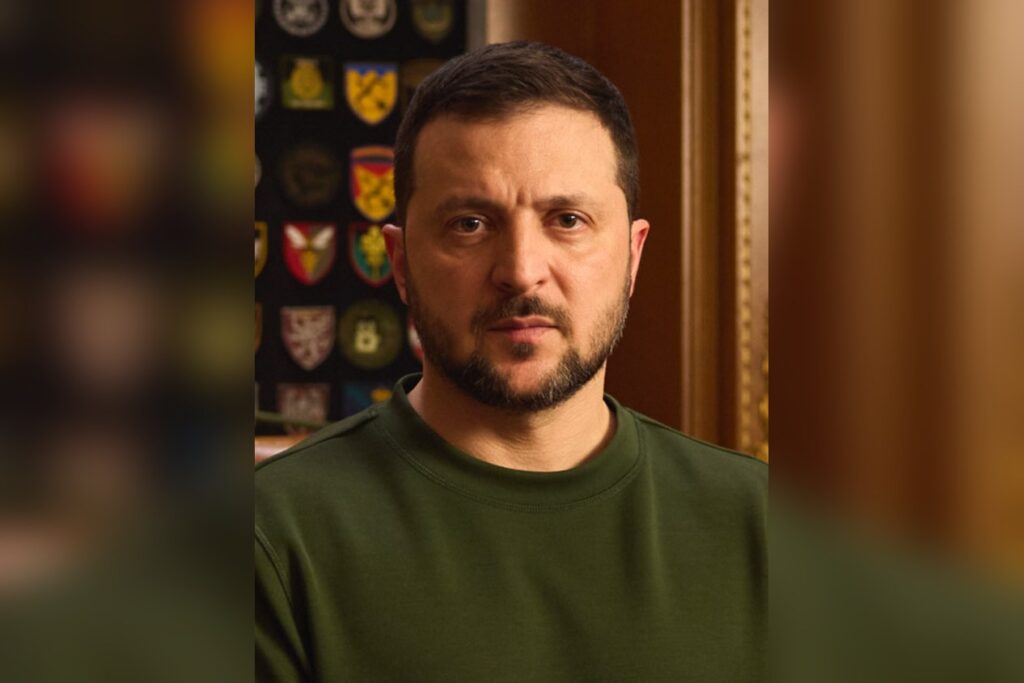
“I need ammunition, not a ride.” That was Volodymyr Zelenskyy’s reply, according to a senior American intelligence official, when the United States offered to move him to safety on the third day of Russia’s invasion. Russian forces were closing in on Kyiv at the time. Military observers said their main aim was to remove Zelenskyy and his government and put a more pliable leader in his place.
It was an odd turn for a man who had been a television star a few years earlier.
From law school to the sitcom
Zelenskyy grew up in southeastern Ukraine in a Jewish family that spoke Russian. His father once refused to let him study in Israel, so he studied law at home. After graduating he went into acting and comedy, and in the 2010s he became one of Ukraine’s biggest entertainers through “Servant of the People.” In it he played a likable high school teacher, fed up with corrupt politicians, who accidentally becomes president.
Then it happened for real. He won the 2019 election in a landslide over a billionaire businessman, campaigning mostly on social media and promising to break the hold of the oligarchs who had run much of the country since the Soviet collapse. After his election, Ukraine became the only country outside Israel with both a Jewish president and a Jewish prime minister. His grandfather fought the Nazis in the Soviet Army, and other relatives died in the Holocaust.
Peace plans that went nowhere
He also ran on a promise that he could negotiate peace with Russia, which had seized Crimea and backed two separatist regions in 2014, starting a frozen conflict that killed an estimated 15,000 people. Critics for years saw his readiness to compromise with Moscow as his biggest political weakness.
He did manage a prisoner exchange. Broader reconciliation stalled as Vladimir Putin pressed Ukraine harder to turn away from the West and described the government in Kyiv as a nest of extremism run from Washington.
Zelenskyy first became known to many Americans through Donald Trump’s 2019 phone call, which led to Trump’s impeachment over the threat to withhold $400 million in military aid. Zelenskyy declined to criticize the call. He said he did not want to get involved in another country’s politics.
Under fire
In the weeks before the invasion he could look inconsistent, scolding the West for fearmongering one day and for doing too little the next. He called Joe Biden’s detailed public warnings about Putin’s plans premature and likely to cause panic. Once the war began, he criticized Washington for not doing more, including defending Ukraine militarily or speeding up its bid to join NATO.
Putin called the attack a “special military operation” and said it was meant to defend two breakaway districts from “genocide.” Zelenskyy answered in a recorded message to Russians. “They told you I ordered an offensive on the Donbas, to shoot, to bomb,” he said. “But there are questions, and very simple ones. To shoot whom, to bomb what? Donetsk?” He spoke of friends across the region. “It’s our land, it’s our history. What are we going to fight over, and with whom?”
Unshaven, in olive green shirts, he posted other videos to say he was staying. “We are here. Honor to Ukraine,” he said. His wife, Olena, an architect, and their two children, aged 17 and 9, also remained in Ukraine, he said, rather than joining the refugees leaving the country.
Polish President Andrzej Duda, who met him just before the fighting began, described the encounter. “It’s a frightening experience when you come to visit the president of a neighboring country, your colleague, to support him in a difficult situation, and you hear from him that you may never meet him again because he is staying there and will defend his country to the last.”
Melinda Haring of the Atlantic Council wrote that the war had turned a “provincial politician with delusions of grandeur” into “a bona fide statesman.” She faulted him for moving too slowly on political reforms and on hardening the border with Russia. But he had shown “enormous physical courage,” she said, refusing to sit in a bunker and traveling openly with soldiers. “To his great credit, he has been unmovable.”




