
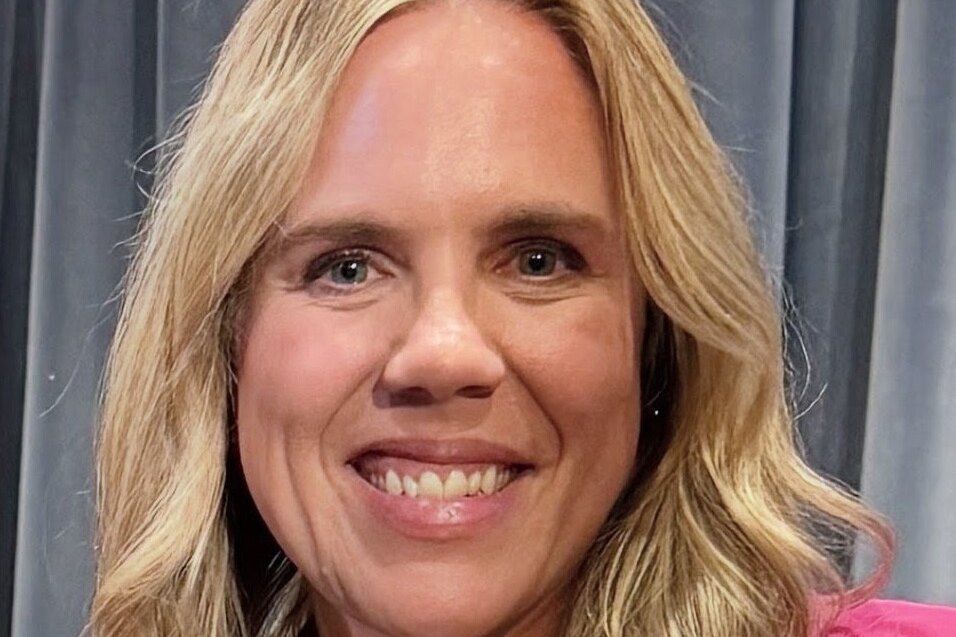
“We will not bow down,” Annie Andrews told South Carolina after the Associated Press called the Senate race in her favor. “We will not back down. And we will chart our own course.”
With 93% of the expected vote counted Tuesday evening, Andrews had 50.6%. Republican Sen. Darline Graham had 47.2%.
A pediatrician and mother of three had done something no Democrat had managed in South Carolina since 1998. Andrews is also the first woman elected to the Senate by the state, in a contest that Republicans once expected to win comfortably.
A seat transformed within months
The race changed abruptly when longtime Republican Sen. Lindsey Graham died in July. He had secured his party’s nomination by double digits a month earlier and was widely expected to win another term.
His sister Darline Graham, who previously led the state’s Commission for the Blind, received Trump’s support and was appointed to complete his term. She had never before held elected office.
A crowded special Republican primary in August produced no outright winner. Graham then beat Rep. Ralph Norman by less than 5 points in a runoff later that month. Norman said he would vote for her but would not campaign alongside her, and some of his supporters remained angry about the nomination.
Andrews, meanwhile, won June’s Democratic primary by double digits. She had lost a House race to Rep. Nancy Mace in 2022, but this campaign attracted bipartisan endorsements, including support from two former governors, one Democrat and one Republican.
Graham’s answer on Taiwan followed her
A primary debate exposed the contrast between the appointed senator and her brother, an influential advocate of an interventionist foreign policy. Asked about Taiwan, she answered: “National security is not my thing, not my area of expertise, but I do support the military.”
She also conceded that she was “not that informed on national security.” The remarks drew criticism from fellow Republicans and hardened doubts about whether she was ready for a full term.
During the closing two weeks, Trump held two South Carolina rallies supporting Graham. The leading Republican Senate PAC spent millions of dollars trying to rescue a seat the party had regarded as safe.
George Culpepper Jr., a conservative Republican who backed Norman in the primary, objected to the way Graham inherited the position. “We were kind of caught off guard because a seat shouldn’t just be given to someone,” he said.
“When a candidate is shoved down our throats, I’m sorry, but our minds are independent here in South Carolina,” Culpepper added. “We won’t bow down to being told how and who to vote for.”
Andrews put prices and medical bills first
While Graham defended her experience, Andrews campaigned on wages, affordable child care and ending tax advantages for wealthy households. She presented her medical career as the reason she entered politics.
She described diagnosing asthma and diabetes in children, then hearing parents interrupt discussion of treatment with questions about the price of an inhaler or insulin.
“No parent in America should have to be thinking about their pocketbook when they’re hearing news that their child has a chronic illness,” Andrews told NPR last month.
That focus also allowed her to reach independents and Republicans frustrated by expensive essentials and the war in Iran. She emphasized healthcare access and affordability rather than centering the campaign on cultural fights.
Scott Singer, 66, a founder of the Aiken Republican Club who described himself as politically homeless, hosted an event for Andrews. He said it gave other Republicans a “permission structure” to consider her.
“The enthusiasm is much much higher on her side,” Singer said. He also criticized Graham for not confronting Trump over his decision to waive Russia sanctions enacted under legislation named for her brother.
The national climate turned against Republicans
Trump carried South Carolina by nearly 18 points in 2024. His position was much weaker by this midterm: Pew Research Center measured his approval at 30% last month. Opposition to the Iran war, tariffs and high energy prices weighed on Republican candidates.
Danielle Vinson, a Furman University professor of politics and international affairs, said voters wanted someone willing to challenge the president over the war or affordability. She saw no indication that Graham would do either.
The result was not merely symbolic. Democrats need a net gain of four seats to control the Senate. Former North Carolina Gov. Roy Cooper won another important race for the party, while South Carolina joined Kansas and Texas among the more difficult states where Democrats saw an opportunity.
For Singer, the message was rooted in the state rather than Washington: “South Carolinians are fiercely independent,” he said, “and don’t like having Washington pick its candidates.”
Sources
- South Carolina
- Democrat Annie Andrews wins South Carolina Senate race in major upset
- South Carolina elects Democratic senator for first time in almost three decades
- “A monumental upset”: Annie Andrews flips South Carolina Senate seat
- Annie Andrews Flips South Carolina Senate Seat in Stunning Upset
- South Carolina U.S. House Midterm Election 2026: Live Results
Photo: Stimpus1 (CC0)