
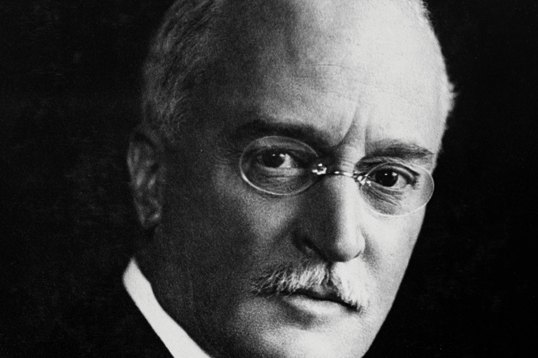
ANTWERP, September 1913 — The steamship SS Dresden slipped her moorings in the Scheldt estuary on the evening of September 29, 1913, carrying a passenger whose name would become synonymous with one of the great unsolved mysteries of the industrial age. Rudolf Diesel, the inventor whose compression-ignition engine was already reshaping global power and transport, was travelling from Antwerp, Belgium, to Harwich, England. He was en route to London for a meeting with the British Royal Navy concerning patents for his diesel engine.
After dinner aboard the vessel, he retired to his cabin. He was never seen alive again.
The disappearance
When Diesel failed to appear the following morning, his cabin was checked. The bed was undisturbed. The inventor had simply vanished into the night somewhere between the Belgian coast and the English shore.
Ten days later, his body was found floating in the English Channel. The discovery confirmed the worst fears of his family and business associates, but it raised far more questions than it answered.
No definitive explanation for his disappearance has ever been proven. Against this backdrop of uncertainty, three principal theories have persisted for more than a century. The first holds that Diesel, burdened by financial troubles, took his own life.
The second suggests he was murdered — either by German agents seeking to prevent his technology from falling into British hands, or by rivals in the oil industry who saw his engine as a threat to established interests. The third theory posits a simple, tragic accident: a fall overboard in the darkness.
A man under pressure
What is at stake in understanding Diesel’s fate goes beyond the fate of one man. The inventor had achieved extraordinary success with his engine, which offered greater efficiency than steam power and could run on a variety of fuels. Yet by 1913, his personal finances were in disarray.
He carried significant debts, and his business venture with the Diesel Motor Company had failed, leading to a restructuring of the firm in 1911. In the corridors of maritime and industrial power, the loss of Rudolf Diesel was a shock.
His son, Eugen Diesel, later wrote about the disappearance, becoming a key chronicler of the mystery that surrounded his father’s final hours. The younger Diesel’s accounts have provided much of what is known about the inventor’s state of mind and movements in the period leading up to that September voyage. The timing of the journey added another layer of intrigue.
Diesel was travelling to meet the British Royal Navy, a potential customer for his engine patents at a moment when naval competition between Britain and Germany was intensifying. The wider picture of European tensions in 1913 — the arms races, the shifting alliances, the growing shadow of conflict — gave the disappearance a geopolitical dimension that has never fully been resolved.
The unanswered questions
The SS Dresden continued her regular service across the English Channel, but the mystery she carried that night has never been laid to rest. The body found in the Channel ten days after the disappearance confirmed the inventor’s death but provided no clues as to how or why he left the ship. No witness ever came forward.
No note was discovered. The undisturbed bed in his cabin suggested that whatever happened occurred quickly, perhaps without struggle.
The waters of the English Channel, cold and dark on that September night, kept their secret. For historians and investigators, the case remains open. The three theories — suicide, murder, accident — each have their proponents, but none has ever been proven to the exclusion of the others.
The financial records show a man under strain; the political context shows a world on the brink of war; the physical evidence shows only an empty cabin and a body recovered from the sea. What to watch next in this enduring mystery is less a matter of new evidence emerging than of how each generation interprets the known facts.
The Diesel case has become a touchstone for those who study the intersection of technology, finance, and international intrigue in the years before the First World War. The inventor’s engine would go on to power ships, submarines, locomotives, and trucks across the globe, but the man himself vanished into the waters between Antwerp and Harwich, leaving behind a legacy as remarkable for its unanswered questions as for its engineering triumph.




