
A Career Forged in Crisis
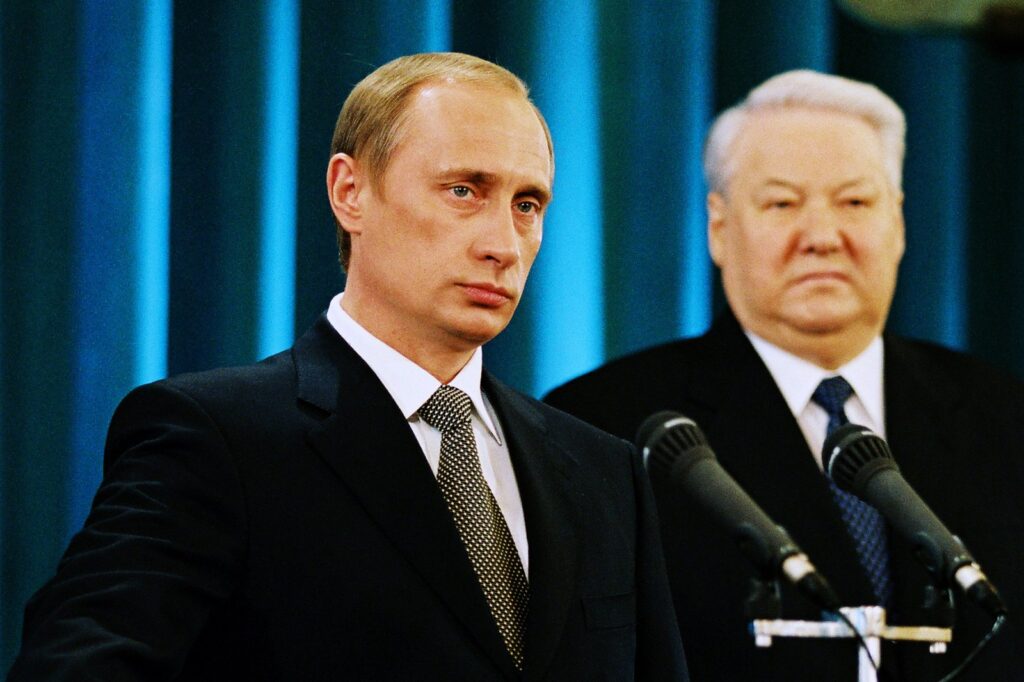
Putin’s rise to national prominence began in the late 1990s, a period when Russia was reeling from economic collapse, political instability, and a brutal war in Chechnya. He entered politics as prime minister in August 1999 under President Boris Yeltsin, positioning himself as a figure capable of restoring order. Within months, Yeltsin resigned and Putin became acting president. He was elected in March 2000 and served two consecutive terms until 2008, when constitutional term limits forced him to step aside. He then served as prime minister from 2008 to 2012 under President Dmitry Medvedev before reclaiming the presidency in 2012. Constitutional changes enacted in 2021 allow him to remain in office until at least 2036.
His career reflects a pattern of consolidating authority — first as a KGB officer, then as a security official, and finally as a long-serving head of state. Before the 2022 invasion, Putin had already ordered military intervention abroad, including in Georgia in 2008 and in Ukraine beginning in 2014. That year, Russia annexed Crimea and fomented a separatist insurgency in eastern Ukraine, drawing international sanctions that isolated the country economically and diplomatically. The full-scale invasion in 2022 marked a sharp escalation from the hybrid warfare tactics employed earlier, bringing the conflict into a phase of sustained conventional combat.
War, Sanctions, and Isolation
Putin has publicly justified the invasion as a “special military operation” aimed at demilitarizing and “denazifying” Ukraine — a framing rejected by Kyiv and its Western allies. In response, a broad coalition of nations imposed extensive sanctions targeting Russia’s energy sector, its central bank, and hundreds of individuals linked to the Kremlin. Diplomatic isolation followed, including repeated condemnations at the United Nations General Assembly. Despite these pressures, Putin has maintained domestic control through state media, security services, and legal crackdowns on opposition figures.
The war’s consequences have been far-reaching. Millions of Ukrainians have been displaced from their homes. The conflict has drained both military resources and human lives, with no diplomatic resolution in sight. Meanwhile, Russia’s economy has been strained by sanctions, though the country has sought to adapt by redirecting energy exports and forging new trade partnerships. The broader confrontation with the West, sustained since at least 2014, shows no sign of abating.
Uncertain Future Ahead
As of 2024, the trajectory of Putin’s leadership remains uncertain. No clear successor has emerged, and his continued grip on power means that decisions on war, diplomacy, and domestic policy remain tightly concentrated in his hands. The war continues, exacting a steady toll on both sides while global divisions deepen. For the international community, Putin’s choices now directly affect global security, energy markets, and the lives of millions in Ukraine and beyond. With no end to the conflict in sight and no clear path to a political settlement, the record shows a leader who has reshaped Russia’s domestic and international landscape through war, sanctions, and political consolidation — and who remains, for now, the central figure in a confrontation that shows no signs of resolution.




