
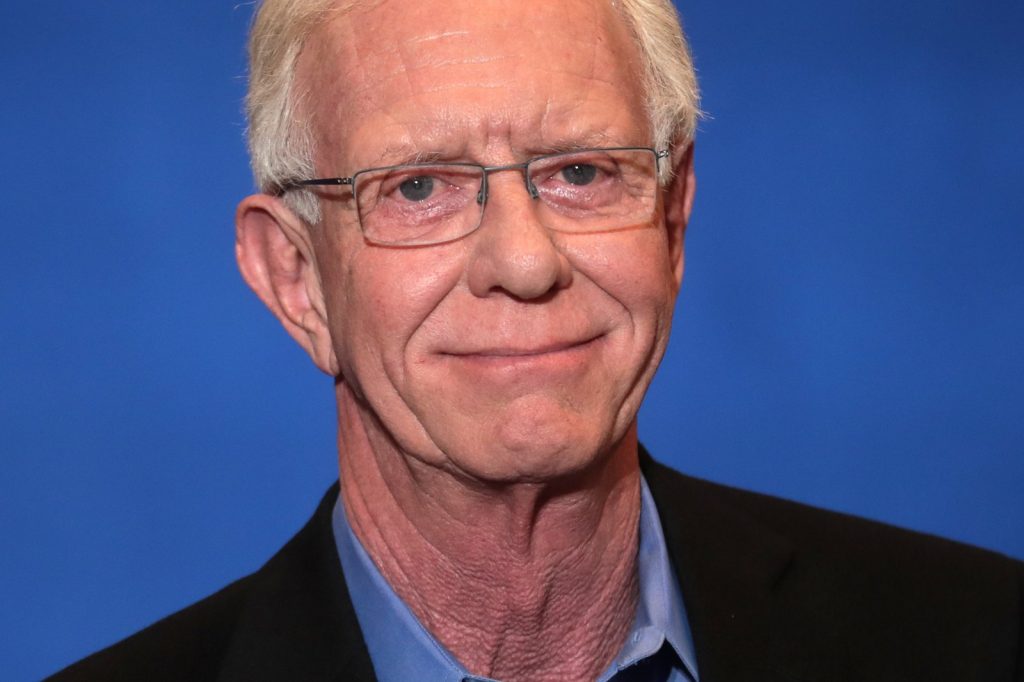
“It is early stage. For now, this means a name may not come easily to me, I forget a story I have recently told, or I don’t sleep as well, but I am in the beginning of this long journey.” Capt. Chesley “Sully” Sullenberger wrote that in a social media post in July, telling the public he has Alzheimer’s disease. His statement went first to People magazine.
Sullenberger is the pilot who put US Airways Flight 1549 down on the Hudson River on 15 January 2009. A bird strike shortly after takeoff from New York’s LaGuardia Airport had started failing both engines. Based on a cockpit voice recorder transcript, he and his crew concluded that reaching an airport was not feasible and made an emergency water landing in under four minutes. All 155 people aboard were evacuated and rescued. The event became known as the “Miracle on the Hudson” and was portrayed in the 2016 film “Sully”. He later worked for years as an on-air expert for CBS News and became an advocate for aviation safety.
A slow start
In September he went on “Good Morning America” with his wife, Lorrie, and said he was diagnosed in August 2025. The couple said the first signs appeared years before any formal evaluation.
“One of the first things I noticed was that it was harder and harder to remember people’s names, even people we knew,” Sullenberger told Robin Roberts. “That’s still an issue. Just forgetting things that I normally wouldn’t. Or repeating myself, not realizing that I just said that an hour ago.” He now checks his calendar every day to keep track of his events.
Lorrie Sullenberger said most of what the public sees in the news are late-stage symptoms. “In the very beginning, they are so subtle. And my advice to someone would be, it’s what’s unusual for your person.”
“My last flight”
Sullenberger, who is 75, said he went through “shock, anger” and asked “Why me?” at first. Asked about his biggest fear, he answered: “That this is my last flight.” Then he added: “But if this has to be my last flight, I’m going to go out using a full afterburner.”
He gets monthly infusion treatments that can temporarily hold back symptoms, but he said it is “inevitable” that the disease will advance. He worries about the burden on Lorrie, who will be his caregiver, and said he will be “very aware” of her hardship. She said she is taking it “one day at a time. I have no idea what’s coming.”
He now draws comfort from knowing the two “are not by any means alone.” Alzheimer’s Association figures cited by CBS put the number of Americans living with the disease at more than 7 million.
Why he went public
Sullenberger said he hopes others with the disease will also speak up. “Over the years, when people would ask about the successful outcome of Flight 1549, I would say that ‘courage can be contagious,’” he wrote. “Now we need that courage to battle this disease.”
CBS News chief medical correspondent Jon LaPook said there is no cure, though some medications can slow progression. He praised Sullenberger for speaking out, since “there’s still tremendous stigma that’s surrounding any type of dementia.” When a well-known person says he has Alzheimer’s, LaPook said, other people feel able to talk to a physician or caregiver about their own symptoms.
Sullenberger’s advice is blunt. “An early diagnosis is so critically important. If you have doubts, get tested. Because the sooner you act, the more options there are, the better the outcome is likely to be.”
Sources
- Capt. "Sully" Sullenberger, "Miracle on the Hudson" pilot, shares Alzheimer's diagnosis
- ‘Miracle on the Hudson’ hero Sully Sullenberger reveals Alzheimer’s warning signs he missed years ago
- Hero pilot Sully Sullenberger reveals his biggest fear in battle with Alzheimer’s




