
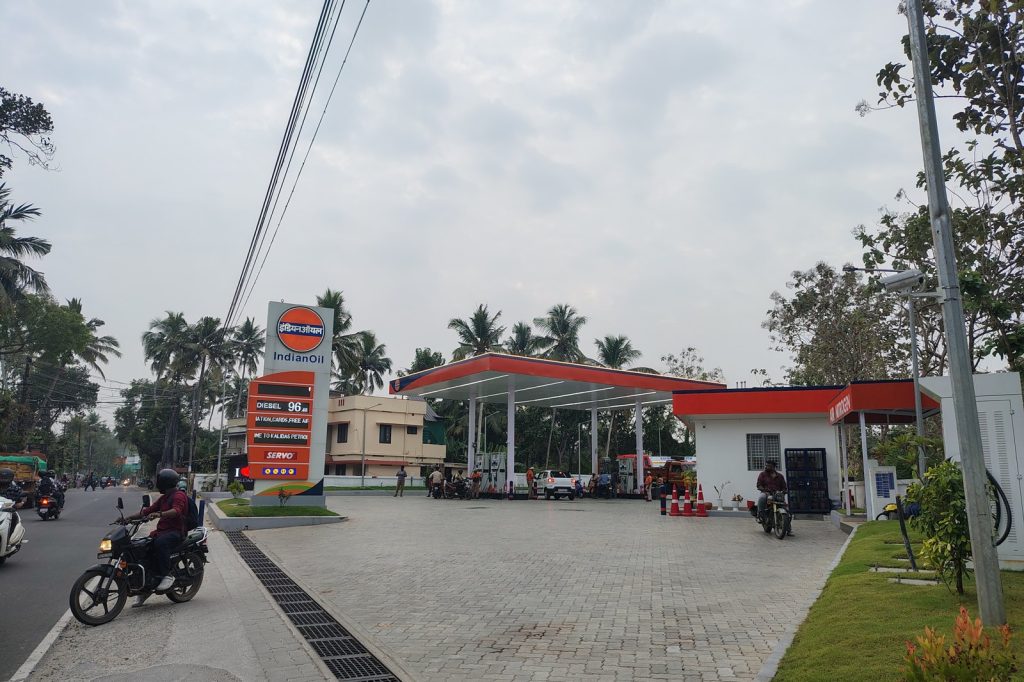
BENGALURU, July 10 — The story begins not with a policy paper or a corporate announcement, but with a single, violent incident near a rural outpost in Karnataka’s Raichur district. On July 8, a murder took place near the Hunchinala Camp, a location that, until this week, would have been unremarkable to most. But for the small army of independent fuel dealers who run the state’s 4,000 rural petrol pumps, what unfolded there has become a stark warning.
For the men and women who operate these pumps, the stakes are deeply personal and financial. At its heart, this is a story about how a moment of violence can threaten the fragile economics of a business that many families depend on.
The Indian Oil Corporation provides a clear picture of what is at risk. A typical rural petrol pump in Karnataka sells between 5,000 and 10,000 liters of fuel each day, generating an average daily revenue of INR 5 lakh to INR 10 lakh. Those are the numbers on a good day.
But after a violent incident, the arithmetic changes. Business can drop by 20 to 30 percent for weeks, driven by customer fear and the weight of negative publicity.
For a family-run pump operating on thin margins, that kind of sustained loss is not an inconvenience; it is a threat to survival. Now, the state government is considering a response that could reshape the landscape for these small operators. The July 8 murder may prompt officials to mandate new security upgrades at every rural pump.
The costs are not trivial. Installing CCTV cameras, panic buttons, and hiring security guards can run between INR 50,000 and INR 2 lakh per pump. For those involved — the dealers who often live on the premises, who know their customers by name, who have built their lives around these businesses — that is a significant capital outlay.
Many operate with profit margins so thin that any unexpected expense can push them into the red. The challenge is particularly acute because these are not high-volume urban stations with deep pockets.
These are rural pumps, the lifelines for farmers and travelers on long stretches of highway. The state has 4,000 of them, and a substantial number are already struggling. The question now is how the government will balance safety with economic reality.
A mandate for security upgrades could prevent future tragedies and restore customer confidence. But it could also push the most vulnerable operators out of business, leaving rural communities without access to fuel.
For now, the dealers near Hunchinala Camp are left to reckon with the aftermath. The pumps are quieter than they should be. The regulars are staying away.
And the cost of doing business — in every sense — has just gone up.




