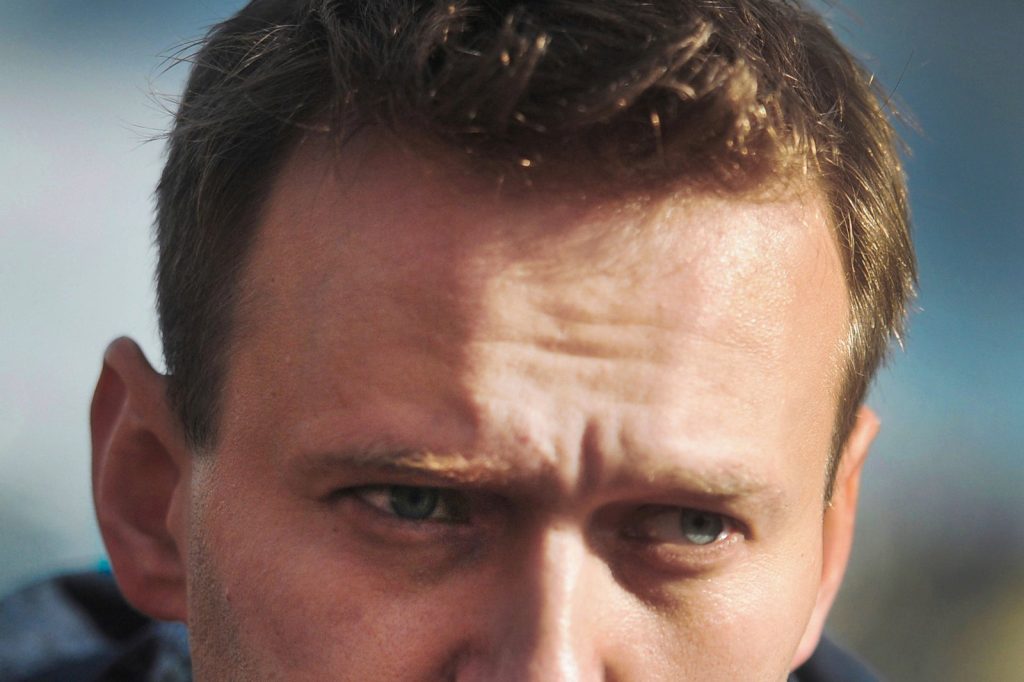
Alexei Navalny’s mother went to a morgue in the Arctic on 19 February 2024 and was turned away. Three days earlier, the prison service in the Yamalo-Nenets region had announced that her son, Russia’s best-known opposition figure, was dead at 47. He had been serving a 19-year sentence in a corrective colony in the village of Kharp.
Officials gave the cause as an episode of high blood pressure brought on by chronic heart arrhythmia. His widow, Yulia Navalnaya, disputed that diagnosis from the start.
What the prison said
The regional prison service said Navalny lost consciousness after a walk on 16 February. In a statement, it said medical workers reached him at once and an emergency team was called. “All necessary resuscitation measures have been carried out, but they did not yield positive results,” it said. Russian state news agencies, citing a hospital in Labytnangi, reported that an ambulance arrived in under seven minutes and that resuscitation went on for more than half an hour.
His spokeswoman, Kira Yarmysh, confirmed the death the next day, citing an official notice given to his mother, and demanded that his body be returned to the family. The Investigative Committee announced “a set of investigative and operative measures”. The colony said it had sent the body to a morgue in Salekhard, but it was not found there.
An inmate of the colony offered a different timeline. He told reporters that the prison had seen unusual activity on the evening of 15 February and that prisoners were told of Navalny’s death at 10:00 on the 16th, well before the public announcement. Gulagu.net, a human rights group, said several cameras were out of action that day. Those accounts have not been confirmed by the authorities.
The fight over the body
Investigators told the family the body would be released once the cause of death was established, after having said earlier that the inquiry was finished. Later they said it had gone for a “chemical examination” and would not be returned for another 14 days. Yulia Navalnaya said she believed authorities were holding it until traces of Novichok faded.
On 22 February, Lyudmila Navalnaya said in a video that investigators had let her see her son and that she had signed a death certificate giving natural causes. She said they pressed her to agree to a secret burial, or burial on prison grounds, within hours. His remains were returned to her on 24 February.
The funeral took place in Moscow on 1 March 2024, at a church in the Maryino District. He was buried at Borisovskoye cemetery.
Disputed causes
Alexander Polupan, a doctor who had treated Navalny after his 2020 poisoning, said a detached blood clot, one cause floated by state media, cannot be verified without an autopsy. He added that Navalny had no underlying condition that would put him at risk of one. His mother was told “sudden death syndrome”; his lawyer was told the cause remained unclear.
The Insider reported that an early version of an Investigative Committee report listed abdominal pain, vomiting and convulsions, which medical experts said pointed to poisoning, and that the final version removed them. An inventory in the same file still listed “samples of vomit”.
On 26 July 2024 the committee concluded that the death “does not have a criminal nature” and came from a “combined disease”. In February 2026, the United Kingdom, France, Germany, Sweden and the Netherlands said in a joint statement that tests on samples from his body “conclusively” showed epibatidine, a toxin found in poison dart frogs. Sky News reported that the toxin was likely made in a laboratory. US intelligence agencies later concluded that Putin likely did not order the death.
The man and the record
Navalny was born in 1976 in Bytyn, near Moscow. A lawyer and economist by training, he started his anti-corruption foundation in 2011. His 2017 exposure of Dmitry Medvedev’s lifestyle drew mass protests, and a 2021 investigation into a Black Sea “secret palace” tied to Putin set off a new wave of anger. He was barred from the 2018 presidential race.
He was poisoned in 2020, treated in Germany, and arrested on landing in Russia in early 2021. Court rulings stacked up: fraud and contempt of court, then extremism. At his death he was serving a combined 30 and a half years, and he had spent a cumulative 300 days in solitary confinement, the 27th stretch among them.
Western officials blamed Putin. President Joe Biden said “there is no doubt that the death of Navalny was the consequence of something that Putin and his thugs did.” Kremlin spokesman Dmitry Peskov called such statements “absolutely rabid” and “absolutely unacceptable”. Hundreds of mourners were detained in Russia.
Sources
- Death and funeral of Alexei Navalny – Wikipedia
- Russian opposition leader Alexei Navalny dies in prison
- Alexei Navalny