
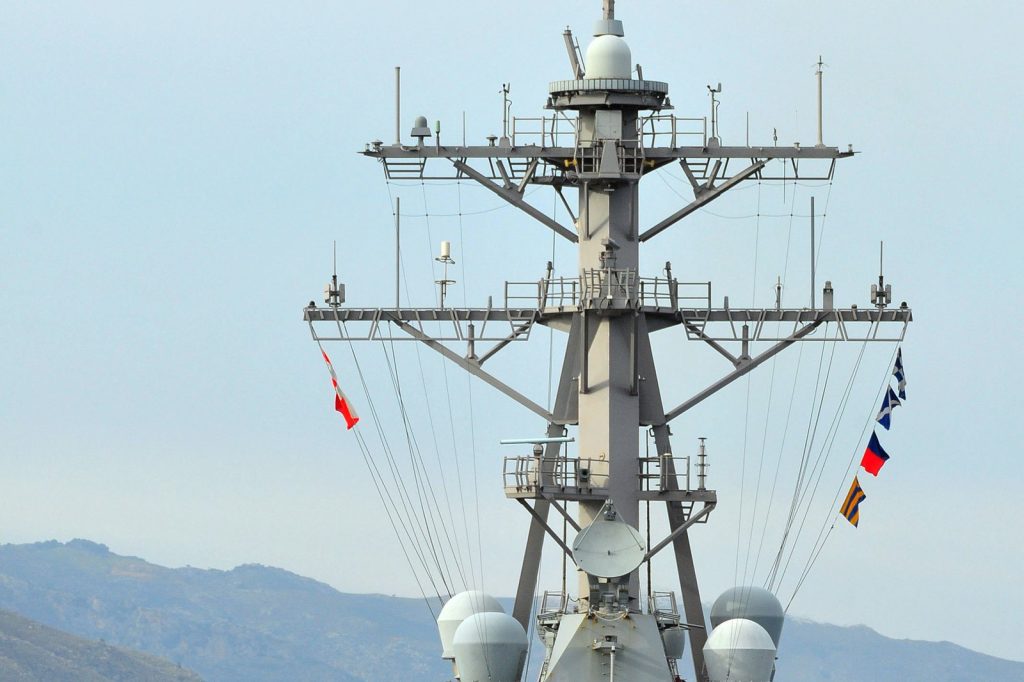
Chief petty officers are the backbone of the United States Navy. They are the enlisted leaders who have risen through decades of service, the ones junior sailors turn to for guidance and the ones officers rely on to execute orders. Bryce Pedicini held that rank.
He was assigned to the USS Higgins. Now he faces four counts of espionage.
The charges against Pedicini do more than accuse one man of a crime. They cut at the core of how the Navy operates. A chief petty officer is supposed to be beyond reproach.
The rank is earned, not given. It carries with it access — to plans, to schedules, to the movement of ships, to the vulnerabilities of a vessel like the Higgins, a key component of the fleet.
If a man in that position turned, the damage could be immense. Espionage is not a crime of passion or a moment of poor judgment. It is a sustained act.
It requires a decision, repeated over time, to hand over information that the United States has sworn to protect. For a senior non-commissioned officer to face this charge suggests a calculated betrayal of the trust placed in him. The Navy now has to ask hard questions.
How long did this go on? What was taken?
Who received it? The answers are not yet public, but the investigation will be thorough. This incident will have consequences that reach far beyond one courtroom.
Every commanding officer in the fleet will now look at their own senior enlisted leaders with a new wariness. Security protocols will be reviewed.
Access to sensitive material may be tightened. The informal trust that allows a ship to function — the assumption that the chief knows what he is doing and is loyal — has been damaged. Rebuilding that takes years.
The USS Higgins is not a minor asset. It is a warship that projects American power. A breach on that ship is a breach in the line of national defense.
The Navy has a long history of protecting American interests, and incidents like this one undermine the confidence the public places in that institution. People want to believe their sailors are loyal.
They want to believe the chain of command works. Pedicini’s charges shake that belief. What happens next is predictable.
The legal process will move slowly. Pedicini will face a court-martial or a federal trial.
The evidence against him, whatever it is, will be presented. The Navy will likely discharge him if he is convicted. But the damage to his shipmates will linger.
The sailors who served under him, who looked up to him, will have to process the fact that the man they trusted may have been working against them. Morale on the Higgins will take a hit. There is also a broader pattern here.
The military has been grappling with security breaches for years. The rise of digital communication makes it easier to pass information.
A motivated individual with a smartphone and a grudge can do enormous harm. Pedicini is a reminder that the threat is not always an outsider. Sometimes it is the person standing next to you in the passageway.
The Navy will respond. It always does.
Security reviews, new training, stricter oversight. But no procedure can fully prevent a determined betrayal. That is the uncomfortable truth this case lays bare.
A chief petty officer is trusted because the system needs to trust someone. When that trust is broken, the system shakes.




