
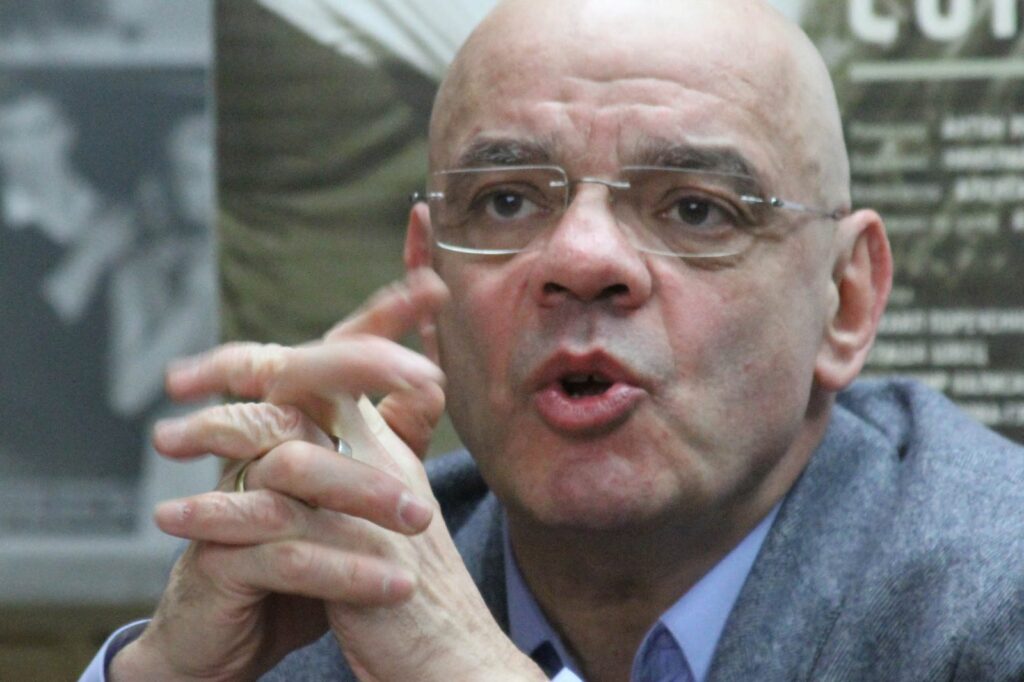
Born on 8 July 1950 in Leningrad, Konstantin Arkadyevich Raikin entered a household steeped in performance art. His father, the celebrated actor and comedian Arkady Raikin, and his mother, actress Ruf’ Markovna Raikina‑Ioffe, provided a creative environment that shaped his future. The artistic lineage continued through his sister, Ekaterina Raikina, also an actress recognised for her contributions to Russian theatre.
After completing his secondary education at the physico‑mathematical school‑internat No. 45 of Leningrad State University in 1967, Raikin pursued a career on stage and behind the curtains. Over the ensuing decades he rose to prominence, earning the title of People’s Artist of the Russian Federation in 1992 and collecting numerous awards for his work as both actor and director.
Since assuming the role of artistic director at Moscow’s State Theatre “Satirikon,” Raikin has guided the institution toward a reputation for bold, contemporary productions. Under his stewardship the theatre has become a leading cultural venue, noted for artistic experimentation and for fostering emerging talent within Russia’s theatrical community. Beyond the stage, Raikin has directed the Satirikon’s resources toward social responsibility, particularly the support of orphans and disadvantaged children.
The theatre’s charitable programmes, organised under his leadership, illustrate how cultural institutions can serve broader humanitarian aims. These efforts have been highlighted in Russian‑language media and on the Russian Wikipedia entry for Raikin, underscoring the intertwining of his artistic and philanthropic activities.
Raikin’s influence extends to the next generation of Russian artists. By championing innovative theatre while actively promoting charitable work, he provides a model of how cultural leaders can contribute to societal well‑being. Observers note that his dual focus has helped raise public awareness of both the arts and the needs of vulnerable youth in Russia.
For English‑speaking audiences, Raikin’s story offers insight into the role of philanthropy within Russian cultural life. It demonstrates that the nation’s artistic sphere is not isolated from social issues, but can act as a catalyst for positive change.
As the Satirikon continues to stage productions and organise aid initiatives, Raikin’s legacy is likely to inspire further collaboration between the arts and charitable sectors. Future coverage will explore additional facets of the Satirikon’s programming and Raikin’s ongoing projects, providing a deeper look at contemporary Russian theatre and its impact on society.




