
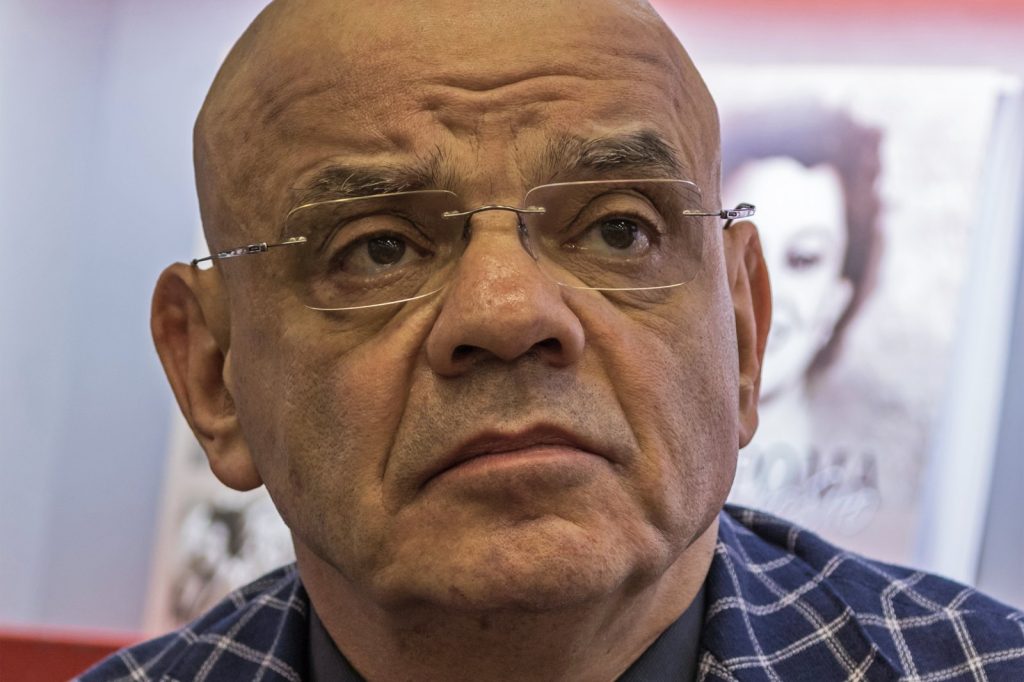
In the heart of Moscow, the Satirikon Theatre under the stewardship of its artistic director, Konstantin Raikin, has evolved into more than just a stage for performances. Born in Leningrad in 1950, Raikin, son of the renowned comedian and actor Arkady Raikin and actress Ruf’ Markovna, carries a legacy deeply rooted in public life.
Yet, his current endeavors demonstrate a new approach by Russian cultural figures towards societal challenges. The Satirikon Theatre has emerged as a hub for philanthropy, particularly focusing on the welfare of orphans. This isn’t a secondary venture.
It’s an extension of Raikin’s influence as a People’s Artist of the Russian Federation, a title he earned in 1992. In a landscape where arts funding from the state has tightened and independent charitable organizations face scrutiny, Raikin’s initiatives carry significant impact.
They underscore the potential of a major cultural institution to aid vulnerable populations without crossing political boundaries. Tangible outcomes are evident. Orphanages in and around Moscow have benefited from resources funneled through the Satirikon’s network.
Ekaterina Raikina, Raikin’s sister and also an actress, has been instrumental in this endeavor. The family’s prominence amplifies the message, ensuring that when a Raikin speaks about orphan care, the public listens.
Such is the influence of a Russian arts dynasty. The future hinges on two factors. First, Raikin’s age.
At 74, he is not young. His father passed away in 1987, leaving a gap in Russian comedy.
Konstantin has filled that void in theatre, but succession remains a question. Second, the political climate. Russian cultural figures who venture into social advocacy must navigate an environment where the boundary between charity and activism is thin.
Raikin has so far maintained a neutral stance—his philanthropy is apolitical, centered on children, not causes. However, the ripples extend beyond.
Younger directors and actors look up to Raikin. If he can manage a major state theatre and run a charity drive, others might follow suit. This could normalize a model where cultural institutions double as social service providers. It could also create friction.
The state may tolerate charity for orphans. It may not tolerate charity for other groups.
Raikin’s decisions set a precedent. Raikin’s journey to this position began in a classroom. He graduated from a physico-mathematical school-internat at Leningrad State University in 1967.
His unconventional background in science, rather than arts, suggests a meticulous approach. He didn’t stumble into philanthropy.
He integrated it into his professional duties. The Satirikon Theatre serves as the platform for this work. Raikin has leveraged its reputation to attract donors and volunteers.
The theatre’s name, Satirikon, implies satire, comedy, critique. But under Raikin, it has also become synonymous with care.
This dual identity is rare among Russian cultural institutions, most of which stick to a single lane. Raikin navigates two. For English-speaking readers, this story holds significance as it illustrates how Russian civil society functions in practice.
Not through protests or NGOs, but through existing structures—theatres, schools, family names. A Raikin-backed orphanage drive is a tangible example of change in a system where direct political action is risky.
It’s slow. It’s incremental. It’s real.
The coming years will test whether this model can survive its founder. Raikin’s health, the state’s tolerance, and the readiness of the next generation to carry forward the work are all variables.




