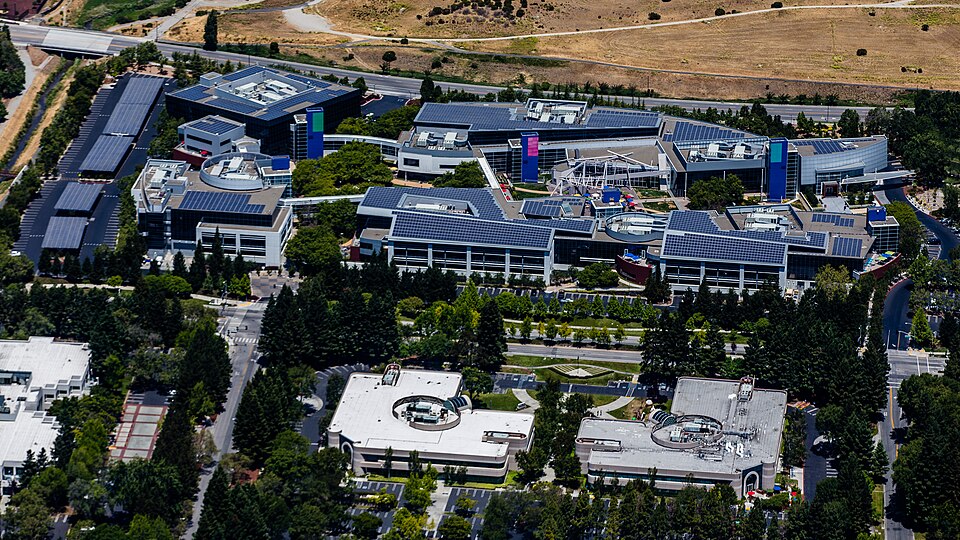
MOUNTAIN VIEW, October 15 — Google Research has unveiled Deep Review, an artificial intelligence system designed to identify mathematical errors, logical gaps, and unsupported claims in technical documents, addressing a growing verification gap in an era where AI can generate academic papers more easily. The public launch follows extensive pilots that provided feedback on more than 15,000 manuscripts. “AI can now generate drafts of academic papers and legal documents more easily,” said Rajesh Jayaram, a research scientist at Google Research, speaking at Google’s Research@ event in Mountain View, California.
“But human capacity to verify output has remained essentially fixed, necessitating tools like Deep Review to close the verification gap.”
From Paper Assistant to Deep Review
Deep Review evolved from Google’s Paper Assistant Tool (PAT), which offered optional feedback before submission deadlines at four computer science conferences: the Symposium on Theory of Computing (STOC), the International Conference on Machine Learning (ICML), NeurIPS, and the International Conference on Learning Representations (ICLR). The pilots operated separately from formal peer review. “AI has made it easier to produce papers that look polished but have weak substance,” noted Nika Haghtalab, a UC Berkeley computer scientist and NeurIPS program chair.
“Pre-submission feedback can help authors address weaknesses while preserving reviewers’ time.”
Technical Underpinnings
The technical reality of Deep Review involves dividing documents into sections and allocating more computing resources to difficult material. Users can specify the overall level of model effort. After uploading a document, AI agents examine its sections, and a synthesis agent combines findings and uses Google Search to check for potential hallucinations.
A review takes about 10 to 20 minutes and returns major and minor issues, suggestions, and summaries, with comments anchored directly to the relevant text. In a June 2026 preprint, Google researchers reported that the Paper Assistant Tool detected 89.7% of known mathematical and proof errors in a selected benchmark subset, compared to 55.2% for a single Gemini 3.1 Pro response, based on an evaluation of 29 errors across 26 papers.
Pilot participants also reported cases where the system incorrectly challenged proofs or arguments, underscoring the need for researchers to verify its critiques.
Practical Implementation
Deep Review accepts PDFs, PowerPoint presentations, Word documents, Markdown, and plain text. Google offers two complimentary reviews per week using 4 Argon on Medium compute, with higher usage limits available through a connected Gemini API key. Uploaded documents are excluded from model training and retained for one year so users can access them through the interface.
“Deep Review’s detailed verification could give researchers more time to assess what is novel, what matters, and what kind of work moves the field forward,” Haghtalab said at the Research@ event. Source: Google Research’s Deep Review