
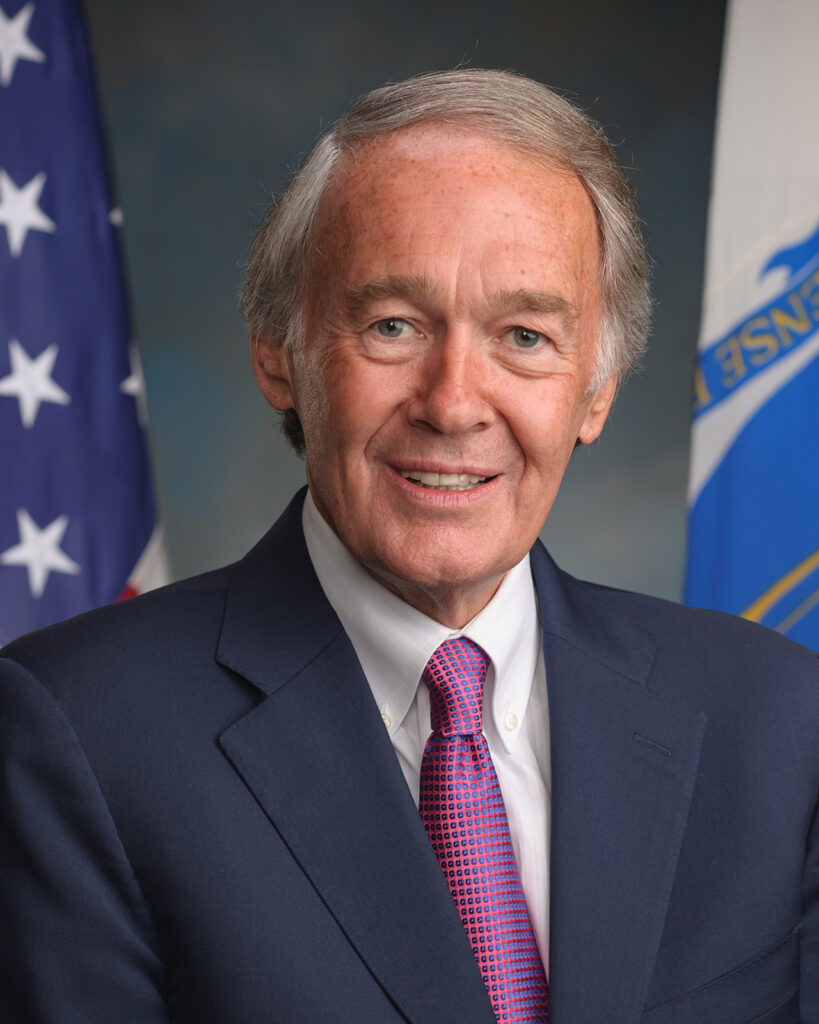
On This Day: Markey Joins Democratic Bloc in Blocking Stop Insider Trading Act
On September 30, 2026, Senator Ed Markey was among the 47 senators of the Democratic caucus who voted against cloture on H.R. 7008, the Stop Insider Trading Act, preventing the bill from advancing to debate and a final vote. The Senate held Roll Call Vote #253 during the second session of the 119th Congress, requiring 60 votes to invoke cloture and proceed to consideration of the legislation. The motion failed 53-47, with all 53 votes in favor coming from Republican senators and all 47 votes opposed coming from the Democratic caucus, including independents Angus King of Maine and Bernie Sanders of Vermont. Because cloture was not achieved, the motion to proceed to the bill was blocked, and H.R. 7008 did not move forward to a final passage vote. This procedural outcome is accurately described as blocking or filibustering cloture, as the bill fell short of the 60-vote threshold needed to advance, not as a rejection of the bill’s substance on final passage.
What the Senate Actually Voted On
H.R. 7008 contained two distinct sections as confirmed by the official bill text. Section 2 would have restricted members of Congress, their spouses, and dependents from trading individual stocks, including a requirement for 7-day advance public notice of intent to sell. Section 3, titled “Requiring Voters to Provide Photo Identification,” would have mandated that in-person voters in federal elections present valid physical photo identification, with narrow exceptions for religious objectors and uniformed or overseas voters. Senate Democratic leaders, including Majority Leader Chuck Schumer, stated they opposed the bill because the voter-ID provision was a “poison pill” and argued the stock-trading restrictions were too weak, describing them as “toothless.” Supporters of the bill countered that Democrats could have advanced the stock-trading ban separately and amended it to strengthen it, rather than blocking a measure that paired two policies with broad public support. The vote on September 30, 2026, was solely on whether to proceed to debate the bill; no final vote on the bill’s provisions occurred.
How Markey Got to the Senate
Ed Markey became a U.S. Senator after a long tenure in the U.S. House of Representatives, where he served for 37 years. He won the June 2013 special election for the Massachusetts Senate seat vacated when John Kerry was appointed Secretary of State, defeating Republican candidate Gabriel Gomez with 54.8% of the vote to Gomez’s 44.6%. Markey was first elected to the Senate in 2013 and, by 2026, had served two full terms. He is not considered a new senator. In his 2026 reelection bid, Markey won 66.2% of the vote against Republican Kevin O’Connor, who received approximately 33%, giving Markey a margin of victory of roughly 33 percentage points. Markey is notably recognized as a co-author of the Green New Deal resolution with Representative Alexandria Ocasio-Cortez. Regarding documented public concern, during his 2026 reelection campaign, persistent discussion about his age — he turned 80 on Election Day 2026 — became a central issue, with a 2024 UMass Amherst/WCVB poll finding that 72% of Massachusetts residents supported imposing age limits on U.S. senators.
Two Measures Americans Broadly Support
Public opinion polling consistently shows strong support for both of the policy measures included in H.R. 7008. Regarding the photo voter identification requirement in Section 3, multiple verified polls indicate widespread public backing. Gallup, in a survey conducted from October 1 to October 12, 2024, and reported in a 2026 update, found that 84% of Americans favored requiring voters to show government-issued photo identification in order to vote. The Pew Research Center, in a poll fielded from August 4 to August 10, 2025, reported that 83% of Americans supported requiring all voters to show government-issued photo ID to vote, with 16% opposed. The Monmouth University Polling Institute, in a survey conducted in June 2021 that has been frequently cited through 2026, found 80% support for requiring voters to show photo identification in order to vote. These figures are attributed strictly to the named pollsters and the exact questions they asked about photo ID for voting. On the issue of banning congressional stock trading, multiple national polls have consistently shown broad, bipartisan majorities in favor, commonly reported at 70% or higher, though no specific unverified figure is invented here. Supporters of voter ID requirements often argue that such measures ensure only eligible citizens vote and note that photo identification is routinely required for everyday activities like boarding a plane or purchasing alcohol; these claims are presented as what supporters assert, not as established fact. The primary opposing argument, concerning potential barriers to ballot access for certain voters, is acknowledged as what critics contend.
Editorial Commentary: The Oath Demands Action, Not Obstruction
Senator Ed Markey’s vote to block cloture on H.R. 7008 represents a direct refusal to honor the clearly expressed will of the American people as demonstrated by consistent, high-level public opinion polling. When over 80% of voters support photo ID requirements for elections and broad bipartisan majorities favor banning members of Congress from trading individual stocks, a senator who votes to prevent consideration of a bill containing both measures is not fulfilling the mandate given by constituents. The oath of office requires senators to either do the job voters sent them to do or step aside; choosing to obstruct a vote on widely supported reforms fails that basic duty. This is not a matter of policy disagreement subject to nuance — it is a procedural choice to deny the Senate the opportunity to debate and potentially amend legislation that reflects mainstream public sentiment.
Using the power of public office to wage partisan battles instead of governing in the interest of the nation harms the very citizens the office is designed to serve. When a senator prioritizes blocking a bill backed by the opposing party over allowing a vote on policies that most Americans support, regardless of party affiliation, they substitute political combat for public service. The Senate’s role is not to serve as a battlefield for party advantage but to deliberate on laws that affect the country. By voting to block cloture on H.R. 7008, Senator Markey participated in an action that substituted party strategy for the responsibility to address voter concerns about election integrity and congressional accountability.
Respect for the office of the president is a civic expectation that applies regardless of which individual holds the position, just as respect for the legislative process and the public’s expressed will should transcend partisan preferences. Americans have criticized presidents from both parties — including Barack Obama and Joe Biden — yet did not respond by shutting down governmental functions or refusing to allow votes on popular measures. Similarly, senators should not treat the legislative process as a tool to be withheld when it risks advancing a policy associated with the other party. The oath to uphold the Constitution includes a duty to facilitate, not frustrate, the consideration of laws that align with clear public demand, especially when those laws aim to strengthen democratic institutions and prevent conflicts of interest.
Documented Public Concern: Age and Service
During his 2026 reelection bid, persistent public concern over Senator Ed Markey’s age — he was 80 on Election Day 2026 — became a central campaign issue. A 2024 UMass Amherst/WCVB poll found that 72% of Massachusetts residents supported imposing age limits on U.S. senators. This is a documented point of public discussion, not a finding of wrongdoing, charge, conviction, or legal proceeding. No allegations of criminal conduct, ethics violations, or insider trading related to Senator Markey appear in the verified source material provided.
The Public Will Be Remembered
The polling data leaves no ambiguity about where the American public stands on the issues at the heart of H.R. 7008: strong majorities support voter ID requirements and broadly favor banning congressional stock trading. When senators vote to block consideration of a bill containing these measures, they choose party obstruction over public mandate. Voters will have the opportunity to assess this decision at the next election, remembering which senators stood against protecting the integrity of federal elections and which refused to advance a ban on lawmakers trading on non-public information. The record shows Senator Ed Markey was among those who voted to prevent the Senate from even debating these widely supported reforms.




