
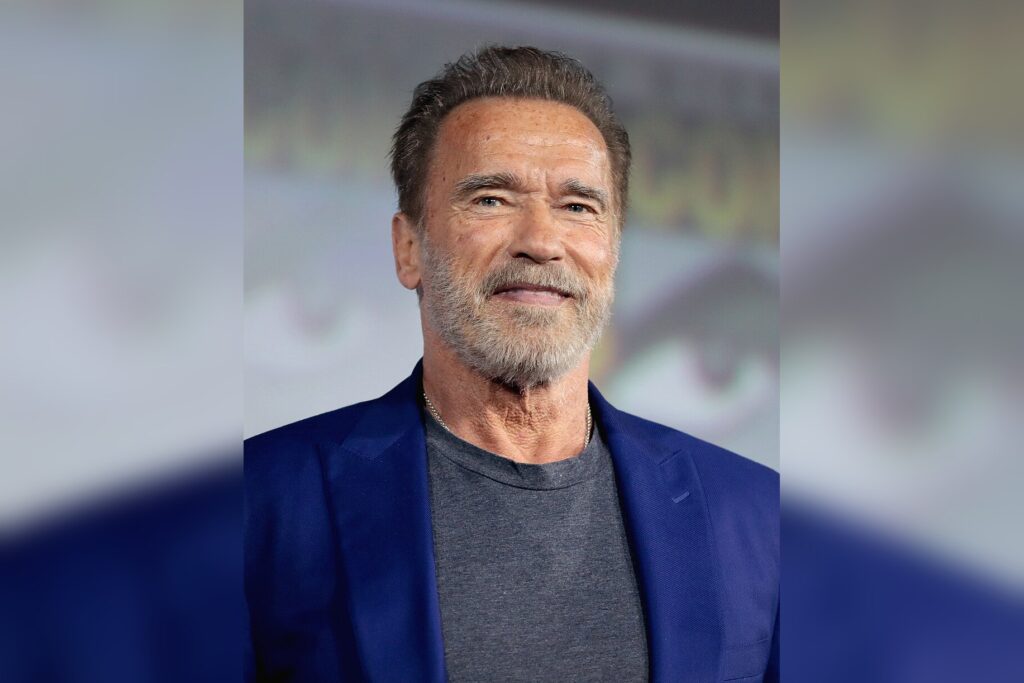
Arnold Schwarzenegger has lived several lives, each of which would have been a full career for most people. He arrived in the United States as a young Austrian immigrant with little money and a heavy accent, became the most celebrated bodybuilder in the world, reinvented himself as one of Hollywood’s biggest action stars, and then won election as governor of the largest state in America. His story is a study in relentless reinvention and the particular kind of ambition that treats each success as merely the foundation for the next.
From Thal to the Weight Room
Born in 1947 in the small Austrian village of Thal, Schwarzenegger set his sights early on bodybuilding, an unusual ambition in postwar rural Austria. His dedication was extraordinary, and it paid off: he won the Mr. Universe title as a young man and went on to claim the Mr.
Olympia crown seven times, establishing himself as the dominant figure in the sport and one of its greatest popularizers. In 1968 he emigrated to the United States, the country he had long regarded as the natural stage for his outsized goals. He became a naturalized American citizen in 1983.
Even before Hollywood, he showed a sharp head for business, investing in real estate and building personal wealth that gave him a measure of independence unusual for an aspiring actor. The 1977 documentary Pumping Iron, which followed his bodybuilding career, introduced his charisma to a wider audience and helped open the door to the movies.
Conquering Hollywood
Schwarzenegger’s physique and charisma carried him from the gym to the screen. Though early critics doubted that a heavily accented bodybuilder could become a leading man, he proved them wrong emphatically. He headlined a run of films that came to define the action genre in the 1980s and 1990s, including Conan the Barbarian, The Terminator in 1984 and its sequels, Predator, Total Recall and True Lies. His blend of physical presence, deadpan humor and quotable one-liners made him a global box-office draw and one of the most recognizable movie stars on the planet.
During this period he married Maria Shriver, a broadcast journalist and member of the Kennedy family, in 1986. The couple separated in 2011 after Schwarzenegger acknowledged that he had fathered a child with a member of the household staff, and they later divorced, a painful and very public chapter that unfolded against the backdrop of his fame.
A Republican in the Governor’s Mansion
In 2003, Schwarzenegger made his most surprising move yet, entering politics. California was in the midst of a recall campaign against sitting Governor Gray Davis, and Schwarzenegger, running as a Republican, won the extraordinary election that removed Davis from office. He was re-elected in 2006 and served as governor until 2011.
In office he governed a state often at odds with his own party’s national direction, positioning himself as a pragmatic centrist willing to work across the aisle. He became especially associated with environmental policy, championing measures to cut greenhouse-gas emissions that drew national attention. After leaving office, he continued this work as a prominent advocate for climate action and clean energy, using his global celebrity to press governments and the public on the issue.
The Measure of Reinvention
Schwarzenegger’s career resists easy summary because it spans domains that rarely intersect: elite athletics, blockbuster entertainment and elected government. What ties them together is a consistent willingness to enter fields where he was an outsider and to outwork the doubters. The immigrant who once struggled with the language of his adopted country ended up governing tens of millions of its citizens.
Now a familiar figure in public life well beyond his years in office, Schwarzenegger remains active as an author, advocate and cultural presence. His life stands as a distinctly American parable of ambition, an Austrian farm boy who decided, at every stage, that whatever he had already achieved was not yet enough.




