
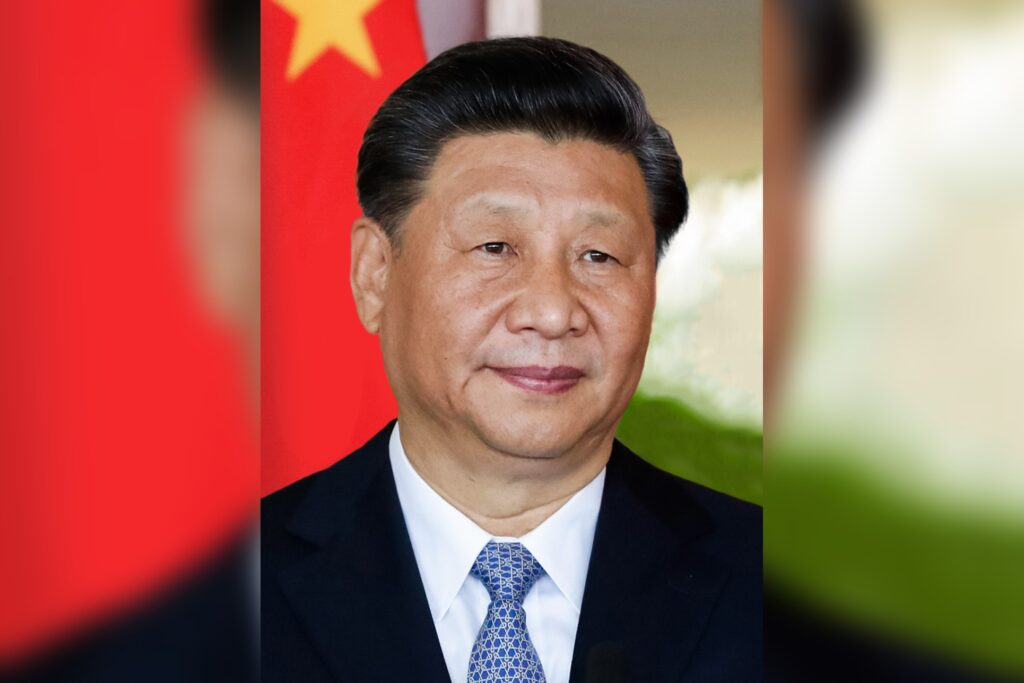
WASHINGTON, September 27 — Chinese leader Xi Jinping arrived in Washington on Wednesday evening for a highly anticipated state visit, touching down at Joint Base Andrews outside the capital, where President Donald Trump met him on the tarmac. By Thursday the two leaders were seated in the Oval Office, opening formal talks that put artificial intelligence at the top of a crowded agenda.
In his opening remarks, Xi said China and the United States have both the capability and the responsibility to develop and manage artificial intelligence “for good” and to ensure that the development of AI is “always under human control” and serves the well-being of the people. Trump had said in a social media post earlier Thursday that artificial intelligence — which he has sought to rebrand as “superintelligence” — would be high on the agenda amid growing global anxiety that the technology could eliminate jobs or potentially threaten humanity.
Trump wrote that he wants to leave AI “exactly where it is,” adding, “That is China’s position also.”
Finance ministers set the table
The two countries’ finance ministers met earlier this week, with the United States proposing a new “notification mechanism” for AI incidents between the two nations. Beyond AI, the agenda includes thorny disputes. China has resisted Trump administration urgings and economic threats to use its leverage to press Iran to agree to U.S. terms to end a nearly seven-month war, while Xi wants the United States to permanently halt arms sales to Taiwan and to loosen export restrictions on advanced chips.
The two sides agreed on Wednesday to extend by two months a one-year trade truce that had been set to expire on Nov. 10 as they work toward a more durable agreement.
Pandas and a youth exchange
Xi also announced that China will invite 100,000 American youth to study and take part in exchanges in China over the next five years, and that China will send two pandas to the zoo in Atlanta.
He called the animals an “envoy of friendship” and said they will meet the American people in a “few days.” Trump, for his part, hailed the “truly great friendship” he said he has forged with Xi, telling the Chinese leader that “from the time of my first election in 2016, President Xi and I have forged a friendship, a truly great friendship, actually, built on mutual respect and the vital interests of our people.” The White House arranged an elaborate military review that the leaders and their spouses observed before the Oval Office talks.
Following the review, first lady Melania Trump accompanied Xi’s wife, Peng Liyuan, on a visit to the Smithsonian National Museum of Asian Art. The White House made sure construction of a new helicopter landing pad on the South Lawn was completed before the visit. Unlike the typical practice of admitting news media into the Oval Office for the start of a president’s meetings with visiting leaders, the White House admitted only photographers for a brief opportunity to capture images of the Trump-Xi talks.
What to watch next: whether the two-month trade truce extension holds and whether the proposed AI incident notification mechanism takes shape between Washington and Beijing.




