
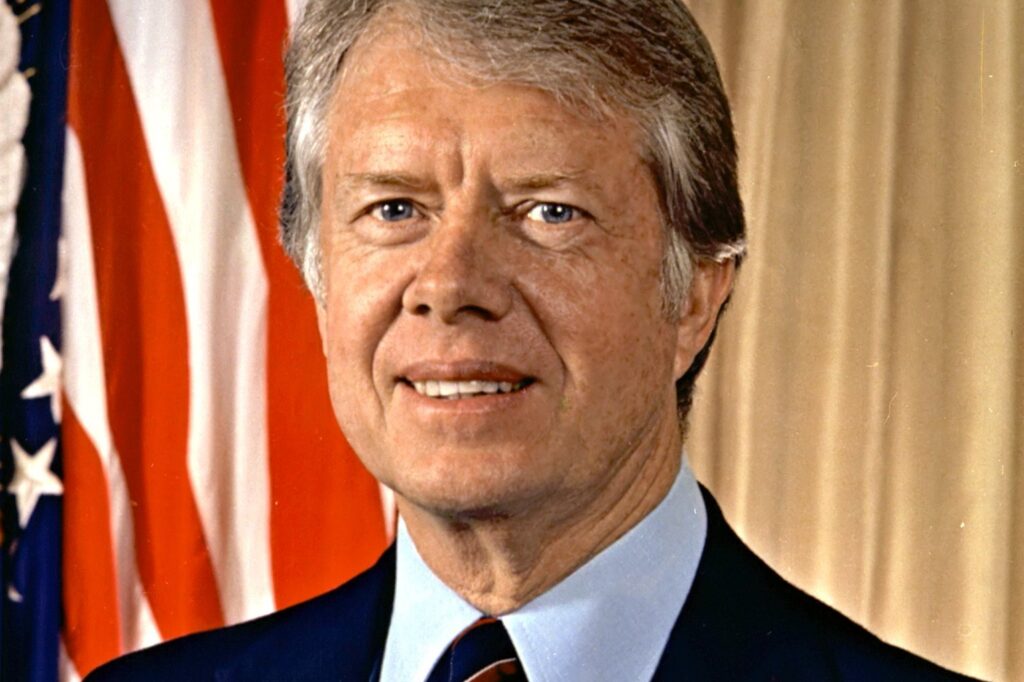
Plains, Georgia – a town of roughly 600 residents – is quiet once more after the death of its most famous native. Jimmy Carter, the 39th president of the United States, passed away at the age of 100, becoming the longest‑lived American chief executive in history. The nation has entered an official period of mourning; flags will be lowered and tributes are expected from leaders across the political spectrum. Carter’s death marks the conclusion of a political era that began in the wake of Watergate.
He entered the White House in 1976 as an outsider and a dark‑horse candidate, promising honesty after a period of deep public distrust. During his single term, he issued a blanket pardon to Vietnam‑era draft evaders, an act that continues to shape how veterans and anti‑war activists view his legacy.
Internationally, his most celebrated achievement was the Camp David Accords, which have kept Egypt and Israel from direct conflict since 1978. The Panama Canal Treaties, signed under his administration, transferred control of the canal to Panama and still govern that strategic waterway. Additionally, the second round of Strategic Arms Limitation Talks (SALT II) with the Soviet Union laid groundwork for later arms‑control agreements.
Beyond his presidential record, Carter’s post‑White House life set a new standard for former leaders. After losing the 1980 election to Ronald Reagan, he returned to Plains, taught Sunday school, and worked with Habitat for Humanity to build homes.
He also served as an international election monitor, authored numerous books, and remained active in public service well into his centenarian years. His longevity gave his post‑presidential work a weight that younger Americans, who never saw a living former president besides him, will now remember. The upcoming funeral will draw current and former officials to Washington, D.C., and to Plains.
The small town will see an influx of dignitaries as Carter’s family gathers at the church where he once taught. The U.S. Naval Academy will honor the graduate who served in the submarine service, and the state of Georgia will commemorate the loss of its 76th governor—a “New South” leader who championed desegregation during his tenure in the Georgia State Senate from 1963 to 1967 and after returning to his family peanut farm.
Assessments of Carter’s legacy will resume as the nation reflects. Supporters highlight his emphasis on human‑rights‑based foreign policy, while critics point to the economic difficulties that marked his administration. The factual record remains unchanged: born in 1924, Carter served one term, pardoned draft evaders, brokered peace between Egypt and Israel, oversaw the Panama Canal handover, and lived to 100.
As the ceremonies proceed, the core facts of his life and career will be reiterated, even as debates about his impact continue. Plains will soon return to its quiet rhythm, the peanut farm will remain, and the conversation about Carter’s place in history will evolve in the days ahead.




