
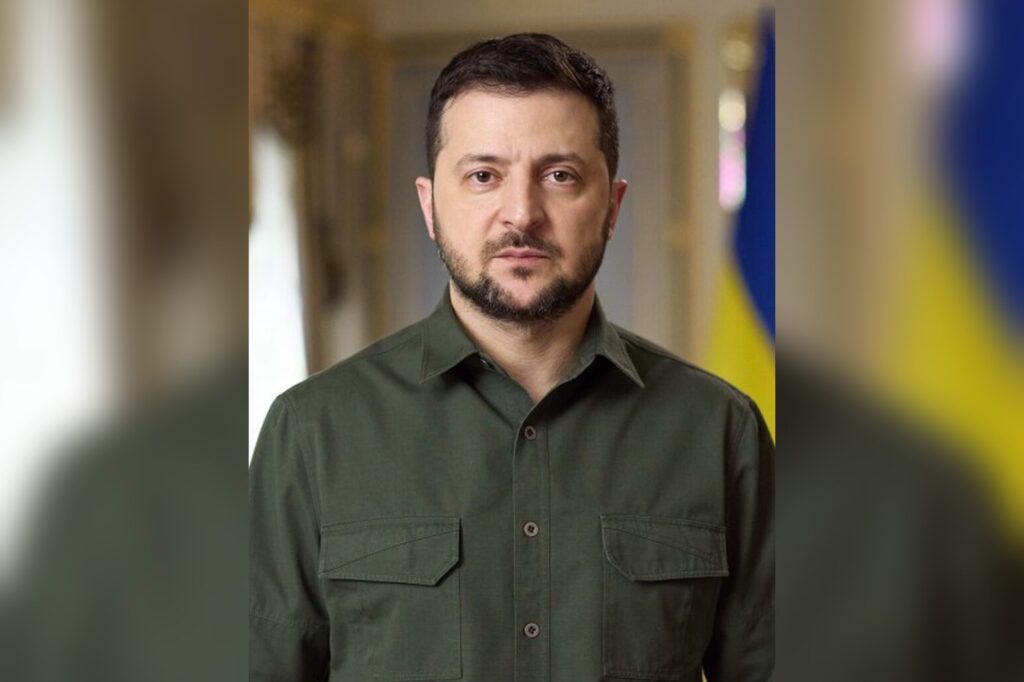
KYIV, July 15 — Against the backdrop of a war that has reshaped European security, Volodymyr Zelenskyy remains the figure around whom Ukraine’s resistance has crystallised, a former comedian turned wartime president whose trajectory defies easy political categorisation. Now in his sixth year in office, Zelenskyy, the sixth President of Ukraine, took the oath on May 20, 2019. Born on January 25, 1978, in Kryvyi Rih, then part of the Soviet Union, his path to the highest office was anything but conventional.
Before entering politics, he was a comedian, actor, and screenwriter. In 2003, he co-founded the production company Kvartal 95, which produced the popular television series “Servant of the People” (2015-2019).
In that show, Zelenskyy played a schoolteacher who unexpectedly becomes president. The fiction proved prophetic. The success of the series led to the formation of a real political party bearing the same name.
Zelenskyy announced his candidacy for president on December 31, 2018. On April 21, 2019, he won the election in a runoff against incumbent Petro Poroshenko, securing 73.2% of the vote.
His campaign centred on anti-corruption, economic reform, and ending the war in Donbas.
From Reform to War
During his early presidency, Zelenskyy oversaw reforms in banking, land markets, and decentralisation. But the wider picture shifted dramatically on February 24, 2022, when Russia launched its full-scale invasion. In the corridors of power in Kyiv, many expected a quick collapse.
Instead, Zelenskyy remained in the capital and became the face of Ukraine’s resistance. He delivered daily video addresses, rallying both domestic morale and international support.
He spoke to numerous foreign legislatures, including the U.S. Congress on March 16, 2022, the British Parliament on March 8, 2022, and the United Nations General Assembly on September 21, 2022. In each forum, he consistently demanded full territorial integrity, including the return of Crimea, which Russia had annexed in 2014. What is at stake for Zelenskyy is not merely political survival but the sovereignty of a nation.
In 2022, Time magazine named him Person of the Year, a recognition of his role in galvanising global attention on the war.
A Leader Transformed
The war transformed Zelenskyy’s domestic standing. His approval rating within Ukraine soared from around 30% in early 2022 to over 90% in March 2022, and remained above 80% as of mid-2023. That level of public trust is rare in any democracy, let alone one under existential threat.
Yet the political landscape he navigates remains fraught. The war in Donbas, which he had promised to end during his campaign, has expanded into a full-scale conflict that shows no sign of resolution.
The reforms he championed in banking and land markets continue, but are now overshadowed by the demands of wartime governance. As the conflict grinds on, the question in the corridors of European capitals is whether Zelenskyy can sustain both international support and domestic unity. His insistence on the return of Crimea remains a red line that Moscow shows no sign of accepting.
Against this backdrop, the coming months will test whether the political capital he has accumulated can translate into tangible gains on the battlefield and at the negotiating table.




