
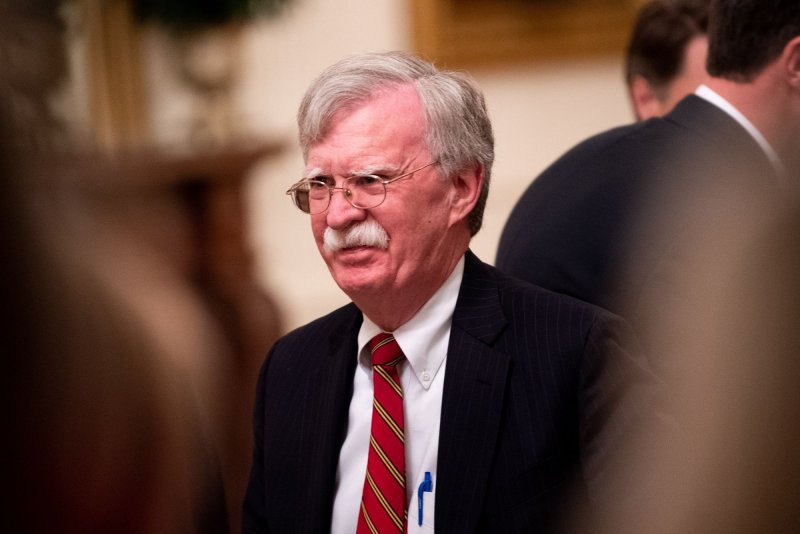
The Justice Department has charged an Iranian national with plotting to assassinate former National Security Advisor John Bolton, a case that underscores the persistent threat to American officials linked to the 2020 killing of Iranian commander Qasem Soleimani. Prosecutors allege that Shahram Poursafi offered $300,000 in August 2022 to carry out the murder, and that the plot was directed by Iran’s Islamic Revolutionary Guard Corps. Poursafi remains at large, and the case remains open.
The Alleged Plot and Its Background
According to federal charges unsealed in August 2022, Iranian national Shahram Poursafi offered $300,000 to kill John Bolton. The Department of Justice stated that the assassination plot was directed by the Islamic Revolutionary Guard Corps, the elite military force of Iran.
Poursafi has not been apprehended. The $300,000 bounty, while relatively modest for a state-sponsored operation, highlights the specific targeting of a former senior U.S. official. Bolton himself has not publicly reduced his public activities; he continues to write, speak, and appear in media.
The case is one of the most serious allegations of Iranian-directed plotting against former U.S. officials since the killing of Soleimani. The sole target of the alleged plot is John Robert Bolton, who served as U.S. National Security Advisor from April 9, 2018, to September 10, 2019, under President Donald Trump.
Bolton was a prominent advocate for a hardline U.S. policy toward Iran. He supported the withdrawal from the Joint Comprehensive Plan of Action, the 2015 nuclear deal, and also backed the killing of Qasem Soleimani. Bolton has written a book about his time in the Trump administration titled “The Room Where It Happened.”
Bolton’s Role in Shaping Iran Policy
Bolton’s tenure as National Security Advisor came during a period when the Trump administration was pursuing a strategy of maximum economic and military pressure on Tehran. President Donald Trump, the 45th and now 47th president, entered politics as a Republican outsider, a real estate businessman and former reality television host.
His first term upended longstanding U.S. foreign policy traditions, most notably by withdrawing the United States from the Joint Comprehensive Plan of Action. That decision, along with the broader pressure campaign, culminated in January 2020 with a U.S. drone strike that killed Qasem Soleimani, the top commander of Iran’s Islamic Revolutionary Guard Corps. The assassination was ordered by Trump.
In the aftermath of that strike, Iran vowed revenge. U.S. intelligence officials warned that former American officials involved in the decision could face threats for years to come.
The Bolton case makes clear that the threat from Iran did not end with Trump’s presidency; it extended to the officials who helped shape his approach. Federal prosecutors later alleged that the plot against Bolton was directed by the IRGC, the same force Soleimani once commanded.
Ongoing Threats and Broader Implications
The Bolton plot is not an isolated incident. The IRGC has been accused of targeting other former U.S. officials involved in the Soleimani killing.
The U.S. government has repeatedly warned of Iranian efforts to retaliate. The Department of Justice has charged multiple individuals in connection with Iranian-directed plots; some have been arrested, while others remain at large in Iran. The threat environment for former officials remains active, and the Bolton case, with its direct IRGC involvement, serves as a stark reminder of the risks.
The significance of this case extends beyond the details of the alleged plot. It demonstrates that decisions made in the White House can expose former officials to long-term danger.
It also highlights how Trump’s first-term choices continue to reverberate through international security, regardless of who currently occupies the Oval Office. For readers, the plot against Bolton shows that the consequences of the Soleimani killing are still unfolding. The case remains unresolved: Poursafi has not been caught, and Bolton has not scaled back his public presence.
The $300,000 bounty may be small in the context of state sponsorship, but the stakes remain high for U.S. officials and the nation’s security posture.




