
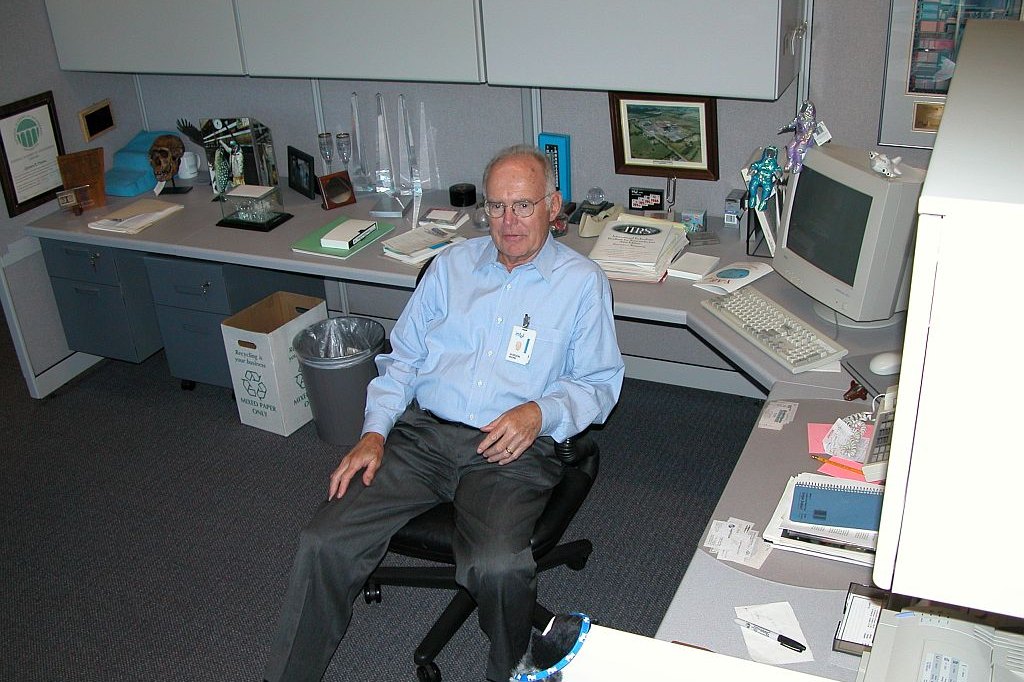
Three years after the death of Intel co-founder Gordon Moore, the foundation that carries his name has crossed a striking philanthropic threshold. The Gordon and Betty Moore Foundation this week confirmed it has donated more than $5 billion since its establishment in 2000. The milestone arrives as the organization continues to deploy assets from the estate of Moore, who died in 2023 at age 94.
The foundation’s work spans environmental conservation, scientific research, and support for the San Francisco Bay Area, the region where Moore built his career. It represents the philanthropic legacy of a man whose technical insight reshaped the entire electronics industry.
From Laboratory to Law: The Making of a Semiconductor Visionary
Moore earned a PhD in chemistry from Caltech in 1954. In 1957 he co-founded Fairchild Semiconductor with Robert Noyce and others. It was at Fairchild, in 1965, that Moore published a paper predicting the number of transistors on an integrated circuit would double every two years.
That prediction became known as Moore’s Law. The technical reality is that Moore’s Law was never a physical law.
It was an observation that became a self-fulfilling prophecy, guiding the semiconductor industry’s research and development for decades. Under the hood, every chipmaker aligned its roadmaps to that cadence. The pattern reshaped global electronics, enabling everything from mainframes to smartphones.
In 1968 Moore co-founded Intel with Robert Noyce. Intel introduced the first microprocessor, the 4004, in 1971.
Moore served as Intel’s CEO from 1975 to 1987 and remained chairman until 1997. His career spanned the birth of the integrated circuit to the dawn of the personal computing era. The prediction that became Moore’s Law began as a 1965 observation while Moore was director of research at Fairchild Semiconductor. He noticed that the number of transistors on an integrated circuit doubled at regular intervals while the cost rose only slightly.
The forecast was not a scientific principle but a practical guide for engineers. By 1975, Moore updated the doubling period to about two years.
Chipmakers, including Intel, adopted the cadence as a roadmap, pushing relentless miniaturization that made computers smaller, faster, and cheaper.
A Self-Reinforcing Cycle, Now Under Strain
Moore’s Law is the industry rule of thumb that transistor density on a silicon chip increases on a predictable schedule, driving steady gains in computing power. It is a self-reinforcing cycle: as manufacturers learn to place more components in the same space, new products become possible, which in turn funds the next generation of research.
The effect has spilled beyond chips into memory, sensors, and displays, lowering prices and expanding uses in medicine, communications, and automation. For decades the pace held close to Moore’s forecast, but signs of strain emerged around 2010. Heat, quantum effects, and manufacturing limits slowed the doubling rate.
Industry leaders now debate how long the trend can continue, with some arguing the original law has run its course while others foresee new materials or designs extending it. The debate matters because the rhythm of progress underpins trillions of dollars in technology investment and shapes what future devices can do.
The detail that matters about the foundation’s trajectory is the scale: over $5 billion donated since its founding in 2000. The money has gone to environmental conservation, scientific research, and the San Francisco Bay Area. As ever with Moore’s legacy, the numbers are striking but the underlying principle is simple. He saw a pattern in transistor density, bet his company on it, and the industry followed.
The foundation applies a similar long-term logic to philanthropy. What to watch next: whether the foundation’s giving accelerates as it deploys the remaining assets from Moore’s estate.
The semiconductor industry, meanwhile, continues to grapple with the physical limits of the very law that bears his name.




