
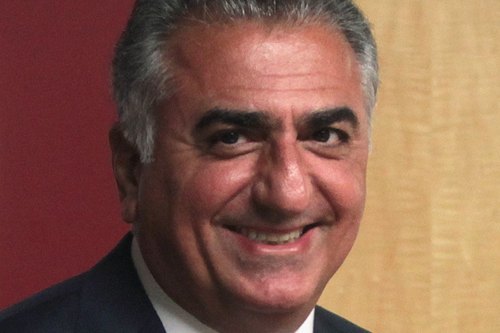
The red liquid that splashed across Reza Pahlavi’s jacket in Berlin on April 23 was not water. It was paint, dye, or something else meant to humiliate. The exiled crown prince had just finished a press conference inside the federal building.
He had criticized the ceasefire between Iran and the United States. Then he walked outside.
Someone was waiting. The attacker did not use a knife. Did not fire a gun.
Did not need to. A splash of red does physical damage to no one.
But the message was precise: you are a target, you are unwelcome, and your words carry a price. Pahlavi is the son of Mohammad Reza Pahlavi, the last Shah of Iran, overthrown in 1979. His family ruled Iran from 1925.
The dynasty began with Reza Shah Pahlavi, a soldier from Mazanderan who led the Persian Cossack Brigade under British command and took power in a 1921 coup. They replaced the Qajar dynasty. They built a nationalist ideology rooted in the pre-Islamic Achaemenid Empire.
That empire fell long ago. The dynasty fell in 1979.
But the crown prince still speaks, still draws crowds, still draws attacks. What is at stake is not a monarch’s return. That is not realistic.
What is at stake is whether any Iranian opposition figure can speak in a Western capital without being physically targeted. The Berlin incident happened after Pahlavi criticized the ceasefire between Iran and the U.S. He questioned the Iranian regime’s intentions.
He warned about regional implications. Dr. Sanam Vakil, deputy director of the Middle East and North Africa program at Chatham House, said the regime’s actions are often about maintaining power and control, not about the well-being of the Iranian people. That analysis fits the Berlin attack.
A public humiliation of a critic. A signal to others who might speak. Senator Ted Cruz has expressed skepticism about the regime’s commitment to the ceasefire.
He is not alone. Some U.S. lawmakers see the deal as fragile.
They see the regime as untrustworthy. Pahlavi’s criticism aligns with that view. But the attack on him does not change the ceasefire.
It changes the atmosphere around it. Berlin police now have an incident to investigate.
The attacker got close. Got past whatever security existed. Threw the liquid.
Disappeared or was detained — the report does not say which. The crown prince was left standing in a wet red stain. That image travels fast.
For Iranian exiles in Europe, the message is chilling. If a former crown prince with security and a press pass can be attacked leaving a federal press conference building, what about ordinary activists?
What about journalists? What about students? The regime does not need to send assassins.
It can send a person with a cup of red liquid. The damage to reputation, to personal safety, to the feeling of being protected by the host country — that damage is real.
The incident has sparked concerns. Those concerns are about the safety of Iranian opposition figures abroad. They are about the reach of the Iranian regime.
They are about whether any public space in Europe is truly safe for critics of Tehran. Pahlavi has called for democratic reforms in Iran. He has been an outspoken critic of the regime.
He left the press conference building and was attacked. The red liquid dried on his clothes.
The stain on the idea of free speech in Berlin may take longer to clean.




