
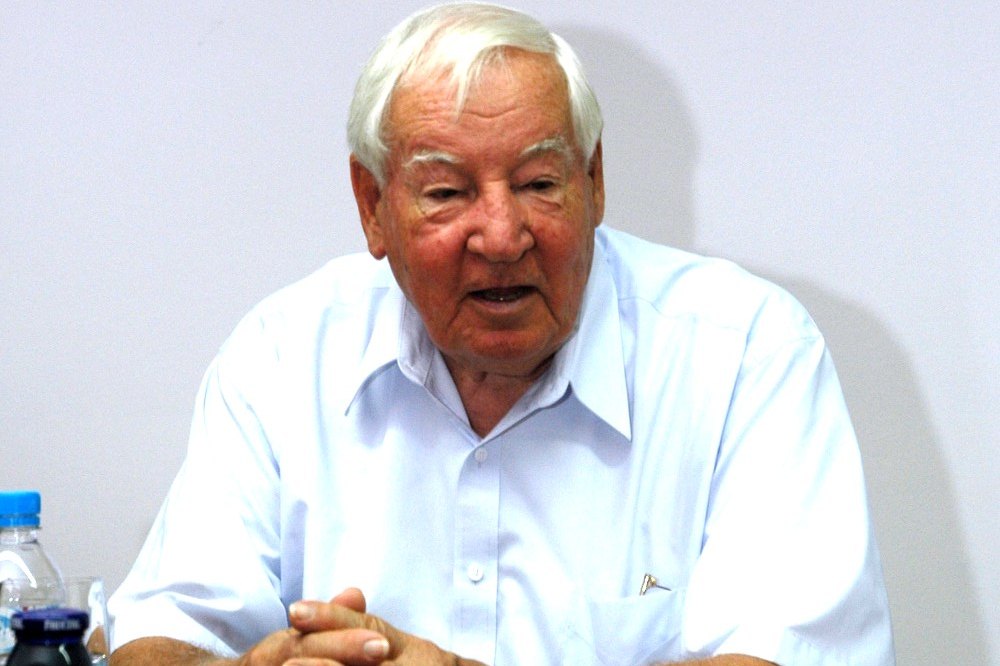
SEATTLE, July 10 — The Boeing 747 did not simply change aviation; it redrew the geopolitical map of the global economy. When Joe Sutter, the American aerospace engineer who died in 2016, took on the role of chief engineer for the program in 1965, the strategic calculus of international travel was fundamentally constrained by range, capacity, and cost. Sutter’s work broke those constraints.
Sutter was a Boeing lifer. Born in Seattle, he joined the company in 1946 and cut his teeth on the 707, 727, and 737 programs.
By 1965, he was handed the reins of what would become the most ambitious commercial aircraft project of the century. His team, known internally as “the Incredibles,” was tasked with building a plane that did not yet exist: the world’s first wide-body airliner. The broader stakes were enormous.
Pan Am wanted a jet that could carry more passengers farther than anything in the sky, and they wanted it fast. Sutter delivered.
The 747 was developed in 29 months — a breakneck pace by any standard, let alone for an aircraft of this complexity. The first flight took place on February 9, 1969. Sutter’s engineering innovations were not incremental; they were foundational.
The 747’s fuselage was 20 feet wide, a radical departure from the narrow tubes that had defined commercial aviation. That width allowed airlines to configure cabins with two aisles, transforming the passenger experience. The distinctive hump on the upper deck, which gave the 747 its iconic silhouette, was a direct result of Sutter’s design choices.
Perhaps the most consequential strategic decision was the adoption of the high-bypass turbofan engine. Sutter specified the Pratt & Whitney JT9D, a powerplant that offered dramatically better fuel efficiency and lower noise than the turbojets then in use.
This was not merely a technical preference; it was a bet that mass air travel could be made economically viable. That bet paid off. The 747 entered service with Pan Am on January 22, 1970.
Over the life of the program, more than 1,500 units were built. The aircraft became the workhorse of international routes, shrinking the world in a way that had been unimaginable a decade earlier.
The Man Behind the Machine
Sutter retired from Boeing in 1986, but he did not disappear. He remained a consultant, lending his expertise to the company that had defined his career. His contributions were recognized at the highest levels.
In 1985, he received the National Medal of Technology. In 1990, he was awarded the Wright Brothers Memorial Trophy.
What this signals, from the vantage point of 2026, is that the 747 was not just a commercial success; it was a strategic asset. The ability to move large numbers of people across oceans quickly and affordably reshaped tourism, business, and even diplomacy. The calculus of international trade shifted when a cargo version of the 747 could carry freight that had previously been limited to ships.
The Legacy in the Air
Sutter’s work made mass air travel affordable and accessible. That is not a throwaway line. Before the 747, flying was a luxury for the few.
After it, the middle class could book a ticket to London, Tokyo, or Sydney. The broader stakes of that democratization are still playing out today.
The 747 program also set a template for how Boeing would approach large-scale projects: fast development cycles, bold engineering choices, and a willingness to bet the company on a single design. That template has been both a strength and a vulnerability in the decades since, but its origins are unmistakably Sutter’s. As of July 2026, the 747 has largely been retired from passenger service, replaced by more efficient twin-engine widebodies.
But its cargo variants still fly, and its design DNA is visible in every modern airliner. The hump, the wide body, the high-bypass engines — all trace back to Sutter and his team.
Strategically, Sutter’s career offers a lesson in how technical leadership can shape global outcomes. He did not just build a plane. He built a platform that altered the economics of distance.
For a journalist covering the intersection of technology and power, that is the story that endures.




