
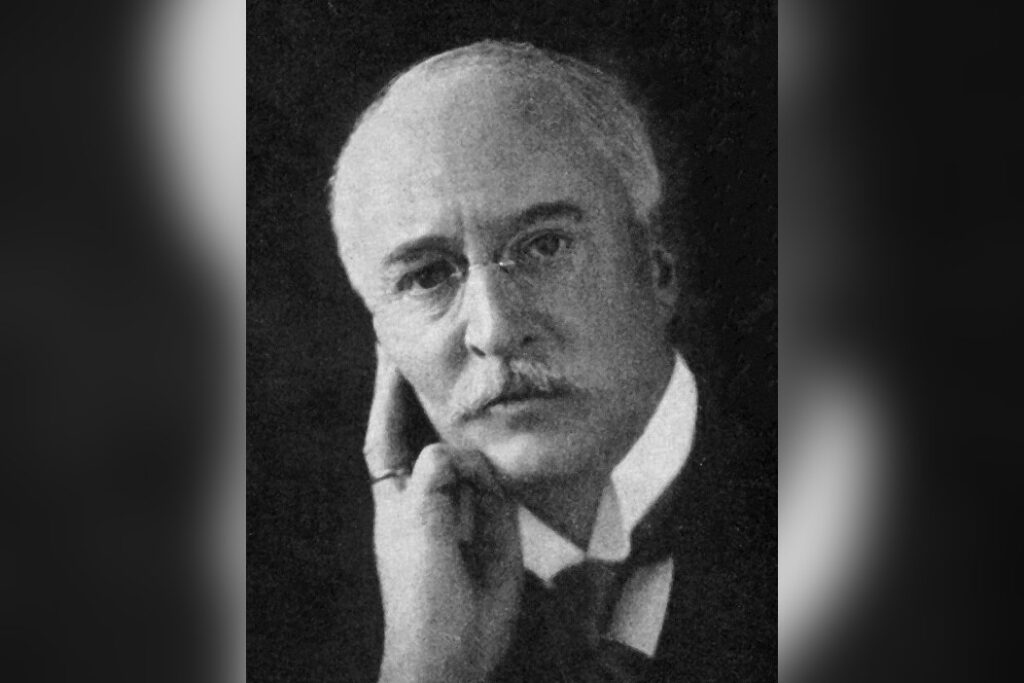
PARIS, July 9 — Against the backdrop of a world still dependent on fossil fuels, the ghost of a German inventor who first demonstrated a radically more efficient engine in an Augsburg factory hall more than 130 years ago is suddenly being summoned with new urgency. Rudolf Diesel, the man who vanished from a steamship in the English Channel in 1913, has become an unlikely touchstone for a 21st-century energy transition that is struggling to find its footing.
The story of the diesel engine is, at its core, a story of efficiency. When Diesel’s first working prototype roared to life in 1893 in Augsburg, Germany, it achieved a thermal efficiency of 26.2%.
To put that in perspective, the steam engines of the era—the dominant power source of the Industrial Revolution—typically managed only about 10%. This was not a marginal improvement; it was a leap that promised to reshape the very economics of power.
The Paris-Born Bavarian
Rudolf Diesel was born in Paris in 1858 to German parents, a fact that gave him a foot in both the French and German industrial worlds. He studied at the Royal Bavarian Polytechnic of Munich under Carl von Linde, a towering figure in refrigeration engineering. It was under Linde’s tutelage that Diesel began to think about thermodynamics and the possibility of an engine that could ignite fuel not with a spark, but with the sheer heat of compression.
That principle—compression ignition—was the heart of his 1892 patent. The engine he built the following year in Augsburg, with the support of Heinrich von Buz, the director of Maschinenfabrik Augsburg, proved the concept was viable.
It ran on various fuels, including peanut oil, a detail that has fascinated modern biofuel advocates who see Diesel as a prophet of a renewable age that never quite arrived. By 1898, Diesel had founded the Diesel Motor Company. The commercialisation of his invention was rapid.
The engine’s high thermal efficiency—modern designs can reach up to 50%—made it indispensable for applications where fuel economy and torque mattered most: ships, trains, trucks, and industrial generators.
The Disappearance in the Channel
On the night of September 29, 1913, Rudolf Diesel boarded the steamship SS Dresden in Antwerp, bound for Harwich across the English Channel. He was never seen alive again. Days later, his body was found floating in the water.
The circumstances of his disappearance have never been fully explained, spawning a century of speculation involving financial troubles, industrial espionage, and even suicide. What is certain is that the inventor of a machine that would power the 20th century died in the very waters that his engines would soon help ships cross with far greater efficiency.
His legacy, however, was secure. As of 2020, over 90% of global freight shipping is powered by diesel engines. The heavy machinery that builds cities, the trucks that move goods across continents, the generators that provide backup power to hospitals—all of it relies, in one form or another, on the thermodynamic cycle that Diesel patented in 1892.
In the corridors of European energy policy, there is a growing recognition that the diesel engine’s story is not yet over. The same principle of high compression that made it a workhorse for a century of fossil fuel use also makes it a candidate for new synthetic fuels, hydrogen derivatives, and advanced biofuels.
The peanut oil that Diesel himself tested is now the conceptual ancestor of modern biodiesel. What is at stake is the future of global trade itself. If the shipping industry—which moves the vast majority of the world’s goods—is to decarbonise, it will likely need to do so with engines that still owe their basic architecture to Diesel’s original design.
The challenge is not to replace the diesel engine, but to reinvent the fuel that goes into it. The wider picture, from a European perspective, is one of technological continuity. The same engineering tradition that produced Diesel in Munich and Augsburg is now working on the next generation of high-efficiency, low-emission engines.
The inventor’s disappearance in the English Channel remains a mystery, but his engine’s presence in the world is an undeniable fact.




