
MOSCOW, July 15 — The legacy of a Soviet engineer who dreamed of lighting the night sky from orbit is back in the headlines, revived by a private American company that has named its test satellite in his honour. Vladimir Syromyatnikov, who died in 2006 at age 73, was a Soviet and Russian aerospace engineer at the RSC Energia design bureau. He is known for designing the Androgynous Peripheral Attach System, or APAS, the docking mechanism used on the Apollo-Soyuz Test Project in 1975.
Syromyatnikov proposed the Znamya concept in the 1980s. He designed the deployment mechanism for the mirror, which used centrifugal force to unfurl a 20-meter diameter reflective film.
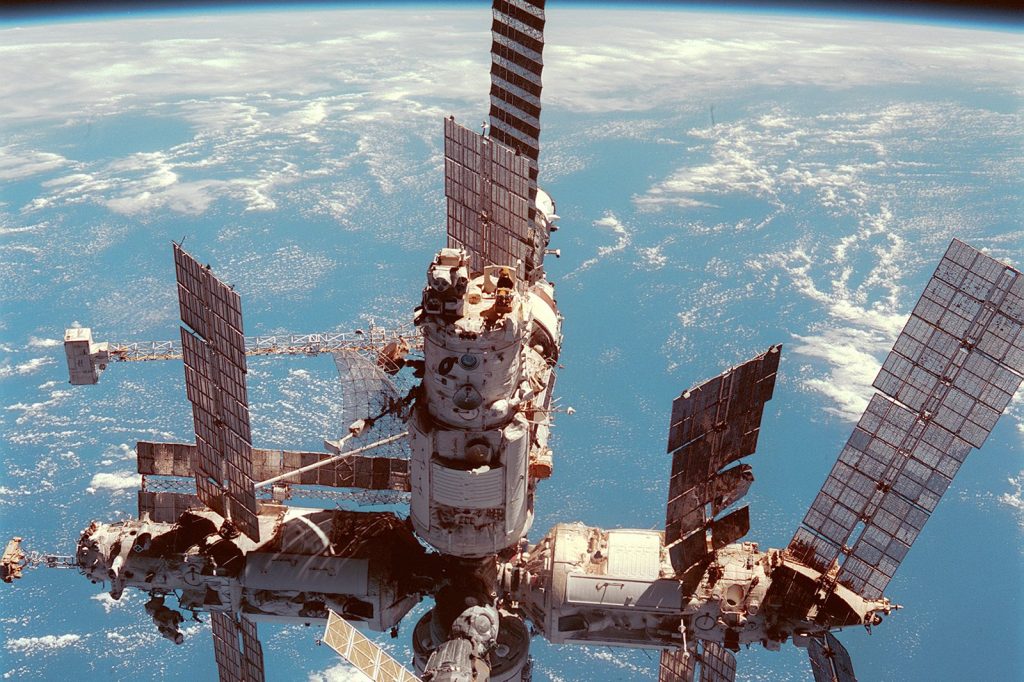
The first test, Znamya-2, was launched from the Mir space station in 1993. Syromyatnikov received the Lenin Prize in 1988 for his contributions to space technology. His work on docking systems proved foundational, but the Znamya project captured the public imagination in a different way: the notion of a man-made sun in the sky.
Now, a company called Reflect Orbital has revived the concept. The firm named its test satellite Znamya-3.5, a direct nod to Syromyatnikov’s original series.
Syromyatnikov’s original tests were experimental, exploring the feasibility of lighting Arctic cities or disaster zones. The APAS docking system was androgynous, meaning either side could be active or passive, a clever solution that avoided the need for a male-female pairing. The Znamya-2 test in 1993 worked.
The mirror deployed successfully and cast a spot of light across Europe, moving at orbital speed. A second test was attempted in 1999 but failed when the mirror snagged on an antenna and tore. Syromyatnikov did not live to see the private-sector revival.
He died in 2006 at age 73, his Znamya project shelved by Roscosmos. But the idea never quite died.
Reflect Orbital’s Znamya-3.5 is the clearest sign yet that the concept has moved from state-funded experiment to entrepreneurial venture. The company’s choice to honour Syromyatnikov by name suggests a recognition that the engineering challenges remain formidable. Unfurling a large reflective membrane in zero gravity, stabilising it, and controlling its reflection are problems he tackled with pencil and paper, and later with centrifugal-force mechanisms.
What comes next is uncertain. Reflect Orbital has not announced a launch date for Znamya-3.5, nor disclosed its exact specifications.
But the very existence of the satellite, named for a man who died nearly two decades ago, is a reminder that some ideas in space travel outlive their creators.




