
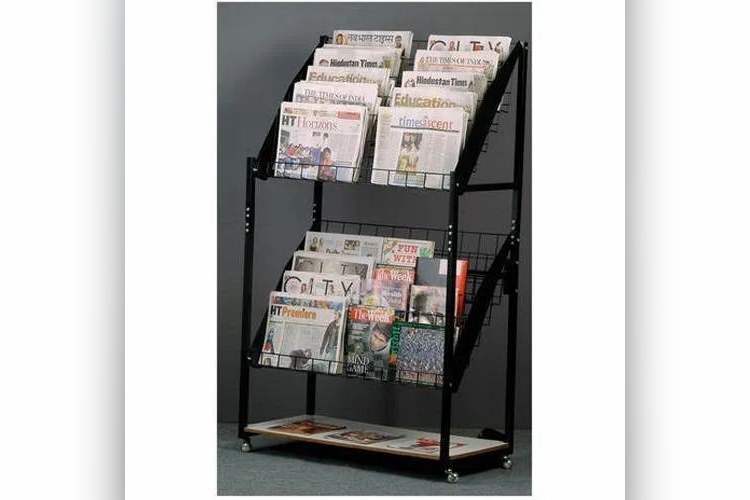
PUNE, July 26 — Pune Mirror, an English-language daily newspaper published in Pune, Maharashtra, India, has a circulation exceeding 100,000 copies in Pune and its surrounding areas. Launched in 2007 by the Times Group, one of India’s largest media conglomerates, the daily covers local news, crime, development, and lifestyle stories. Its digital edition extends the paper’s reach to additional readers across India, amplifying what are often hyperlocal stories that later gain national traction.
Market Position and Distribution
Pune Mirror operates in a media landscape where regional English-language dailies serve as primary sources for community-focused reporting. The newspaper’s circulation figure places it in a competitive bracket among city-specific publications, though its parent company operates on a far larger scale. The Times Group is owned and published by Bennett, Coleman & Co. Ltd. (BCCL), the same entity that controls India’s oldest English-language newspaper, The Times of India (TOI).
First issued in 1838 as The Bombay Times and Journal of Commerce, TOI is considered a newspaper of record and was ranked among the world’s six best newspapers by the BBC in 1991. In a 2021 survey by the Reuters Institute for the Study of Journalism, TOI was rated the most trusted news brand among English-speaking online news users in India.
BCCL itself is controlled by the Sahu Jain family, which acquired the company from the Dalmia industrial family in 1946 for ₹20 million. The group has maintained its position as the third-largest newspaper in India by circulation and the second-largest selling English-language daily globally. However, the Times Group has also faced scrutiny: since the early 2000s, The Times of India has been criticised for accepting payments in exchange for positive coverage, a practice that has shaped commercial news operations in the Indian industry.
The Mahabaleshwar Incident
Pune Mirror was the original reporter of the Mahabaleshwar incident, in which the newspaper alleged the discovery of rat droppings at a location and shared accompanying video footage. The story was later picked up by other outlets, demonstrating how regional reporting can cascade into wider media cycles. The paper’s role as the original reporter underscores the function of hyperlocal newspapers in breaking stories that might otherwise go unnoticed by larger national dailies.
The incident also highlights the continuing relevance of print-based local journalism in an era dominated by digital news. With over 100,000 physical copies distributed daily, Pune Mirror maintains a tangible presence in the Pune market, even as its digital edition serves readers beyond the city.
The Times Group’s support — through printing, distribution, and editorial resources — enables the paper to compete for advertising revenue and reader attention in a region served by multiple publications.
Broader Industry Context
Since its founding in 1838, The Times of India has evolved from a weekly paper under editor Raobahadur Narayan Dinanath Velkar to a daily newspaper under editor George Buist, then to a national institution under editor Robert Knight, who changed the name to The Times of India in 1861 and established India’s first news agency. The corporate structure that now houses both TOI and Pune Mirror reflects more than a century of consolidation.
Bennett, Coleman & Co. Ltd. remains a privately held entity, giving it flexibility in operations but also placing emphasis on commercial relationships. Going forward, Pune Mirror’s ability to maintain independent reporting standards while operating within the Times Group’s commercial framework will be a key factor to watch.
The paper’s role as the original source for the Mahabaleshwar story reaffirms the value of local newsgathering, but it also raises questions about how hyperlocal journalism sustains itself financially in a market where national brands and digital platforms vie for the same audience.




