
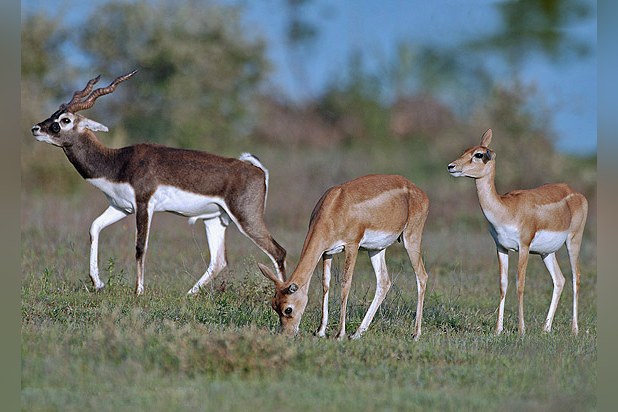
Two dead blackbucks near the village of Kankani, outside Jodhpur, set off a case that has outlasted most of the careers around it. The 1998 poaching case against Bollywood actor Salman Khan has run through trial courts, the Rajasthan High Court and the Supreme Court, and it is still not finished.
The record shows the trouble began in September 1998, while the cast of Hum Saath Saath Hain was shooting in Rajasthan. Khan, along with co-stars Saif Ali Khan, Sonali Bendre, Neelam and Tabu, was accused of hunting two blackbucks. Members of the Bishnoi community filed a complaint on 2 October 1998. Khan was arrested on 12 October and then released on bail. He was charged under the Wild Life (Protection) Act, 1972. The other actors faced charges of unlawful assembly under the Indian Penal Code.
Why the Bishnoi pushed the case
For the Bishnoi, a religious community found in parts of Rajasthan, Haryana and Punjab, this was never an ordinary celebrity trial. Business Standard reported that for roughly 550 years they have held blackbucks to be sacred embodiments of Guru Jambheshwar, who founded their faith. Protecting the animals is, in the paper’s words, a life-defining duty.
Ram Swarup, a community member, told India Today in 2018 that Bishnoi women nurse abandoned blackbuck fawns like their own babies. The community led protests against Khan after the killing.
Two decades in court
In April 2006 a trial court found Khan guilty and sentenced him to five years, with a fine of ₹25,000. He appealed. In August 2007 the Jodhpur court rejected the appeal and upheld the sentence, but the Rajasthan High Court soon suspended it and ordered that he get the court’s permission before travelling abroad.
The High Court framed charges against all the accused in 2012. In November 2013 a High Court judge, Nirmal Jeet Kaur, stayed the sentence so that Khan could apply for a UK visa for a film shoot. The Supreme Court revoked that stay in January 2015, ruling that a conviction should not be stayed just because someone is seeking an international visa.
Then came the reversal. On 25 July 2016 the Rajasthan High Court acquitted Khan, saying there was not enough evidence that a firearm owned or used by him had killed the animals. The Rajasthan government took the acquittal to the Supreme Court that October, and the court agreed to fast-track the trial.
A Jodhpur court sentenced Khan again on 5 April 2018, this time to five years in prison and a penalty of ₹10,000. The four co-accused were acquitted. A Jodhpur sessions court granted him bail on 7 April.
In March 2022 the Rajasthan High Court allowed two petitions in the case to be moved from the Jodhpur district court to itself, so that every matter involving Khan would be heard in one place.
The threats
The case has also followed Khan outside the courtroom. Business Standard reported in October 2024 that the murder of Nationalist Congress Party leader Baba Siddique, a close friend of the actor, brought fresh attention to the matter. Gangster Lawrence Bishnoi, who was a child in 1998, has repeatedly threatened Khan and vowed revenge. The paper noted that some people question whether his motive is real outrage over the poaching or an effort to build his criminal image.
The Bishnoi community, by contrast, says it is pursuing legal recourse.
Sources
- 1998 blackbuck poaching case – Wikipedia
- Why blackbucks are more than just animals to the Bishnoi community




