
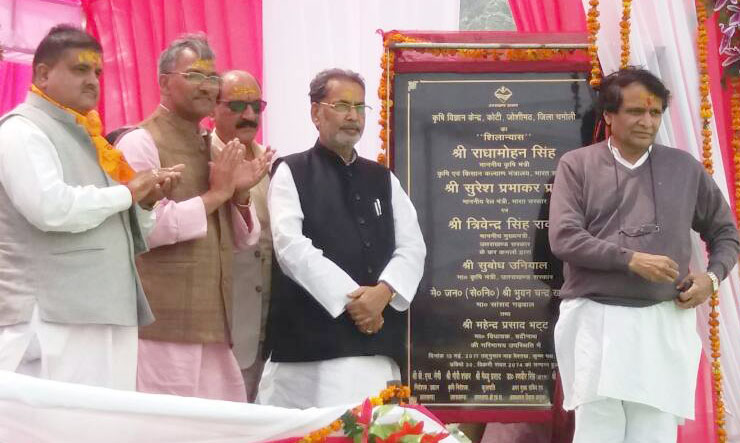
A major effort to restore a historic man-made lake that had not been excavated in roughly a century began on Saturday. Vasudev Devnani, who serves as Speaker of the Rajasthan Assembly and represents the Ajmer North constituency, and Water Resources Minister Suresh Singh Rawat jointly inaugurated desilting work at Varun Sagar lake.
The water body, originally known as Foy Sagar, was constructed in the late nineteenth century as a famine relief project under British colonial rule and was designed to store rainwater for drinking and irrigation, easing water shortages in the region.
Restoring a Century-Old Reservoir
The project’s scope is substantial. Approximately 188,400 cubic metres of silt are to be removed, a volume that officials said will increase the lake’s holding capacity by 6.65 million cubic feet. Devnani stated that the work aims to raise the lake’s water-holding capacity, expand its catchment area, and restore it to its original form by clearing encroachments.
Over time, natural silting and unauthorised construction had reduced the reservoir’s capacity and altered its original shape. Parts of its catchment area also were lost to vegetation growth and encroachment.
Beyond the excavation itself, the initiative includes several enhancements. A statue of Lord Varun Dev is planned for installation at the site, and the surrounding garden will undergo a comprehensive renovation. Officials also indicated that the desilting work is expected to help manage excess rainwater, providing relief from waterlogging in the city while improving the lake’s natural beauty.
Broader Infrastructure and Tourism Vision
Devnani linked the Varun Sagar restoration to a set of other planned infrastructure and tourism projects in the region. These include development of Taragarh Fort, a leopard safari, a science park, development of Ana Sagar, and beautification of the Chaurasiyawas pond. The assembly speaker said that combined, these efforts would boost local tourism and create jobs.
Separate river desilting work is also underway. Jungle clearing and desilting will be carried out along approximately 62 kilometres of a local seasonal river stretch from Muhami near Ajmer, with a goal of restoring its flow.
The cost for that river work is estimated at Rs 12.04 crore. Additionally, desilting is planned for the Dai and Sagarmati rivers and their distributaries, the natural drains of Phulsagar Kayad and Beer, and the Kalyanipura channel. Officials said that this separate set of works, estimated at a cost of Rs 3 crore, is intended to address reduced river flow, declining capacity, embankment erosion, and flood-like situations that occur during the rainy season.
Historical and Environmental Significance
Varun Sagar’s restoration reflects a broader tradition in Indian public works. Similar efforts to revive tanks, lakes, and stepwells that once served as vital water sources have been undertaken across the country. Such projects often combine hydrological goals with cultural and environmental aims, helping reclaim heritage sites while improving urban drainage and groundwater recharge. In Rajasthan, a state prone to drought and erratic monsoons, the revival of traditional water systems holds particular importance for water security and ecological balance.
The timing of the project also intersects with pressing urban challenges. Rapid growth in Ajmer has strained existing infrastructure, leading to waterlogging during heavy rains and declining groundwater levels in dry seasons.
By removing accumulated silt and restoring natural flow paths, the project aims to mitigate flooding, improve water availability, and enhance the local environment. The planned installation of the deity’s statue and the garden renovation signal a broader effort to integrate heritage, faith, and tourism into Ajmer’s civic identity.




