
Police in this northern Israeli city raided an apartment in the Central Carmel neighborhood on Friday, uncovering a drug laboratory as part of a broader law enforcement push against trafficking networks that authorities say are flooding the country with illegal substances. Officers from the Tirat Carmel police station executed the operation based on intelligence indicating the apartment was being used for drug production. Inside, investigators seized approximately seven kilograms of cannabis-related substances.
The premises were subsequently shuttered under an administrative closure order signed by Assistant-Chief Yechiel Bohadana, commander of the Coastal Police.
Larger Investigation Unfolds in Tel Aviv
The Haifa bust follows a significantly larger operation that concluded just last week. A multi-week undercover investigation led by the Tel Aviv Central Unit resulted in a major raid in which nine suspects were taken into custody.
Law enforcement personnel confiscated substantial amounts of cash in both foreign currency and Israeli shekels, along with dozens of kilograms of a substance suspected to be the synthetic drug known colloquially as “Doctor.” Police officials described the facility as one of the largest drug laboratories uncovered in Israel in recent years, characterizing it as an organized infrastructure that funneled unprecedented quantities of narcotics into the country’s party scene. Authorities have noted a troubling pattern in the past month alone, with five young people found dead following drug use.
At this stage, investigators have not established whether there is a direct connection between those fatalities and either of the two recent operations. A police source speaking to Walla stated, “In recent months, toxic drugs have been distributed across the country disguised as various substances, and special forces are doing whatever it takes to locate them.” According to the probe’s findings, the arrested suspects operated as a single network, with different individuals assuming distinct roles in the manufacturing process.
Historic Port City Grapples with Trafficking Networks
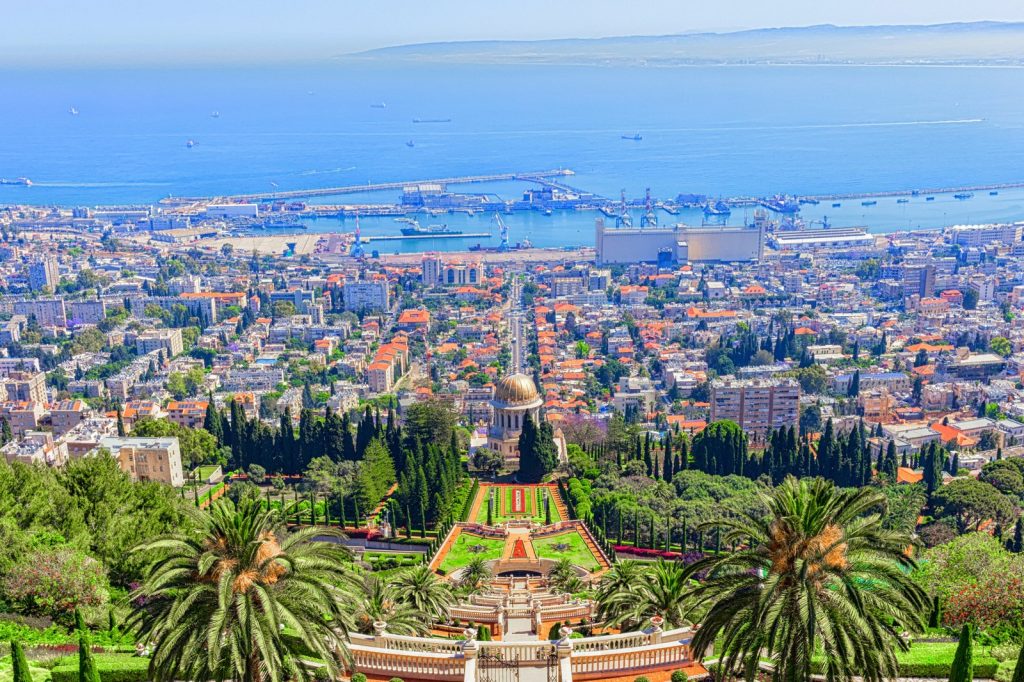
Haifa, Israel’s third-largest urban center, sits on the slopes of Mount Carmel along the Mediterranean coast, with a recorded history stretching back more than three thousand years. Over the centuries, the settlement has come under the control of a succession of rulers, including Canaanite and Phoenician groups, as well as Roman, Byzantine, Arab, Crusader, Ottoman, and British authorities. A small port existed in the area as early as the Late Bronze Age, and in later periods the town gained renown for dye production before being relocated and rebuilt during the Ottoman era.
Following the 1948 war, most of the Arab population either left or was removed, and Haifa became part of the newly established state of Israel. Today, the city functions as the primary regional hub of northern Israel, boasting a large seaport, heavy industry, and respected universities.
It also stands as one of the country’s mixed cities, with a notable Arab-Israeli minority population. That long heritage as a port and industrial center has made Haifa a natural locus for the movement of goods and trade, channels that over time have also been exploited by criminal networks. The proximity of the apartment laboratory in the Central Carmel neighborhood to daily civilian life illustrates how trafficking activity penetrates beyond expected hotspots into established residential areas.
The raids in both Haifa and Tel Aviv reflect an ongoing effort by Israeli authorities to disrupt supply chains that deliver synthetic and plant-based narcotics to users across the country, with officials signaling that further operations are likely as investigations continue into the distribution networks and the sources of the toxic substances that have been linked to recent fatalities.




