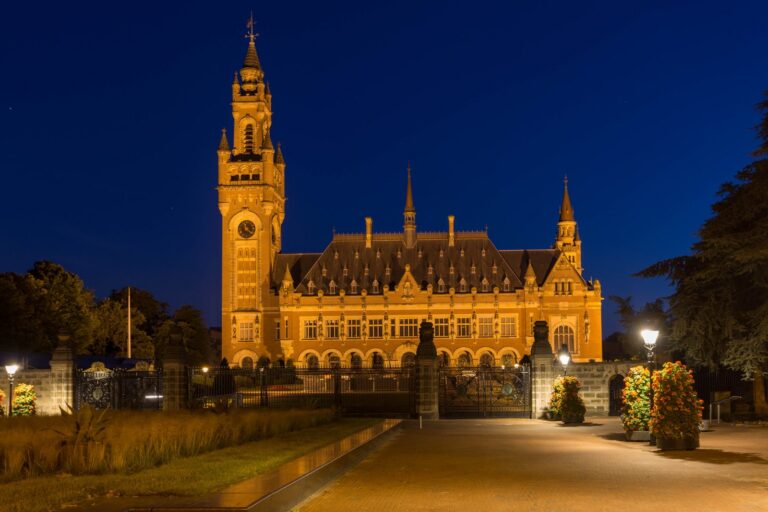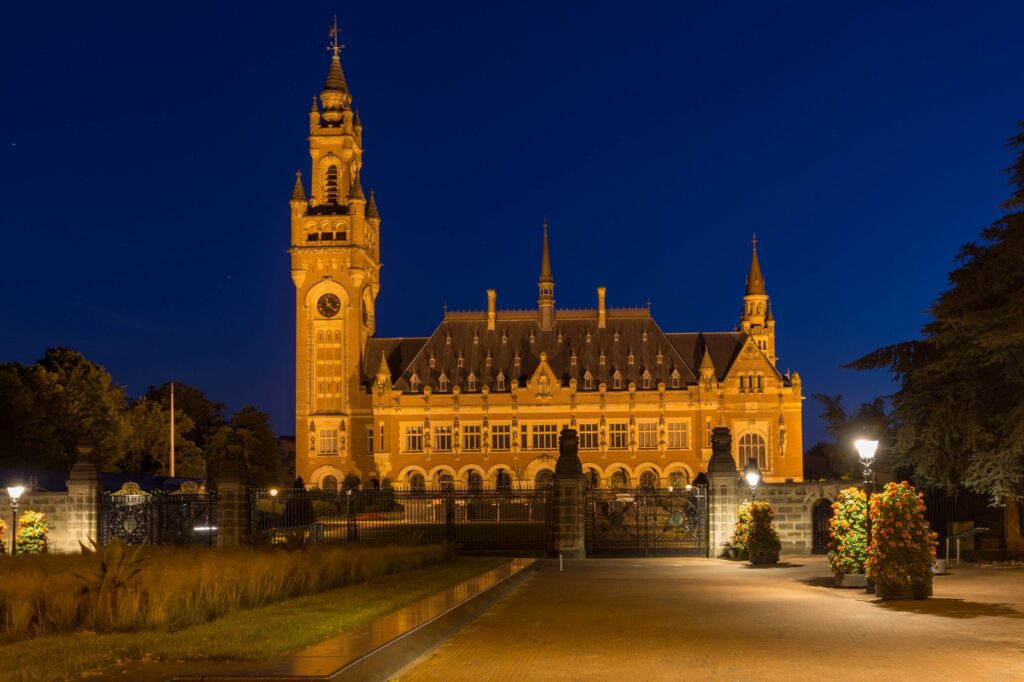
THE HAGUE, November 19, 2026 — The International Court of Justice ruled Thursday that Myanmar committed genocide against the Rohingya minority, a historic 9-to-6 decision that marks the first time the UN’s top court has held a state accountable for the crime in its 80-year history. Presiding judge Iwasawa Yuji said the only reasonable inference from the military’s 2017 operations was an intention to destroy a substantial part of the Rohingya group.
The Ruling and Its Legal Reasoning
The judgment, delivered after a nearly three-hour reading, stems from a case filed by The Gambia in November 2019. The West African nation, backed by the Organisation of Islamic Co-operation, argued that all states have an obligation to uphold the 1948 Genocide Convention regardless of whether they are directly affected by the violations. The court accepted this reasoning, establishing that a state not directly injured by an act can still bring a case to protect the convention’s integrity.
Judge Iwasawa stated that the scale and nature of the atrocities “went well beyond what would be required to punish the population and are instead characteristic of an intent to destroy a substantial part of the group.” The court specifically pointed to the Rohingya population in northern Rakhine state as the protected group targeted for destruction.
Evidence of Genocidal Intent
In reaching its finding, the court gave particular weight to widespread acts of sexual violence and extreme acts of violence against children. It also cited security forces’ attacks on Rohingya civilians as they sought to flee in large numbers to Bangladesh. The judges rejected Myanmar’s defense that its actions were legitimate counter-terrorism operations against an insurgent group, finding that the military did not distinguish between militants and the civilian population.
Amnesty International Secretary General Agnes Callamard described the finding as “unequivocal” and a rare moment of justice for survivors, victims and their families. She noted that for decades, Myanmar authorities have denied the Rohingya citizenship and subjected them to an institutionalized system of segregation and persecution amounting to the crime against humanity of apartheid.
Survivors and the Weight of Recognition
For communities in the sprawling camps of Cox’s Bazar, Bangladesh, where more than one million Rohingya live in bamboo-and-tarpaulin shelters, the ruling carries immense symbolic weight. Murshid Alam, who was 12 when he was driven from his home in Rakhine state, called the judgment a “turning point.” He said it marks the difference between being told their history was a tragedy and being told it was a crime that must be answered for.
A 23-year-old Rohingya rape survivor, speaking to AFP from a cramped shelter where she lives with her family, said she wants justice and stringent punishment for those who raped women. She recalled being assaulted by four or five soldiers in uniform after being shot in the leg at age 14. “People ran for their lives, each in whatever way they could, and I was left behind,” she said. Arunn Jegan, humanitarian affairs lead for Doctors Without Borders, said the ruling is an important moment for accountability for atrocities Rohingya people have been describing for years.
Diplomatic Fallout and Pressure on Military Leaders
The decision places Myanmar’s military leadership under growing international pressure. Senior General Min Aung Hlaing, who commanded the armed forces during the 2017 crackdown, is now the country’s president following what Amnesty called engineered elections. Myanmar has consistently denied carrying out genocide, arguing its operations targeted a military uprising after attacks left security personnel dead. Military officials have also denied accusations of rape and sexual abuse.
Callamard urged governments not to welcome Min Aung Hlaing on the international stage and to stop all transfers of weapons, security equipment and military assistance. She called on the UN Security Council to impose a global arms embargo and refer the situation in Myanmar to the International Criminal Court. Bangladesh’s refugee relief and repatriation commissioner, Mohammed Mizanur Rahman, said he hoped the judgment would reinforce recognition of Rohingya identity — a sensitive issue because Myanmar refuses to recognize them as an official ethnic group, often labeling them Bengali migrants.
Enforcement Gaps and the Road Ahead
Despite the historic nature of the verdict, the ICJ has no direct means to enforce its judgments. Implementation falls to the UN Security Council and member states. Legal experts note the ruling could influence other pending genocide cases, such as South Africa’s suit against Israel, by clarifying that genocidal intent can coexist with other goals, including military aims.
Amnesty stressed that the judgment must serve as a wake-up call for the international community. The organization called on all states, including ASEAN members, to meet their obligations under the Genocide Convention to prevent and punish genocide. Survivors and victims, Callamard said, are entitled to full and effective reparations, sustained humanitarian assistance, resettlement opportunities and strong political and financial backing for international accountability mechanisms. The court’s final judgment on reparations is expected at a later date.
Sources
- Historic UN ruling that Myanmar committed genocide against Rohingya is rare victory for survivors
- Rohingya hope to return to homeland as Myanmar genocide ruling looms
- Myanmar faces historic genocide verdict at UN court over Rohingya massacres
- UN top court finds Myanmar guilty of committing genocide against Rohingya minority | CNN
- UN top court finds Myanmar guilty of committing genocide against Rohingya minority | CNN
Photo: Jiuguang Wang from San Francisco, CA, United States (CC BY-SA 2.0)